Japan private tour insights into miso or fermented soybean paste
This post is all about one of Japan's healthiest food ingredients: miso or fermented soybeans.
Miso is a thick paste that is made by fermenting soybeans with salt and a special type of fungus (Aspergillus oryzae). Often miso also includes rice, grains or seaweed. But there are many kinds of miso and thus also a wide range of ingredients that are used to make this fermented paste. The time required to ferment miso can be as short as a week or last for years.
Grain and fish fermentation has existed in Japan and elsewhere in East Asia since the Neolithic Jomon period. Chinese soybean miso came to Japan during the Nara period (710-794). By the Kamakura period (1185-1333) a serving of miso was part of the Japanese daily diet.
Early Japanese soybean miso was made with whole beans like in China. It was only in the Muromachi period (1337-1573) that Buddhist monks figured out that crushing the beans before fermentation was better than using whole beans. In Japan, the whole bean miso version still lives on in the form of natto.
During Japan's Sengoku civil war period miso became a common provision for samurai warriors and thus a key business for the samurai class in general.
Since the beginning of the 20th century miso is largely produced using an industrial process and rarely made at home.
Miso started attracting attention in other countries from 2015 onwards. In foreign countries miso production has focused less on soybeans for fermentation and more on other ingredients including chickpeas, quinoa, and corn.
Miso is used in many ways in Japanese cuisine. It can be a sauce. It can be used to pickle vegetables and other things like fish and even meat. Misoshiru, Japan's signature breakfast soup, is probably the most familiar miso dish for foreign travelers in Japan.
Miso is a rich source of protein and minerals. People with high blood pressure should be careful with miso due to its high salt content.
Miso is sold in shops unrefrigerated but should be put in the fridge once opened. Miso is a living food rich in microorganisms and should not be overheated as this would kill the bacteria. So, be sure to add miso to soups and other Japanese foods at the last moment. Note: some of the foods listed below involve cooking processes that kill the bacteria and only take advantage of the miso flavor.
Common Japanese foods that use miso:
Soups and stews:
Misoshiru soup: The classic breakfast soup that includes miso, tofu, onions and wakame seaweed.
Tonjiru or Butajiru: A hearty pork and vegetable miso soup.
Miso ramen: A rich, flavorful broth base for ramen dishes.
Nabemono: Hot pots like Ishikari Nabe (salmon & vegetables) or Kaki Dotenabe (oysters) use miso.
Grilled & pan-fried dishes:
Miso glazed fish: Salmon, mackerel, or cod served with a sweet miso glaze.
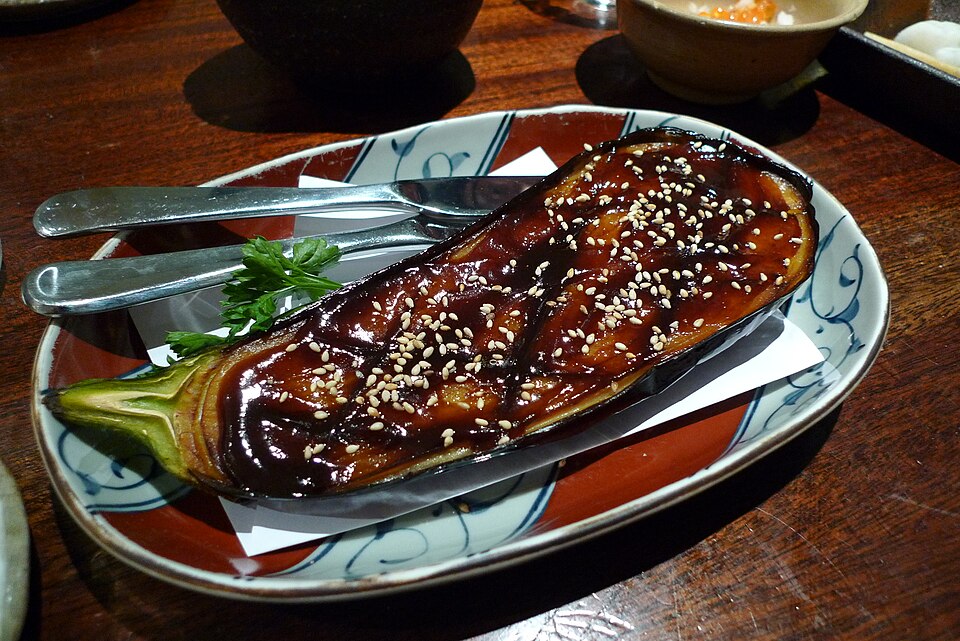
Nasu Dengaku: Grilled eggplants glazed with sweet miso.
Miso-marinated chicken or beef: Skewered chicken or beef marinated in miso or steak marinated in miso.
Yaki onigiri: Grilled rice triangles featuring a miso-butter coating.
Sauces, dips & marinades:
Miso dressing: For salads (often featuring yuzu citrus or ginger).
Miso butter: For vegetables, fish, or even udon noodles.
Miso mayonnaise: A popular dip or sauce for fried foods.
Nikumiso: A savory ground meat and miso sauce used as a topping for other Japanese dishes like domburi rice bowls.
Other Uses
Stir-fries: Chicken or pork stir-fried with miso.
Miso caramel: A sweet and savory dessert flavor.
Baked goods: Miso is also a new flavor for artesanal bread and cookie recipes.
Types of miso across Japan:
The flavor and texture of miso is not the same everywhere in Japan. Most regions have their own style of miso. Miso flavor is the result of several factors that include ambient fermentation temperature, length of the fermentation process, amount of salt used, the type of koji fermentation bacteria, and the container the miso is fermented in. The Tokyo region misos are dark brown and have a high salt content. In the Osaka-Kyoto region common misos are lighter in color.
Kome miso: Kome or rice miso ranges from yellow to yellow white in color. Using boiled soybeans produces a whiter miso. If the soybeans are steamed the color is more red. Kome miso is popular in eastern Japan.
Mugi miso: Mugi miso or barley miso comes in two types: white miso (Kyushu, Yamaguchi prefecture, and Shikoku) and reddish mugi miso (mostly around Nikko north of Tokyo).
Mame miso: Mame miso or bean miso is a dark reddish brown. It is not very sweet and requires a long time to ferment to perfection. Mame miso is commonly found in Aichi prefecture (Nagoya), Gifu prefecture (north of Nagoya), and Mie prefecture (south of Nagoya).
- Indexed full list of all my blog posts | articles.
- Indexed full list of all my Japanese culture essays.
Japan private travel content by Your Japan Private Tours' (established in 1990) founder Japan travel expert Ian Martin Ropke. I have been planning, designing, and making custom Japan private tours on all five Japanese islands since the early 1990s. Your Japan Private Tours specializes in bespoke travel for private clients (I do not work with agents) including exclusive excursions, personalized experiences, and unique adventures. I am 100% client-centric and total individual attention. Consider my Japan travel services for your next trip. And thank you for reading my content. Learn more!