Kagoshima Prefecture Part 1: subtropical, volcanic, mythological
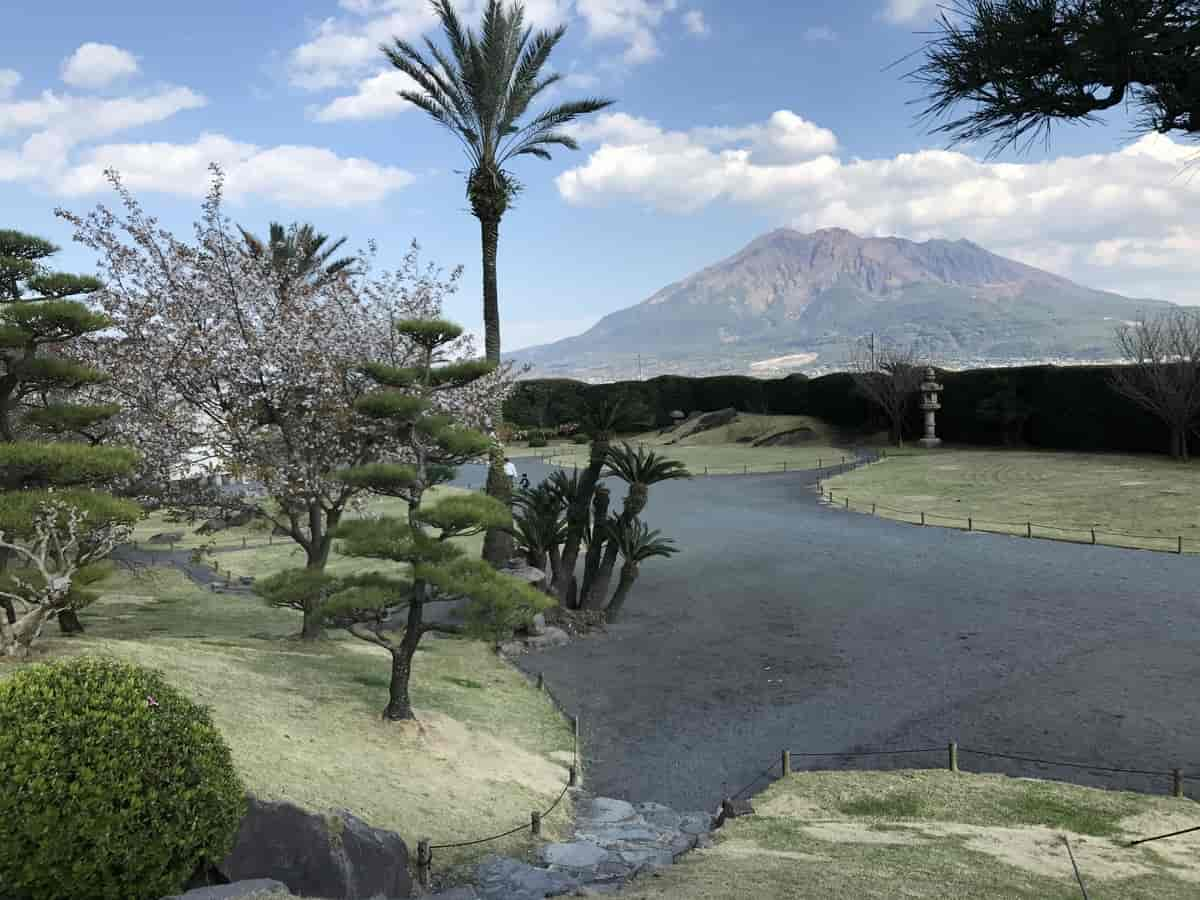
Kagoshima Prefecture defines the southern tip of Kyushu island as well as the northern part of the Nansei Shoto island group (which stretches from Kyushu to Taiwan). The prefecture's name before modern times was Satsuma. Satsuma played a crucial role in the Meiji Restoration at the beginning of the Meiji Period (1868-1912) when the Edo-Tokyo Tokugawa shoguns were finally overthrown. The men of Kyushu, who stood up to the Tokugawa shoguns (basically Darth Vader), are known as the most macho men in all of Japan by far. They are called Kyushu danjiri men! And Kyushu has produced an enormous number of heroes, business magnates and politicians.
Kagoshima Prefecture is subtropical and has a low population density. So, lots and lots of nature to forest bathe in or hike through. And this includes fantastic coastlines. And it's the southern terminus of Kyushu's super fast bullet train line.
Before we get into the post I would personally like to rave for a bit about Kagoshima City's incredible Ohkatei Restaurant overlooking the sea and the Sakurajima volcano. Exceptional interior design and the cuisine is almost as impressive as the view! Details: https://www.senganen.jp/food-shopping/ohkatei-restaurant/
The rest of this post covers:
- Kagoshima City: Japan private tour basecamp or not . . .
- Destinations of high value near Kagoshima City
Content by Ian Martin Ropke, owner of Your Japan Private Tours (est. 1990). I have been planning, designing, and making custom Japan private tours on all five Japanese islands since the early 1990s. I work closely with Japan private tour clients and have worked for all kinds of families, companies, and individuals since 1990. Clients find me mostly via organic search, and I advertise my custom Japan private tours & travel services on www.japan-guide.com, which has the best all-Japan English content & maps in Japan! If you are going to Japan and you understand the advantages of private travel, consider my services for your next trip. And thank you for reading my content. I, Ian Martin Ropke (unique on Google Search), am also a serious nonfiction and fiction writer, a startup founder (NexussPlus.com), and a spiritual wood sculptor. Learn more!
Kagoshima City: Japan private tour basecamp or not . . .
Kagoshima is Kyushu's southernmost major city and the capital of Kagoshima Prefecture. The city is often compared with its Italian sister city Naples due to a similarly mild climate, palm tree-lined streets, relatively hot tempered inhabitants and rumbling Mount Sakurajima, Kagoshima's Vesuvius.
The city has a rich history as the former seat of one of Japan's most powerful feudal clans, the Shimazu, who played a central role in the Meiji Restoration period (1868-1900). Besides offering several attractions on its own, the city can also serve as a base for a variety of attractive day trips, such as to the Kirishima Mountains and the Satsuma Peninsula, and as the stepping stone to island destinations further south, including Yakushima and Amami Oshima.
Top attractions in Kagoshima:
Sakurajima: Active volcano in the bay off Kagoshima:
Sakurajima is one of Japan's most active volcanoes and the symbol of Kagoshima. The volcano smokes constantly, and minor eruptions often take place multiple times per day. Located in the middle of Kagoshima Bay, Sakurajima is the area's most prominent geographic feature, having an elevation of 1117 meters and a circumference of about 50 kilometers.
Before a powerful eruption in 1914, Sakurajima used to be an island in the bay, but the massive lava flow from that eruption created the volcano's current land connection to the Osumi Peninsula in the east. For the majority of travelers, however, the volcano is still most easily accessed by the ferries that run the 3.5 kilometers between Kagoshima Port and the Sakurajima Ferry Terminal.
Sakurajima has three main peaks: Kita-dake ("north peak", 1117 meters), Naka-dake ("middle peak" 1060 meters) and Minami-dake ("southern peak", 1040 meters). The Minami-dake peak is currently the most active, with many eruptions taking place from the Showa Crater on the peak's eastern slope. It is prohibited to approach within two kilometers of the volcano's craters, but there are many observation points around Sakurajima where eruptions can be observed from about three kilometers away.
Travelers visiting Sakurajima can find many attractions just around the ferry terminal, including an onsen hot spring, foot baths, short hiking trails and an information center. Those who would like to further explore the volcano should travel by rental car, which can be taken across the water from Kagoshima by the ferries. Sightseeing buses, regular buses and rental bicycles are other possible methods of travel.
Senganen Garden: Japanese-style landscape garden:
Senganen Garden is a Japanese-style landscape garden along the coast north of downtown Kagoshima. One of the garden's most striking features is its use of Sakurajima and Kagoshima Bay as borrowed scenery. The garden also includes small ponds, streams, shrines and a bamboo grove.
Senganen was constructed in 1658 by the local Shimazu Clan, one of the most powerful feudal clans during the Edo Period (1603-1868). The Shimazu ruled the Satsuma domain (present day Kagoshima) for almost 700 years until the end of the feudal age in 1868. They continued to be influential into the modern era as some of the earliest adopters of Western technology.
At the center of the garden stands the Iso Residence. The residence was originally built in 1658 along with the rest of the garden, but the current building dates back mostly to a mid 1880s reconstruction. After the end of the feudal age, the Iso Residence became the main residence of the Shimazu family, and its rooms are preserved in the way they were used in the 1890s. Visitors can explore the interior of the residence.
Senganen has a variety of plants, which make the garden interesting in all four seasons. There are a number of cherry trees, especially of the early flowering Kanhizakura variety, which open as early as late January. Other cherry tree varieties provide flowers through mid April.
Towards the end of the Edo Period, the Shuseikan Industrial Complex was constructed on the Senganen grounds as part of early local efforts to produce iron for shipbuilding and casting cannons. A large part of the industrial complex is not standing anymore today, but some of its surviving structures, foundations and auxiliary sites have received World Heritage status in summer 2015 as part of the Sites of Japan's Meiji Industrial Revolution.
Among the World Heritage Sites are the foundations of a reverberatory furnace, located inside Senganen's paid area not far from the entrance gate. Furthermore, just outside the garden stands a long stone building that functioned as one of Japan's earliest Western-style machinery factories and now houses the Shoko Shuseikan Museum about the Shimazu Clan and their early efforts at industrialization.
Charcoal and hydropower were important sources of energy used to power the machinery at the industrial complex. For that reason, the ruined remains of a charcoal kiln and a sluice gate were also recognized as World Heritage Sites. Note that the remains of the kiln and sluice gate are located several kilometers away in the nearby hills above Senganen, and are difficult to reach by public transport. Access by rental car is recommended.
The final related site added to the World Heritage list is the Ijinkan, a residence for foreign engineers who helped design and build a textile mill in the area. The residence is located a short walk from Senganen and is open to the public. Entry to the Ijinkan requires a separate fee and is not included in the Senganen Garden's admission ticket.
Kagoshima Aquarium:
Kagoshima Aquarium is located along the waterfront, just beside the Sakurajima ferry terminal. The aquarium was opened in 1997 and has a total of seven floors. There is an emphasis on local marine life, including the chain of islands to the south that are also part of Kagoshima Prefecture.
The aquarium's most impressive attraction is its massive Kuroshio Tank, which holds fish of all sizes. There are schools of tiny fish, rays and even a giant whale shark. Other exhibition areas include sea otters, giant crabs, coral reefs, electric eels and mangroves. There is a Dolphin Pool that has three dolphins shows per day. Occasionally the dolphins are allowed to swim freely in the canals outside the aquarium where they also perform tricks.
Destinations of high value near Kagoshima City
Kirishima: National Park with volcanic mountain range: On the boundary between the prefectures of Miyazaki and Kagoshima is the active volcanic mountain range known as Kirishima. It offers excellent hiking through stunning natural environs and is composed of mountains, highlands, volcanic lakes, and hot springs. Some of the hiking routes are now closed because of Mount Shinmoedake's recent eruption. In Japanese Shinto mythology, the Kirishima mountains are significant. According to legend, the god Ninigi no Mikoto, the grandson of the sun goddess Amaterasu, was brought there to govern the planet and create the Japanese emperors' lineage. The spear that Ninigi no Mikoto used to fall to Earth is sunk in the peak at the summit of Mount Takachiho-no-mine. The two most well-known resort towns in the Kirishima region are Ebino Kogen and Kirishima Onsen. Situated in a highland region encircled by mountains and volcanic lakes, Ebino Kogen is a little village with a few motels on the Miyazaki side of the border. Kirishima Onsen, a highly developed hot spring town with great views of Kagoshima Prefecture and good baths, is located on the Kagoshima side.
The Satsuma Peninsula: Rural peninsula with hot springs in southern Kyushu: The southwest part of Kagoshima Prefecture is made up of the Satsuma Peninsula, which stretches roughly 50 kilometers south from Kagoshima City. Offering a variety of hot springs, subtropical natural features, and cultural monuments, the peninsula is named after the historic Satsuma feudal domain, which is roughly comparable to present-day Kagoshima Prefecture.
Top attractions in Satsuma Peninsula:
Ibusuki: Hot spring resort famous for sand bathing: The onsen town of Ibusuki is well-known for its sand baths, in which visitors are submerged in sand that has naturally heated up. The town's major downtown area is located along the shore that faces Kagoshima Bay, and it includes the southernmost point of the Satsuma Peninsula. The Saraku Sand Bath Hall, located roughly a kilometer from Ibusuki Station, is the most well-liked location for Ibusuki's sand baths, however they may be found at several hotels and other establishments. Staff members bury guests in hot sand heated by natural steam rising from below after providing them with yukata robes for the sand bath. Visitors rinse off the sand and have a normal hot spring bath after spending ten to twenty minutes submerged. There are plenty additional things to do in Ibusuki, even though the sand baths are by far the most well-known attraction. The Satsuma Denshokan Museum showcases local history and ceramics, and Healthy Land's outdoor baths offer yet another wonderful bathing experience. Cape Nagasakibana, located at the southernmost tip of Ibusuki City, boasts a pleasant vantage point with views of the surrounding Mount Kaimondake and the ocean.
Chiran Samurai District: A well preserved samurai district: Chiran is a tiny town in Kagoshima Prefecture, located in the center of the Satsuma Peninsula. A conserved samurai neighborhood with homes and gardens that are roughly 250 years old may be found within the town. Due to its remote location near Kyushu's southernmost tip, Chiran has managed to preserve a large portion of its traditional charm. The 700-meter-long lane that parallels the major highway in downtown Chiran is the conserved samurai neighborhood. With its rock walls, residential hedges, and distant forested hillsides, the street itself is quite lovely. Additionally, it is devoid of parked cars and telephone poles that would take away from the ancient ambiance, unlike some other samurai districts. Although the samurai homes themselves are closed to the public, seven of their gardens are. The gardens are intended to be visible from the dwellings and are somewhat tiny. The Karesansui Dry Garden type makes up five of the seven gardens. One of the other two is made up of groomed plants, and the other has a pond. Tourists can visit all seven gardens with a single admission ticket. Except for the one at the northern end of the area, tickets cannot be bought at the gardens themselves. Along the major street that parallels the samurai district, they can also be found at a few stores next to parking lots.
Cape Nagasakibana: The southernmost tip of the Satsuma Peninsula is Cape Nagasakibana. On the other side of Kagoshima Bay, the Osumi Peninsula stretches another 20 kilometers south, therefore it is not precisely Kyushu's southernmost point. At the point of the cape is a white lighthouse that may be reached by foot from a small group of souvenir shops. Views of neighboring Mount Kaimondake, which rises 924 meters above sea level, are a highlight of a trip to the cape. It is frequently called "Satsuma Fuji" because to its conical shape, which gives it a remarkable similarity to Mount Fuji. Hiking up the mountain is an option; the trail circles the slope and offers several stunning views of the surroundings. The Nagasakibana Parking Garden, which features a range of tropical flora and fauna, including hibiscuses, cacti, mango trees, lemurs, flamingos, squirrels, and monkeys, is another point of interest at the cape. There is an even greater diversity of flora at the Flower Park Kagoshima, which is a little further north.
Botanical gardens: The Flower Park Kagoshima is situated roughly one kilometer north of Cape Nagasakibana, close to the southernmost point of the Satsuma Peninsula. Approximately half a million plants of over 2400 different varieties can be found in this spacious, lovely park. There are species from tropical locations worldwide, such as Brazil, Australia, and South Africa, in addition to the usual native flowers. The park is roughly 500 meters long along the coast, and it takes almost three kilometers of walking pathways to traverse from one end to the other and back. With the exception of a break at noon, a free shuttle bus runs in a circle through the park every fifty minutes. You can also rent a cart and move about at your own speed for 500 yen per hour. There are many different types of flowers throughout the park, both indoors and out. Additionally, there are some striking viewpoint sites that provide tourists with a view of the coastline and the opportunity to experience the sensation of the ocean wind.
- Indexed full list of all my blog posts | articles.
- Indexed full list of all my Japanese culture essays.
Content by Japan travel specialist & designer Ian Martin Ropke, founder & owner of Your Japan Private Tours (YJPT, est. 1990). I have been planning, designing, and making custom Japan private tours on all five Japanese islands since the early 1990s. I work closely with all of YJPT's Japan private tour clients and have a great team behind me. I promote YJPT through this content and only advertise at www.japan-guide.com, which has the best all-Japan English content & maps! If you are going to Japan and you understand the advantages of private travel, consider my services for your next trip to save time & have a better time. Ian Martin Ropke (unique on Google Search) is also a serious nonfiction and fiction writer, a startup founder (NexussPlus.com), and a spiritual wood sculptor. Learn more!