Oita Prefecture & its ancient ceramic, castle town hinterlands
Oita Prefecture is on the eastern coast of Kyushu. The prefecture has long been identified with the extensive mostly high-rise hot spring bathing wonders of Beppu on the coast. I have always found Beppu to be overbuilt and a little ugly (too much concrete & asphalt). But that's just my opinion.
It is for this reason that I have always steered my Japan private tour clients away from Beppu because the true high-value attractions of Oita Prefecture are elsewhere.
This post takes the reader to the charming town of Yufuin (a favorite with my Japan private tour clients) and its hiking and bathing attractions. Then we go deep into the mountains west of the coast to Oita's ancient pottery villages, preserved Edo period merchant worlds, and nature (always nature!).
The rest of this post covers:
- Yufuin: Rural trending hot spring town near Beppu
- Oita Prefecture's remote pottery worlds: Onta, Hita and Ukiha
- The Kunisaki Peninsula: Nature-full peninsula north of Beppu
Content by Ian Martin Ropke, owner of Your Japan Private Tours (est. 1990). I have been planning, designing, and making custom Japan private tours on all five Japanese islands since the early 1990s. I work closely with Japan private tour clients and have worked for all kinds of families, companies, and individuals since 1990. Clients find me mostly via organic search, and I advertise my custom Japan private tours & travel services on www.japan-guide.com, which has the best all-Japan English content & maps in Japan! If you are going to Japan and you understand the advantages of private travel, consider my services for your next trip. And thank you for reading my content. I, Ian Martin Ropke (unique on Google Search), am also a serious nonfiction and fiction writer, a startup founder (NexussPlus.com), and a spiritual wood sculptor. Learn more!
Yufuin: Rural trending hot spring town near Beppu
About ten kilometers inland from Beppu, another, much larger, and more developed hot spring resort, is Yufuin, a well-known hot spring resort. Numerous tourists visit Yufuin only to spend the day exploring the city's many art museums, cafes, and stores.
Surrounded by mountains, Yufuin is situated in a level river basin. The twin-peaked Mount Yufu, which looms over the town and provides the backdrop for numerous picturesque views, is the most noticeable element of Yufuin's skyline. The region is rural, and visitors will soon encounter the rice paddies and farm cottages that comprise a significant portion of the town after departing from the main walking route.
Unlike many other resort towns, Yufuin's hotels and ryokan are dispersed throughout the town rather than lining the main thoroughfare. Yufuin has a vibe more akin to a hip shopping district than a typical onsen town because the main street is packed with cafes, boutiques, and tiny museums. However, there are several hotels with hot springs, and some of them let day visitors use their spas.
Lake Kinrinko is another of Yufuin's natural landmarks. The station is some 1.5km from the little lake, which is at the end of the town's major walking route. There are other little stores and cafes, walking pathways around the lake, and a modest shrine near the southern end of the lake. Additionally, there are a few public bath houses; only locals are permitted to use the others, while outsiders are welcome to utilize the Shitanyu.
A shortlist of Yufuin's bathing options, public and private:
Tsuka no Ma: Large steam clouds rising into the air from hot spring sources can be seen at Tsuka no Ma, which is situated on a hillside in Yufuin's northern region. The ryokan features enormous "rare" outdoor baths that are gender-segregated and have a blueish appearance. Some views of the town below are possible due to the location on the slope.
Musoen: Musoen's outdoor baths offer some of Yufuin's best views of Mount Yufu. Slightly above the town to the south, the ryokan features spacious, attractive, gender-segregated pools. Additionally, the ryokan grounds are really appealing.
Sansuikan: Sansuikan, which is only a short stroll from Yufuin Station, provides some of the most convenient baths for those without access to a private vehicle. There are several indoor and outdoor pools, a sauna, and a scented bath in the spacious ryokan's gender-segregated bathing areas.
Oita Prefecture's remote pottery worlds: Onta, Hita and Ukiha
The tiny village of Onta is almost invisible in the vastness of the Oita mountains, an area where the population density is close to zero. Only fourteen families live in Onta, and ten of these families are multi-generational professional potters. As an , Onta Pottery Village and the pottery-making process are protected in Japan as Important National Intangible Cultural Properties.
The techniques that were initially brought to the region in 1705 are still used to make Onta pottery today. The entire Onta ware production process uses no modern machines. The clay, dug up from the nearby highlands, processed with water mills called karausu. From dawn to dusk, the village is filled with the resounding thud, thump, thump of these wooden hammer water mills. The sound ranks as one of the Top 100 Soundscapes in Japan.
The seesaw motion of the karausu, which continuously grinds the clay into fine dust, is controlled by the flow of rushing water from the small river that winds through the village. Before being used, the clay is sun-dried. The entire Onta clay preparation procedure can take up to two months.
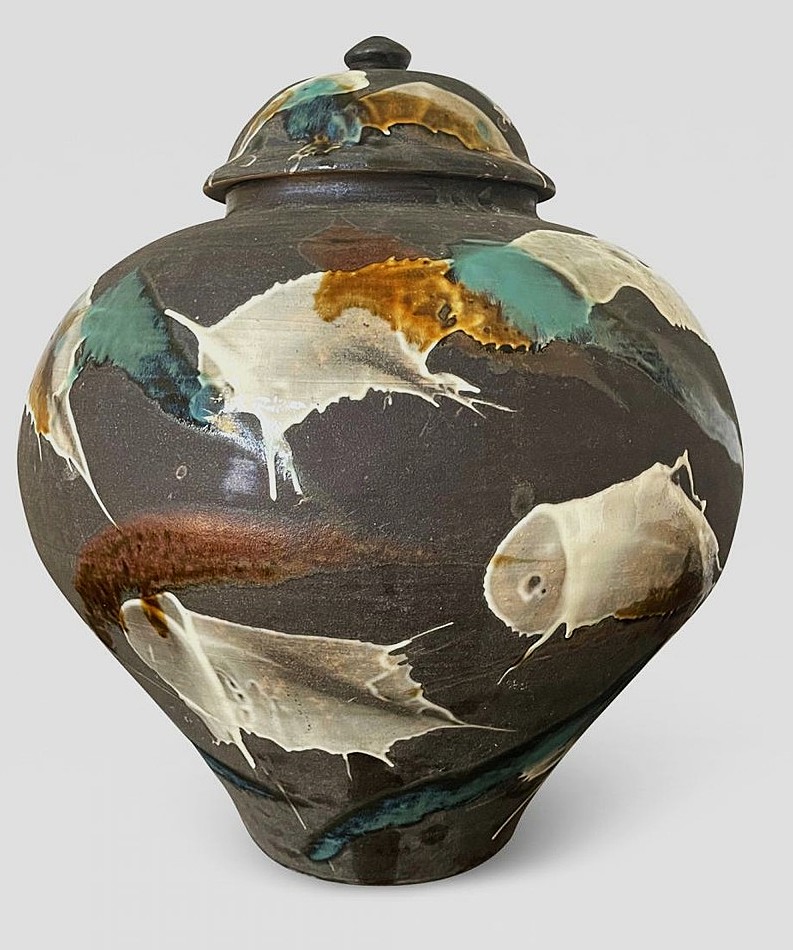
A kick wheel, a pottery wheel without a motor, is used to make the pottery. Firewood powers the kilns, and natural materials like ash, copper, iron, and straw are used to make the glazes. Onta ware's primary colors are black, cream, brown, and green (echoing the surroundings of the village, no doubt).
The clay and glazing are prepared with the help of women and other family members. And no signatures on the final product except the stamp saying Onta ware. Japan's influential Mingei folk art movement, created an "explosion" the popularity of Onta ceramics. The creator of the Mingei movement, art critic Soetsu Yanagi, brought the world-famous English potter Bernard Leach to the region and wrote on the beauty inherent in the commonplace items of Onta porcelain. In addition to sharing skills at two artistic residencies in Onta Pottery Village, Leach introduced the world to Onta-yaki, or Onta pottery.
It takes about 20 minutes in a taxi (or rental car) to reach the village from the closest main town, Hita. Hita is sometimes referred to as the Kyoto of Kyushu due to its historical areas and riverside establishments which resemble those of Kyoto. It was at one stage the political epicentre of Kyushu so the town, though very quiet, is well signposted with historical information. To reach Hita from Fukuoka, take a Shinkansen from Hakata Station to Kurume Station, then transfer to the JR Kyudai Line; a total of ninety minutes.
The old castle towns of Hita and Ukiha
The Edo period's thriving castle towns of Hita and Ukiha are home to exceptional medieval castle ruins, terraced rice fields, an old sake brewery, and one of the oldest soy sauce makers in Japan.
For many the Kunchou Sake Brewery Museum is a great spot to start the Hita experience. It is just one part of the town's remarkable Mameda-machi merchant culture district. Kunchou has been producing its own sake based on the Edo-era brewery knowledge acquired by the affluent local Chihara merchant family. Constructed in 1826, the brewery's second-floor attic serves as an open museum where you can view vintage sake-brewing tools including the wooden pulley used to move bulky objects and the wooden geta sandals used to remove the rice that was steam-cooked in wooden barrels.
Mameda-machi's white-walled warehouses and Edo-era merchant homes have been renovated to create new businesses that sell confections, handmade products, and accessories. The ceremonial Hina dolls that have been handed down through the centuries are on exhibit at the town's Tenryo Hita O-Hina Festival, which takes place from mid-February to late-March.
Hita's famous soba buckwheat noodles: Hita's Sofuren yakisoba joint, since 1957, Sofuren been making Hita yakisoba since 1957. Think crisp-grilled buckwheat noodles seasoned with pork, green onions, spring onions, and fresh bean sprouts in a delicious soy sauce. The dishes are sizzled to perfection on an iron plate before your hungry eyes.
Hita soy sauce: Some of the earliest soy sauce produced in Japan was most likely made at Hita's Maruhara Jirozaemon. This company has been making Ramune soda, Ayu fish sauce, miso sauce, and soy sauce since 1899. Maruhara offers visitors with private gourmet fish sauce and soy sauce tasting experiences.
Ukiya merchant castle town:
Ukiya, a short distance west of Hita, is notable for its Edo-period Yoshii merchant district. Ukiha was a post town (Tokugawa or Darth Vader check points) on the road that connected Hita and Kurume. The district's Shirakabe Street is home to 250 "white-walled" homes with black-tiled roofs. The town is also famous for its handcrafted Hina dolls and decorations.
River bathing in Ukiha: Ukiha's Chikugogawa Onsen Kiyonoya hotel overlooks Kyushu's longest river. The hotel offers a private hot spring bath on the top floor. And they specialize is creative seasonal kaiseki dinners. Some rooms have a swimming pool surrounded by large windows overlooking the river.
Ukiha Inari Shrine & its 91 Shinto torii gates: Ukiha Inari Shrine's 91 crimson torii gates create a tunnel on the steep stairs that ascend the mountainside. The expansive view of the city and the mountains in the distance are spectacular. There are also hiking paths leading further up the mountainside.
Akizuki Castle Ruins & forested views: The medieval Akizuki Castle Ruins, located up in the hills above Asakura on the other side of the Chikugo River, are worth the effort. When the feudal ruler Harada Tanekatsu renamed his clan as the Akizuki clan in 1203, the first fortress was constructed. Some of its stone walls and portions of the gatehouses, including the imposing front Kuromon Black Gate have been restored and are still visible today. The area is pink with cherry blossoms in spring and painted red with maple leaves in fall.
The Koishiwarayaki Ceramics Museum: The Koishiwarayaki Ceramics Museum's vast collection provides a thorough overview of the evolution of Koishiwara pottery. The first potters were mainly farmers by profession, and they created common daily-use things with basic techniques and organic materials. Koishiwara ware is known for its tobikanna chatter effect (made with a chisel) and yubikaki finger stroke patterns. The museum also offers a Koishiwara pottery experience.
Ontayaki pottery village's climbing kilns: Ontayaki Pottery Village, Koishiwarayaki's sister pottery village, was founded in 1705. The village lies in the foothills of Mount Takatsuka. The village has a number of "rare" traditional climbing kilns, built over the local river. Today, you can hear the distinctive sound of a hydro-powered karausu, a mortar and pestle constructed from a hollowed-out pine tree, pounding raw clay alongside the river. The village is a lovely place to stroll and relax, almost in the middle of nowhere.
Spend a night in a ancient rice terrace landscape: One of Japan’s most famous terraced rice paddies lie above Iwata. These terraces have been in use for over 400 years! The newly renovated Old Folk House Villa Antage, a 132-year-old traditional kominka house, was built into this terraced world. The villa's interior has been expanded with the addition of a large atrium space using the structure's original massive wooden beams. If you spend the night, a private chef will prepare amazing seasonal meals for your added pleasure.
The Kunisaki Peninsula: Nature-full peninsula north of Beppu
The Kunisaki Peninsula faces the Seto Inland Sea and is located in the northern part of Oita Prefecture. From Mount Futago at its core, it features several valleys that radiate outward. The peninsula, which is primarily covered in forests and thinly populated farmlands, is peppered with temples of different sizes, ranging from the monumental Futagoji Temple and the well-known Fukiji Temple to smaller, more modest, and more rustic ones.
A distinctive local Buddhist culture known as "Rokugo Manzan" exists on the peninsula. It combines aspects of Buddhism, Shinto, and mountain worship, and it centers on the Usa Shrine, the principal shrine among Japan's thousands of Hachiman Shrines. One of the most distinctive aspects of Rokugo Manzan culture is the prevalence of stone statues.
The city of Kitsuki, located south of the peninsula, is home to beautiful, well-preserved samurai quarters. The peninsula is also home to Oita Airport.
- Indexed full list of all my blog posts | articles.
- Indexed full list of all my Japanese culture essays.
Content by Japan travel specialist & designer Ian Martin Ropke, founder & owner of Your Japan Private Tours (YJPT, est. 1990). I have been planning, designing, and making custom Japan private tours on all five Japanese islands since the early 1990s. I work closely with all of YJPT's Japan private tour clients and have a great team behind me. I promote YJPT through this content and only advertise at www.japan-guide.com, which has the best all-Japan English content & maps! If you are going to Japan and you understand the advantages of private travel, consider my services for your next trip to save time & have a better time. Ian Martin Ropke (unique on Google Search) is also a serious nonfiction and fiction writer, a startup founder (NexussPlus.com), and a spiritual wood sculptor. Learn more!