The attractions of Shikoku's Ehime Prefecture, Part 1: Matsuyama City
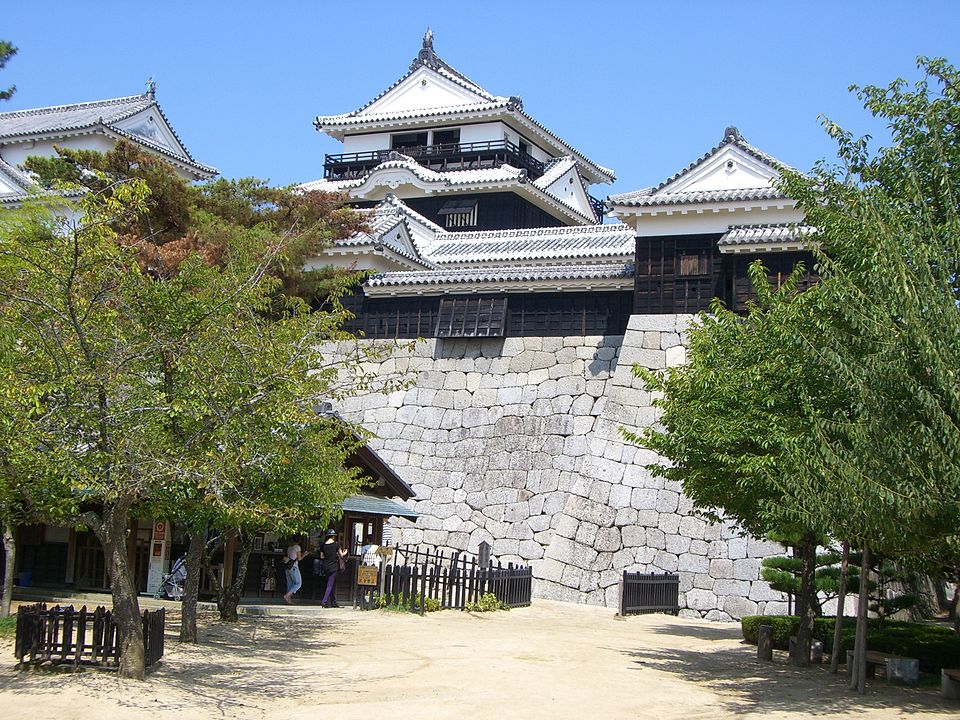
Shikoku island's northwest quarter is called Ehime prefecture. Matsuyama, the capital of Ehime Prefecture, is well-known throughout Japan for its castle and Dogo Onsen, which is one of the country's oldest.
Ehime Prefecture is known for its mild climate, making it a great place for agriculture, particularly citrus fruits, earning it the nickname Japan's "Citrus Kingdom."
The prefecture has a rich history, culture and breathtaking natural scenery. And access to the sea is easy in Ehime! Kyushu island is connected to Ehime prefecture by car ferry. And you can island hop by bicycle to Honshu Island across an amazing bridge. Ehime is a prefecture where old & natural abound.
My sister and her husband lived in Matsuyama in the late 1990s and I visited them from my Kyoto base on 3 occasions (once with my mother, a noted Ontario, Canada ceramic artist). I found the prefecture to be "freeing" because it "seemed" so far from the big cities of the mainland. In Ehime and in Matsuyama the traveler feels as if they are in a separate country, far from the madding crowds of Tokyo and Kyoto (overtourism!). The people of Matsuyama and Ehime in general are known for being super friendly, with a love of Mediterranean relaxation.
Since 1990, I have worked with a number of Japan private tour clients whose focus was Shikoku (usually combined with Kyushu). Renting a car, which is not expensive in Japan, is a good idea for Shikoku (and Kyushu) travel, but the train system is also perfect for touring if you don't want to drive.
For Shikoku rental car travelers (and on other Japanese islands in remote areas), I provide highly detailed step by step driving instructions to my clients. If you don't want to drive but wish to be driven then remember a sedan + driven in Japan rents for Yen 8,000/hour! I hire the vehicle and driver and provide driving and tour instructions that both the driver and client follow. Learn more!
The rest of this post covers:
Content by Ian Martin Ropke, owner of Your Japan Private Tours (est. 1990). I have been planning, designing, and making custom Japan private tours on all five Japanese islands since the early 1990s. I work closely with Japan private tour clients and have worked for all kinds of families, companies, and individuals since 1990. Clients find me mostly via organic search, and I advertise my custom Japan private tours & travel services on www.japan-guide.com, which has the best all-Japan English content & maps in Japan! If you are going to Japan and you understand the advantages of private travel, consider my services for your next trip. And thank you for reading my content. I, Ian Martin Ropke (unique on Google Search), am also a serious nonfiction and fiction writer, a startup founder (NexussPlus.com), and a spiritual wood sculptor. Learn more!
Matsuyama City: Killer castle & oldest hot spring spa!
The capital of Ehime Prefecture and the biggest city in Shikoku is Matsuyama. The stunning, historic castle of Matsuyama is located in the center of the city. Views of the city and the Seto Inland Sea may be seen from the castle's hilltop location.
The city is also well-known for serving as the backdrop for the much loved 1906 "Botchan" novel by Natsume Soseki. The novel, which takes place during the transformative 1868 Meiji Restoration, is on the reading list for most Japanese school children. Natsume's book contributed to the Matsuyama's widespread recognition in Japan.
"Botchan" makes frequent reference to Dogo Onsen, one of the primary tourist destinations in Matsuyama. Dogo Onsen, one of Japan's oldest hot spring resorts, is situated on the city's northeastern outskirts.
I spent quite a few days wandering around Matsuyama when my sister and her husband lived there in the late 1990s and found it to be beyond charming. They have trams! The people are super friendly and seemingly less stressed than the mainland city dwellers. It was perfect for walking and biking (lots of rental options!). And the city's cuisine landscape has everything you could imagine: from seafood and ramen to chicken cuisine and specialty meats.
Top attractions in Matsuyama
Matsuyama Castle: Matsuyama has the distinction of being one of Japan's twelve "original castles", i.e. castles which have survived the post-feudal era since 1868 intact. It is also among the nation's most intricate and fascinating castles. It is located on Mount Katsuyama, a steep hill in the city center that provides visitors with a bird's eye view of Matsuyama and the Seto Inland Sea. There are about 200 cherry trees on the castle grounds, making this a lovely cherry blossom spot typically around late March to early April each year. The construction of Matsuyama Castle took place between 1602 and 1628. In 1635, the castle got assigned to a branch of the Matsudaira family, relatives of the Tokugawa shoguns (Edo-Tokyo), and it remained in their hands until the end of the feudal era.
The current three story castle tower was constructed in 1820 after the original five story castle was struct by lightning and burned down. The castle is a superb example of a feudal castle. The main circle of defense (Honmaru) is located on the top of the hill, accessible through multiple, well defended gates. There are very few main keeps in the nation with more than one wing. The complex also includes a secondary keep and multiple turrets, giving Matsuyama Castle a grand appearance.
Inside the castle, some exhibits offer information on Matsuyama's history and the feudal period. In spite of the castle's steep hilltop location, a ropeway and a chairlift make it easily accessible. Riding the single-chair chairlift is a pleasant and popular way to ascend Mount Katsuyama. Alternatively, it is possible to climb up the hill in about 15 minutes from the base of the ropeway station or from the Ninomaru Garden.
Ishiteji Temple: Temple #51 on the Shikoku pilgrimage: The most well-known temple in Matsuyama is Ishiteji, which is situated northeast of the city center adjacent to Dogo Onsen (see below). Out of the 88 temples on the Shikoku Pilgrimage, Ishiteji is number 51. [I had an American friend in the early 1980s, who visited all 88 temples wearing rice straw sandals. It was my idea that he spend the summer of 1987 doing the pilgrimage. He gave me the sandals when he finished the circuit, and I kept them for many years.]
"Stone hand temple" is the translation of the name Ishiteji. This alludes to a local tale in which an aristocrat, after unsuccessfully searching for the Buddhist saint Kobo Daishi, dies clutching a stone and is reborn as an infant with the same stone in his hand. Ishiteji's grounds are reached via a well-kept, covered approach lined with the wooden facades of shops (where pilgrims stop). The precinct is home to numerous temple halls, a three-story pagoda, statues, and a distinctive inner temple that is connected to the main grounds through a cave. Ishiteji is home to a rare three-door Niomon Gate, which has made the temple especially popular (many of the pilgrimage temples are in remote locations!). The pagoda and main hall, which are both recognized as important cultural properties, all include Kamakura Period (1185-1333) architectural characteristics. Some of the temple's most significant artifacts are on exhibit in a museum facility.
Dogo Onsen: A huge & legendary hot spring spot: Dogo Onsen is just east of central Matsuyama. It is one of the oldest and most famous hot springs in Japan. The Imperial Family visited the Dogo Onsen on numerous occassions (they are a very picky family and thus Matsuyama's fame only increased because of this patronage).
The Dogo Onsen Honkan, an 1894 wooden structure, is the overwhelmingly favored bathhouse at Matsuyama's Dogo Onsen. The Honkan's interior is a tangle of hallways, rooms, and stairways that are crowded with employees and bathers. Hayato Miyazaki's much beloved animated feature "Spirited Away" was very much influenced by the Dogo Onsen Honkan's complexities.
The Honkan has two traditional stone public baths, male and female (and probably NO tattoos!). Kami no Yu (Bath of the Gods) is the name of the main bath; Tama no Yu (spa of the Spirits) is a smaller but more prestigious spa. Bathers can relax and eat in the spacious common tatami rooms on the second floor and the smaller private rooms on the third floor. Visitors can access the Honkan's facilities at different levels using a range of entry options. What are you waiting for!
For the 1899 visit of the Imperial Family, a dedicated area of the Honkan known as the Yushinden was constructed. Check out the emperor's private bath and toilet in an opulently furnished chamber with a vaulted ceiling. The Yushinden hasn't been used by an emperor since 1952 but that emperors once bathed here has never been forgotten!
Asuka no Yu: The newest public bath at Dogo Onsen: Asuka no Yu, with its first-floor baths and second-floor leisure areas covered in tatami, opened to great fanfare in 2017. And it's only 150 meters west of the Dogo Onsen Honkan. Japan's Asuka Period (538–710) served as the inspiration for the exterior design of Asuka no Yu. The place may be new but the attractions are timeless. They have amazing outdoor tubs made from precious hinoki wood panels, and stone baths. The huge tatami-covered social space on the second level, where tea and sweets are served, can be accessed for a small extra charge. There are also a couple private rooms and a private bathroom on the second floor.
- Indexed full list of all my blog posts | articles.
- Indexed full list of all my Japanese culture essays.
Content by Japan travel specialist & designer Ian Martin Ropke, founder & owner of Your Japan Private Tours (YJPT, est. 1990). I have been planning, designing, and making custom Japan private tours on all five Japanese islands since the early 1990s. I work closely with all of YJPT's Japan private tour clients and have a great team behind me. I promote YJPT through this content and only advertise at www.japan-guide.com, which has the best all-Japan English content & maps! If you are going to Japan and you understand the advantages of private travel, consider my services for your next trip to save time & have a better time. Ian Martin Ropke (unique on Google Search) is also a serious nonfiction and fiction writer, a startup founder (NexussPlus.com), and a spiritual wood sculptor. Learn more!