Ehime Prefecture Part 2: Old towns, parks, and porcelain
This post covers most of Ehime Prefecture's top attractions on Shikoku Island. It should be mentioned that Shikoku is probably the greenest island in Japan. A lot is forested, and the rivers are famous.
One of the father's of permaculture is from Ehime. Masanobu Fukuoka is world-famous for his "natural farming" or "do-nothing farming" method. He developed this approach, which emphasizes minimal intervention and working with nature, on his farm in Ehime.
The rest of this post covers:
- Attractions near Matsuyama: Nature & history
- Ehime's Shimanami Kaido: cycling across the Seto Inland Sea
- Ehime's 240-year-old Tobe ware traditions
Content by Ian Martin Ropke, owner of Your Japan Private Tours (est. 1990). I have been planning, designing, and making custom Japan private tours on all five Japanese islands since the early 1990s. I work closely with Japan private tour clients and have worked for all kinds of families, companies, and individuals since 1990. Clients find me mostly via organic search, and I advertise my custom Japan private tours & travel services on www.japan-guide.com, which has the best all-Japan English content & maps in Japan! If you are going to Japan and you understand the advantages of private travel, consider my services for your next trip. And thank you for reading my content. I, Ian Martin Ropke (unique on Google Search), am also a serious nonfiction and fiction writer, a startup founder (NexussPlus.com), and a spiritual wood sculptor. Learn more!
Attractions near Matsuyama: Nature & history
Uchiko: Countryside town formerly known for its wax: The charming town of Uchiko lies roughly 40 kilometers southwest of Matsuyama. Once a thriving hub for the manufacturing of paper and wax, Uchiko is now a relic of old, rural Japan. The majority of the town's attractions are located along Yokaichi Old Town, a restored street of homes in Uchiko. This historic quarter seems just as it did when Uchiko's wax trade brought wealth and prosperity more than a century ago. Just outside the historic area, lies the Uchiko-za, a full-scale kabuki theater with trap doors, secret entrances, and a spinning stage.
Ozu: Small city with nice castle, old town and villa: Ozu City is situated on the west side of Ehime Prefecture. The city first appeared as a castle town during the Edo period (1603–1867). The local symbol, newly restored Ozu Castle, looks over the heart of the city. The center of Ozu City is traversed by the charming Hijikawa River. Along with the Mikumagawa River in Oita Prefecture and the Nagaragawa River in Gifu Prefecture, this is said to be one of the top three places in Japan to witness cormorant fishing (ukai) during the summer.
Uwajima: Secluded port town with original castle: Located in southern Ehime Prefecture, Uwajima is a seaside city that faces the Bungo Channel, which divides Kyushu from Shikoku. The Date Museum commemorates the history of Uwajima and the Date clan, who dominated the area surrounding Uwajima for about 250 years, while the little city is home to one of only 12 ancient feudal castles still standing today. As a seaside city, Uwajima supports a few maritime-related industries, including pearl cultivation and fishing. It is among Japan's leading producers of pearls. Taimeshi (sea bream on rice) and Jakoten (fish cake) are two of the region's most well-known foods. There is beautiful coastal scenery along the city's waterfront. Another well-known aspect of Uwajima are its bullfighting traditions.
Ehime's Imabari towel making monopoly: The leading manufacturer of towels in Japan is Ehime Prefecture. With about 200 manufacturers producing cotton towels, Imabari, a city in Ehime, Japan, has been known for producing towels for over 120 years. The Towel Museum, a multifaceted establishment offering insight into the craft of towel making, is one of its attractions. This establishment was established in 1974 with the goal of showcasing towels as works of art rather than just any ordinary object. Beautifully designed towels can be found in the main exhibition area of the Towel Museum. In addition to being a museum, the Towel Museum combines art and history to provide an entire experience focused on towel culture. Visitors can observe vibrant yarn displays and follow the towel-making process. Additionally, they can visit exhibitions that showcase well-known figures like the Moomins. In addition, the charming European-style garden offers a tranquil setting for leisurely walks or lunches in the cafes and restaurant on site.
Other great ideas for exploring Ehime Prefecture
Yusumizugaura Terrace Fields: Near the Uwa Sea, the Yusumizugaura Terraced Fields offer a striking example of agricultural ingenuity. These fields are supported by sturdy stone walls that rise at a sharp 45-degree angle. As a "National Important Cultural Landscape" and one of Japan's top 100 farm village landscapes, the Yusumizugaura terraces embody the peaceful fusion of fishing and farming customs. Mt Ishizuchi: Explore the highlands of magnificent Mt. Ishizuchi, one of Japan's revered mountains. And don’t forget to visit Ishizuchi Shrine, surrounded by verdant woodlands, first thing in the morning. Take in the fresh mountain air as you stroll around the shrine's picturesque trails and appreciate the serene beauty all around you. Then take the Ishizuchi Tozan Ropeway, a cable car that will take you to the summit. Mt. Ishizuchi offers an amazing experience to all hikers, regardless of skill level. Omogo Gorge: This breathtaking national landmark, renowned for its glistening blue rivers and vibrant fall foliage, is located at the base of Mount Ishizuchi. The serene gorge has an extensive network of excellent hiking routes. Shikoku Karst Natural Park: This large park is well-known for its big skies, wide meadows, and picturesque roadways. The park is ideal for leisurely bike rides or strenuous treks. Camping in the park is a very popular activity during the warmer months. Nametoko Gorge: adventure awaits: The thrilling journey down Nametoko Gorge, which is located at the base of the magnificent Mount Onigajo is surrounded by lush forests. For both experienced thrill-seekers and those who are fresh to the realm of adventure, Nametoko Gorge is a memorable and thrilling place to visit. Get ready for an exciting day full of adventure including world-class canyoning opportunities.
Ehime's Shimanami Kaido: cycling across the Seto Inland Sea
The Shimanami Kaido is a 60-kilometer road that crosses six tiny islands in the Seto Inland Sea on its way from the island of Shikoku to Honshu. The Shimanami Kaido is accessible by foot or bicycle.
The route begins at Imabari City, Ehime Prefecture, north of Matsuyama City. It ends in Onomichi City on Honshu Island, not far from Hiroshima City. Since the route's 1999 opening, travelers have taken in the stunning landscape of the islands' little settlements and the Seto Inland Sea during the crossing.
A popular way to do the Shimanami Kaido is by bicycle. On the islands, the bike path deviates from the highway and is clearly marked and maintained. With bikers in mind, the ramps leading up to the bridges were constructed at gentle slopes. Although the bike path is slightly longer than the toll road—roughly 70 kilometers—intermediate cyclists can easily finish it in one day.
Ehime's 240-year-old Tobe ware traditions
Did you know Japanese pottery can be categorized as either earthenware or porcelain? Earthenware is made of potter’s clay, while porcelain is made of pottery stone. Tobe yaki or Tobe ware is a well-known porcelain production area. My mother is a ceramic artist, and she loved the day she spent in Tobe (and the porcelain things she purchased there!).
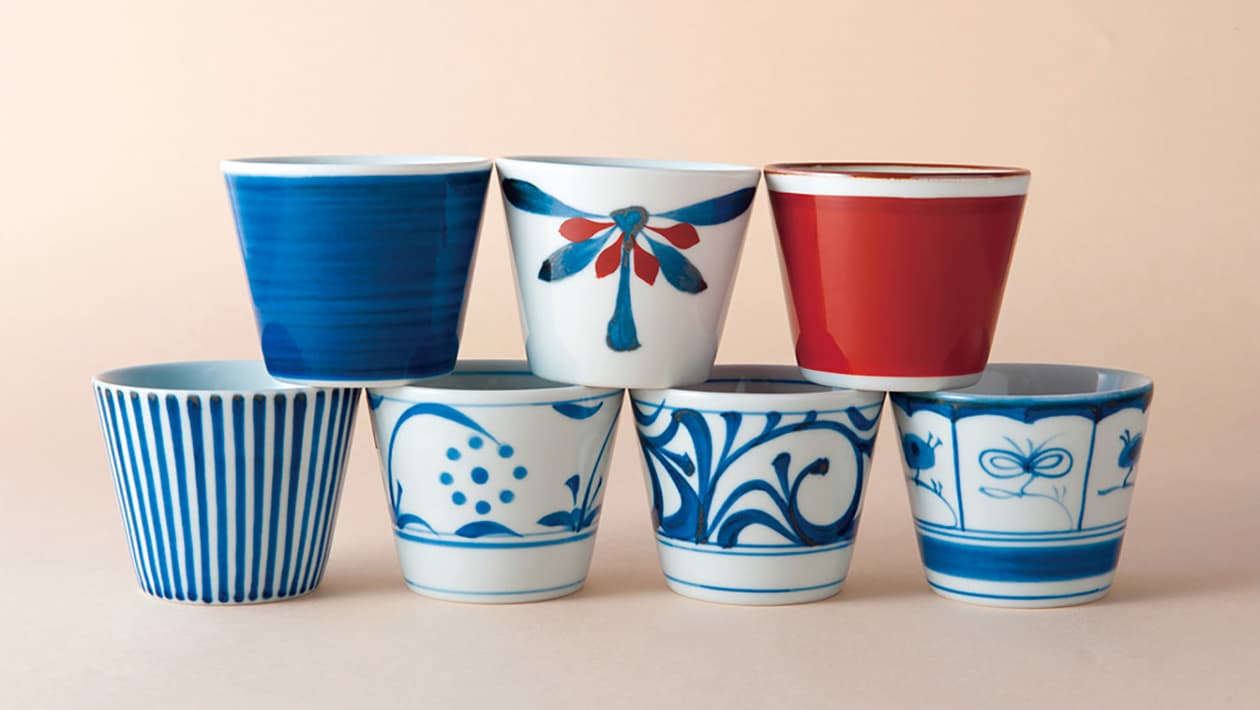
Tobe ware classed as sometsuke blue and white porcelain and identified with Tobe Town, Ehime Prefecture (a short distance south of Matsuyama City).
Tobe ware was "created" by Kato Yasutoki, 9th daimyo (samurai lord) of the Ozu Domain from 1769 to 1787. He hired potters from Hizen to start his own porcelain ware. White porcelain (hakuji) produced started in 1777 in the town of Tobe.
In 1976 Tobe ware was officially designated by the Japanese government as a traditional craft. Today, there are roughly 80 active pottery studios in Tobe. Everything is handmade and hand-painted.
Prominent Tobe ware studios:
Mr Takenishi's Joshua Koubou: Joshua Koubou studio was founded in 1966 under the name Keisen-gama. In 2001, Takenishi changed its name and took charge of its operations. He has worked as a potter for almost 40 years. The majority of Joshua Koubou's goods are wheel thrown. His studio is famous for its Joshua Blue products. The studio's kilns appear blue inside when you open the doors. Joshua Blue by Takenishi has a rich and alluring hue. Although tobe ware is mostly tableware and vases, Joshua Koubou also creates porcelain interior goods and garden accessories.
Masami Kato's Studio Mi: Masami, who was born in 1982 in Matsuyama, studied fine art at the St. Cloud State University in the United States. He enrolled in a diploma program at the Tobe ceramics school after returning to Japan in 2007. He began working as a potter in one of Tobe's principal workshops after graduating. He has been working as a self-employed ceramic artist since 2016.
Chie Okada's Atelier Chie: Chie Okada was born in Tobe. Before she started her apprenticeship at Tobe's Endo Studio she’d worked at a kimono store in Kyoto where she learned a lot about traditional patterns. Her use of color is completely unique among other potters in Tobe. In her words, “I don’t have a set cut pattern, I usually go with the flow. So, all of my works are individually unique.”
Eisuke Kajiwara's Toubou: Born in 1985, Eisuke is the youngest Tobe Collective member. He is one of the few Tobe potters who makes Tobe ware lampshades and plant pots in Tobe.
- Indexed full list of all my blog posts | articles.
- Indexed full list of all my Japanese culture essays.
Content by Japan travel specialist & designer Ian Martin Ropke, founder & owner of Your Japan Private Tours (YJPT, est. 1990). I have been planning, designing, and making custom Japan private tours on all five Japanese islands since the early 1990s. I work closely with all of YJPT's Japan private tour clients and have a great team behind me. I promote YJPT through this content and only advertise at www.japan-guide.com, which has the best all-Japan English content & maps! If you are going to Japan and you understand the advantages of private travel, consider my services for your next trip to save time & have a better time. Ian Martin Ropke (unique on Google Search) is also a serious nonfiction and fiction writer, a startup founder (NexussPlus.com), and a spiritual wood sculptor. Learn more!