The off-the-beaten-track wonders of Kochi Prefecture on Shikoku Island
Kochi Prefecture on the southern coast of Shikoku Island is one of Japan's best kept secrets. The capital of the prefecture, Kochi City (population 300,000 and a bit), is small and friendly, characterized by a relaxed vibe and a dose of southern flair.
Kochi City boasts several attractions of interest to travelers including an outstanding castle, a mountain pilgrimage temple (#31 on the 88-temple Shikoku Pilgrimage route), great food, and proximity to the sea.
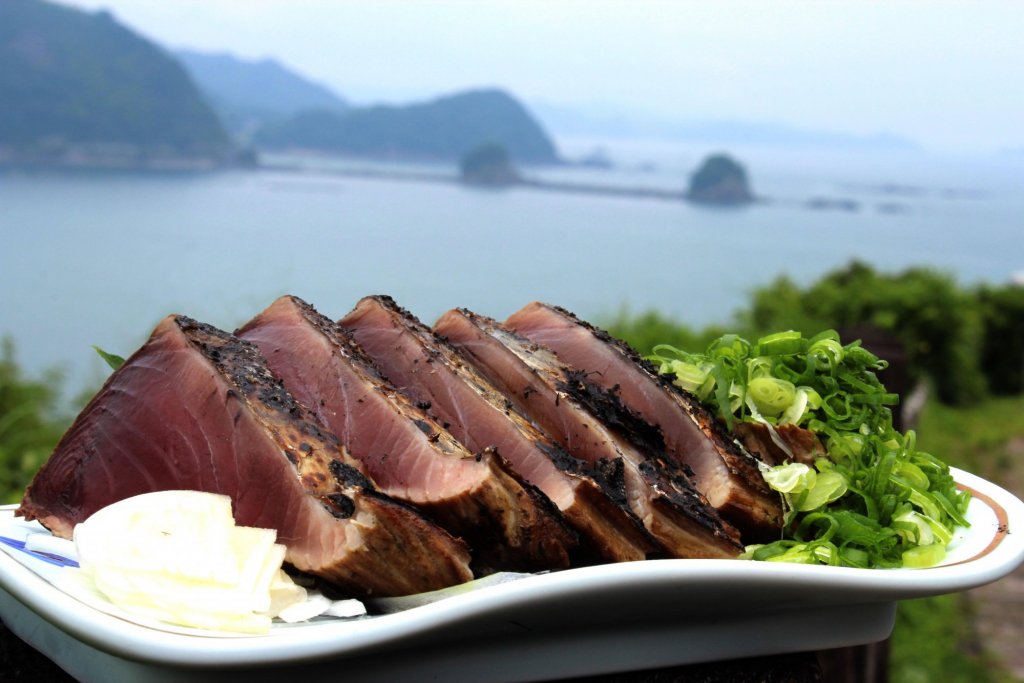
Kochi is also famous throughout Japan for its katsuo no tataki, which is sliced bonito (sometimes called skipjack tuna) that has been delicately grilled. It is seasoned with salt or soy sauce with vinegar and citrus and served with spring onions, ginger, and garlic. It is customary to broil katsuo no tataki over a straw fire until only the outer layer is somewhat toasted.
Additionally, Kochi's local bonito catch is used to manufacture katsuobushi, which are dried fish flakes used as a flavoring or as stock for soups in many Japanese recipes. The katsuobushi from Kochi is well known for its flavor and quality. There are souvenir stores all across Kochi that sell a variety of katsuobushi-related items.
The rest of this post covers:
Content by Ian Martin Ropke Japan travel expert since 1990. I have been planning, designing, and making custom Japan private tours on all five Japanese islands since the early 1990s. I work closely with Japan private tour clients and have worked for all kinds of families, companies, and individuals since 1990. Clients find me mostly via organic search, and I advertise my custom Japan private tours & travel services on www.japan-guide.com, which has the best all-Japan English content & maps in Japan! If you are going to Japan and you understand the advantages of private travel, consider my Japan travel services for your next trip. And thank you for reading my content. Learn more!
Kochi Prefecture's capital: Kochi City
Kochi Castle: One of Japan's few surviving original castles:
Only twelve Japanese castles have withstood the post-feudal era's fires, wars, and other calamities, including Kochi Castle. Although it was initially built between 1601 and 1611, the majority of its principal structures were rebuilt following a fire in 1748.
During the Edo period (1603-1868), the Yamauchi lords, who dominated the surrounding area, then known as Tosa, resided at this great feudal castle. Since then, the castle buildings have been recognized as "important cultural properties," which are home to countless historical artifacts and local treasures.
The main tower (donjon) of Kochi Castle is distinctive in that it served as home for the daimyo lord's family and as a in addition military installation. The lords in the majority of other castles typically occupied separate palace buildings. The vantage point from the top level of the Kochi Castle tower provides a pleasant view of downtown, while the interior of the castle is still made of wood, preserving the appearance of its Edo Period beginnings.
Kochi Castle looks more intimidating than it actually is because of its towering reinforced stone walls and placement on Otakasa Hill. A false gate was built so that assailants could be hit by rocks, arrows, and boiling water before they understood the entrance they were attempting to force open went nowhere. In actuality, however, the castle was never attacked, which is why it is in such perfect shape now.
Hirome Market for local foods & local color:
Kochi City's Hirome Market, a popular dining location for both locals and visitors, is easy to find in Kochi City. However, the peculiarity of Hirome Market is its Kochi nature. You sit at long picnic tables with strangers, who might not be strangers after your third beer.
A wide range of reasonably priced foods that are easy to eat and share are available for purchase from the Hirome Market vendors. Among them are yakitori (grilled chicken skewers), makizushi (sushi rolls), gyoza dumplings, and fried karaage chicken. However, the well-known dish that appears on every table is katsuo no tataki, which is bonito tuna that has been seared over flames fed straw. It has a smokey flavor that is enhanced with wasabi, finely sliced garlic, and a squeeze of sudachi citrus juice. While you can find katsuo no tataki all around Japan, the best place to see and eat it is in Kochi.
Mount Godaisan: Chirininji Temple & Makino Botanical Garden:
East of Kochi's city is a little mountain called Godaisan. Chikurinji Temple on Godaisan is a significant destination on the Shikoku 88-temple Pilgrimage. Chikurinji, which is temple number 31 along the pilgrimage route, draws both pilgrims and students due to its standing as a scholarly establishment.
A stunning five-story pagoda is one of the many intriguing halls and buildings on Chikurinji's temple grounds. A glimpse of the interior of the structure and a well-kept garden can be seen from the paid entrance to the hondo (main hall), while a treasure hall showcases a number of Buddhist statues and scrolls that are significant to the temple. Sutra copying and meditation sessions (which require prior email reservations) are the two experiences the temple provides to its guests.
The Makino Botanical Garden's entrance is located close to Chikurinji. Numerous walking trails, outdoor playgrounds, a greenhouse, and multiple sizable museum buildings featuring top-notch exhibits are all part of the garden's expansive landscape.
Katsurahama beach for all kinds of fun & chilling out:
The picturesque beach of Katsurahama is 30 minutes by bus south of Kochi's downtown. At Katsurahama, swimming is forbidden due to the strong currents. Instead of swimming, tourists take in the area's numerous other attractions such as relaxing on the shore, strolling and snacking on local delicacies and street foods.
Near the shore is a well-known statue of Sakamoto Ryoma, Kochi's beloved son. To help end Japan's feudal era in 1868, Sakamoto, a member of the Tosa clan, played a key role in arranging an alliance between the Choshu and Satsuma clans. Together, these three clans became the Imperial alliance that overthrew the Edo-Tokyo shoguns.
It takes around 35 minutes to travel from JR Kochi Station to Katsurahama on the Kochiken Kotsu bus, one way. The My Yu Bus, a tourist bus that travels from Kochi Station via Mount Godaisan to Katsurahama, is another way to get to Katsurahama Beach. It takes roughly an hour to travel from Kochi Station to Katsurahama in one direction.
A short selection of other Kochi Prefecture attractions
Yuzu: Japan's rare citrus taste:
Kochi Prefecture's claim to citrus renown is the yuzu, much as neighboring Ehime Prefecture's is known for its mikan mandarines. The major producer of yuzu in Japan is Kochi Prefecture. Yuzu is a rather acidic citrus fruit that is utilized in every kind of cookery you can imagine. In some regions of Kochi, yuzu is also used with sushi and is a great way to add a touch of citrus to a dessert or lunch. Inaka-sushi uses yuzu instead of vinegar, which is often used for sushi rice. You can visit a yuzu production site at nearby Umaji, a village famous for producing citrus and yuzu.
In Umaji village, home to less than a thousand people, you can sample yuzu-infused cuisine, such as the well-known beverage Gokkun Umajimura, which is a concoction of yuzu, honey, and water. Slightly south of Umaji, nearby Kitagawa Village is also famous for its yuzu orchards.
Yusuhara Town & the architectural legacy of Kengo Kuma:
Over the last 30 years, Japanese superstar architect Kengo Kuma has created many iconic structures. However, Kuma was still a young artist when he made his first trip to Yusuhara, which some have said fundamentally altered his life.
Once a prosperous logging town, Yusuhara lies tucked away in the primeval forests of northwest Kochi Prefecture. It had been established several centuries before by a member of Kyoto's political elite who had been banished to Shikoku due to a fabricated plot against him. He assembled talented artisans and craftsmen to produce beautiful works in Yusuhara, a culture that still thrives today.
Therefore, it should come as no surprise that one of the best structural designers in the world was able to assist Yusuhara when they needed it. Inspired by Yusuhara's own moniker, Kuma's first project in Yusuhara was the Kumo-no-Ue no Hotel, also known as "The Hotel Above the Clouds," which was completed in 1994. The heavy use of natural wood and the organic curves of the walls and rooflines allude to Kuma's hallmark style.
In 2006, Kuma received another order to design the Yusuhara Town Office. The defining characteristics of his work were by now obvious: wide windows and skylights that gave the room an outside atmosphere, and warm cedar planks that smelled of the forest.
Later, Kuma would design four other structures at Yusuhara, including the famous Kumo-no-Ue no Gallery, which resembles a bridge of an inverted cedar pyramid balanced on a single beam. Visitors are encouraged to stay and read at the Kumo-no-Ue Library, which has several floors connected by spacious stairs and wooden beams made of local lumber that jut from the ceiling like a forest canopy. The town's senior citizens can be cared for at the YURURI Welfare Facility. Additionally, Yusuhara Machi no Eki, a small guesthouse and local marketplace, pays homage to Yusuhara's past by using gassho-thatch grass and native cedar.
In addition to being the starting point for hiking and adventure in the highlands to the northwest of Kochi, Yusuhara offers a variety of other events and activities. For fans of contemporary Japanese architecture or Kengo Kuma himself, it is at least worth a visit.
- Indexed full list of all my blog posts | articles.
- Indexed full list of all my Japanese culture essays.
Content by Ian Martin Ropke Japan travel expert since 1990. I have been planning, designing, and making custom Japan private tours on all five Japanese islands since the early 1990s. I work closely with Japan private tour clients and have worked for all kinds of families, companies, and individuals since 1990. Clients find me mostly via organic search, and I advertise my custom Japan private tours & travel services on www.japan-guide.com, which has the best all-Japan English content & maps in Japan! If you are going to Japan and you understand the advantages of private travel, consider my Japan travel services for your next trip. And thank you for reading my content. Learn more!