Japan private tours' tips for Shikoku's Kagawa Prefecture Part 1
Kagawa Prefecture, Japan's smallest prefecture, is located at the northeastern corner of Shikoku island. The area was once ruled by the Matsudaira Clan, relatives of the Edo-Tokyo Tokugawa shoguns. In the Edo period the region was known as Sanuki province. The capital of Kagawa prefecture is Takamatsu City, which was once the primary port for Shikoku. The completion of the amazing Seto Ohashi Bridge in 1988 largely rendered the port of Takamatsu irrelevant.
The headquarters of the Matsudaira Clan was Takamatsu Castle. The clan funded the construction of the Ritsurin Koen gardens, ranked as one of Japan's top landscape gardens.
Today, Takamatsu is a relaxed city and home to a wide range of tour attractions ranging from small islands to impressive museums. Takamatsu is also home to Japan's longest covered shopping arcade (nearly 3 kilometers in length).
The rest of this post covers:
Content by Your Japan Private Tours' (established in 1990) founder Japan travel expert Ian Martin Ropke. I have been planning, designing, and making custom Japan private tours on all five Japanese islands since the early 1990s. Your Japan Private Tours specializes in bespoke travel for private clients (I do not work with agents) including exclusive excursions, personalized experiences, and unique adventures. I am 100% client-centric and total individual attention. Consider my Japan travel services for your next trip. And thank you for reading my content. Learn more!
Kagawa's Takamatsu City's top tourist attractions
Ritsurin Koen gardens: During the early Edo period (1603-1868), the local Matsudaira daimyo samurai lords began building Takamatsu City's Ritsurin Koen landscape garden. Ritsurin Koen is generally viewed to be one of the three most beautiful gardens of Japan (together with Okayama Prefecture's Korakuen and Kanazawa City's Kenrokuen). The extensive grounds of the garden are divided into two main sections: a Japanese-style garden at the southern end, and a Western-style garden at the north end. The entire garden is home to many ponds, hills, and classic traditional pavilions. The gardens take advantage of the Mount Shiun, as a stunning borrowed landscape backdrop. The garden is also home to a folk museum, shops and rest stops. The garden's classic Kikugetsu-tei teahouse has facilities where visitors can enjoy tea on a wide verandah.
Takamatsu Castle: Takamatsu Castle or Tamamo Castle was built in 1590 overlooking the Seto Inland Sea. The castle has saltwater moats, which are rare in Japan, with water drawn directly from the sea. Takamatsu Castle's keep was destroyed during the uprisings of the early Meiji period (1868-191). The keep's foundations were completely restored in 2013. Only a few of the castle's original structures are still standing in the castle park. The Asahimon Gate and two turrets, the Ushitora Yagura and the Tsukimi Yagura, remain intact. The castle's Hiunkaku structure, which has large tatami rooms, is in the middle of the castle garden. Originally built in 1917 as a mansion and government office, it is now used as a community center for tea ceremonies and flower arrangement lessons, as well as an exhibition space.
Sanuki Udon noodles: Sanuki Udon noodles, Kagawa Prefecture's most famous dish, is also the best-known udon noodle dish in all of Japan. Sanuki Udon's chewy texture comes from a unique locally grown wheat. Today, most the wheat used to make Sanuki Udon is imported from Australia. Sanuki Udon, like other udon noodle cuisines, can be served in many ways: hot or cold and with a variety of different toppings.
Ogijima Island: Ogijima Island, part of Takamatsu City, is a 40-minute ferry ride from Takamatsu City. The island is quite small and home to less than 200 people. There is a lighthouse at the north end of the island. The village and ferry port are at the south end of the island. Visitors can follow a narrow walking path that leads through fields and forested areas to the lighthouse (and the lighthouse's historical museum). Ogijima's Toyotamahime Shrine, located above the village, is a famous shrine to pray for safe childbirth.
Mount Yashima: Flat-topped Mount Yashima is located not far from the downtown area of Takamatsu City. The mountain was just one of the celebrated locations where the Taira and Minamoto clans battled during the 12th-century Gempei War. The Taira lost the war, and the Minamoto clan went on to create Japan' first shogun capital in Kamakura, just west of Tokyo. Yashima is home to a monument commemorating the Battle of Yashima, and the Chinoike blood pond (which turned red from the blood washed from the Minamoto clan swords). Yashima provides excellent views of the Seto Inland Sea and Takamatsu City. Yashima Temple is the 84th temple on the 88-temple Shikoku Pilgrimage. Shikoku Mura, an outdoor museum including traditional homes, bridges, and other constructions from throughout Shikoku, is located at the foot of Yashima.
Shikoku Mura open-air museum: The Shikoku Mura outdoor museum, located in a large hillside park, is home to many traditional structures that have been moved here from all over Shikoku Island. These amazing buildings include farmhouses, fireproof kura storehouses, and old workshops that once manufactured things like sugar and soy sauce. The museum is also home to traditional bridges, a kabuki theater, and a vine suspension bridge. The museum also has an art gallery featuring sculptures and paintings by artists from all over the world.
Megijima Island: Megijima is another small island that is part of Takamatsu City. It has two tiny hamlets, and most of the island is covered by forested slopes interspersed with farming fields. Megijima has connections to legendary Onigashima (Ogre Island) where Momotaro (Peach Boy) battled with and triumphed over the nasty oni ogres. The highest point on Megijima is home to a cave that ogres used as their basecamp according to local legend. The cave's numerous inner chambers are full of ogre art. One of the villages on the island is walled from the sea and home a sandy beach and a labyrinth of narrow car-free lanes.
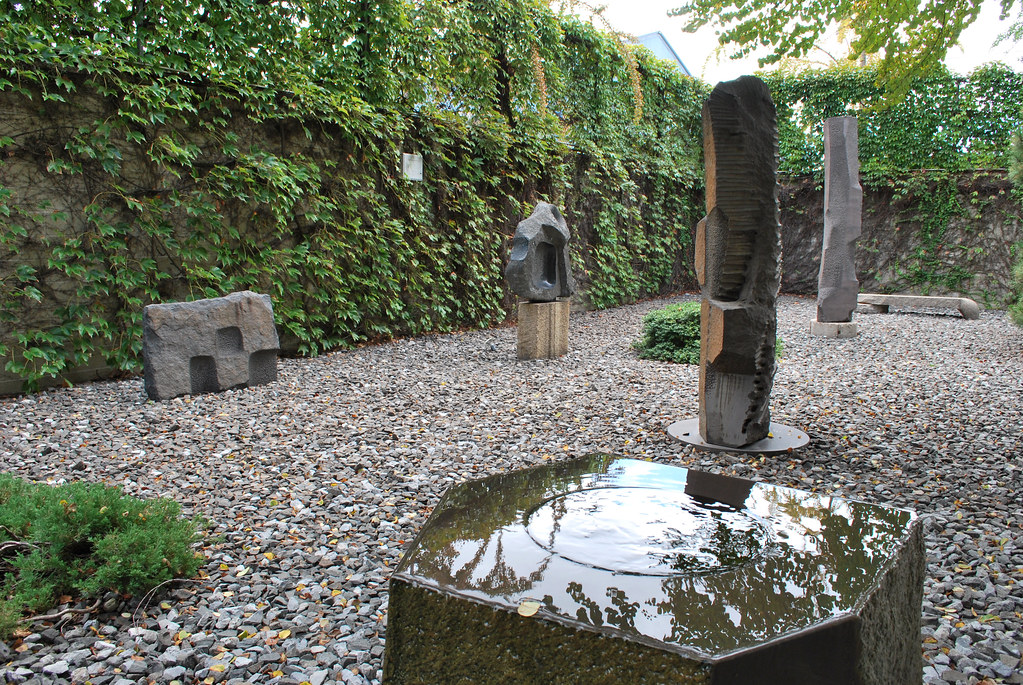
Isamu Noguchi Garden Museum: Isamu Noguchi (1904-19988) was a well-known Japanese-American landscape designer, sculptor, and artist. He was born in the US and became famous in New York. He was a lover of Frida Kahlo, the celebrated Mexican painter, when she lived in New York. At the end of his life he moved to Japan and built a large sculpture garden that is now a museum. Noguchi's work includes works in the Hiroshima Peace Park, Sapporo's Moerenuma Park, and the gardens at the UNESCO center in Paris. Noguchi chose Takamatsu City as his base in Japan because of its proximity to the famous stone quarries Mure village. After his death, his studio was transformed into the Isamu Noguchi Garden Museum. Nearly 150 stone sculptures, many of which are only partially finished, can be found on the grounds. His former home at the site was a repurposed large Edo period merchant residence.
- Indexed full list of all my blog posts | articles.
- Indexed full list of all my Japanese culture essays.
Content by Your Japan Private Tours' (established in 1990) founder Japan travel expert Ian Martin Ropke. I have been planning, designing, and making custom Japan private tours on all five Japanese islands since the early 1990s. Your Japan Private Tours specializes in bespoke travel for private clients (I do not work with agents) including exclusive excursions, personalized experiences, and unique adventures. I am 100% client-centric and total individual attention. Consider my Japan travel services for your next trip. And thank you for reading my content. Learn more!