Japan private tours' tips for Shikoku's Kagawa Prefecture Part 2
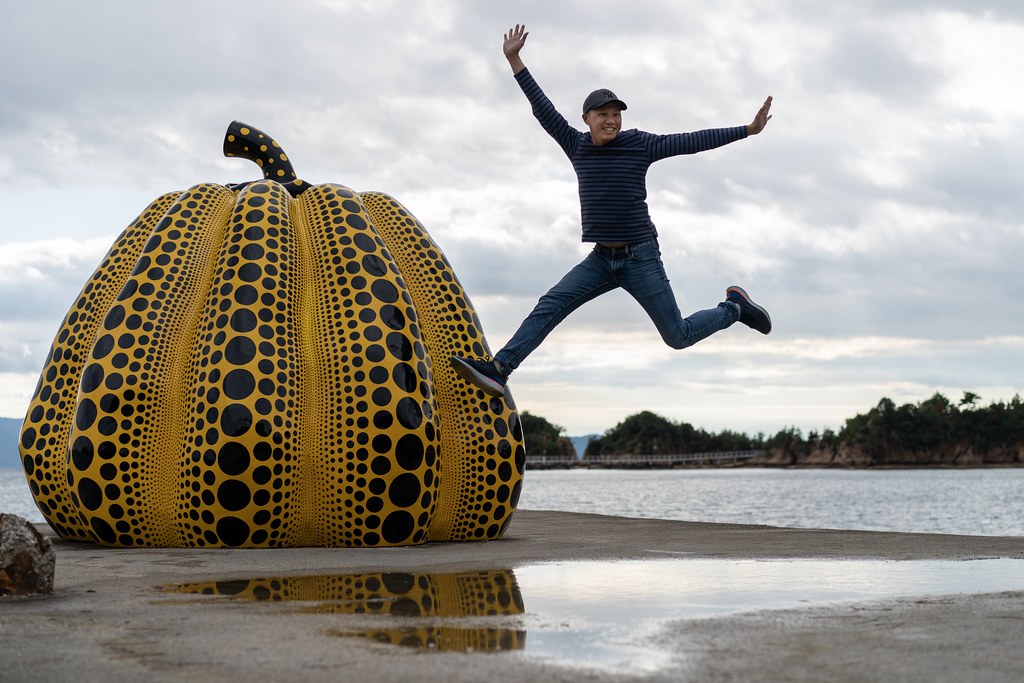
The Setouchi Triennale (dating from 2010) is a contemporary art festival held every three years on the islands of the Seto Inland Sea and is largely connected with Kagawa Prefecture but not exclusively. The Inland Sea is one of the best books ever written by a foreigner. It was penned in the 1970s by Donald Ritchie, Japan's most famous cinema critic (affiliated with the New York Times for most of his career, from his Tokyo base). The festival is on in 2025, 2028, 2031 . . . .
The festival is known for its unique blend of art, culture, and nature, and was designed to revitalize local communities and celebrate the region's identity. The event covers more than 100 days (spring, summer and fall). The festival takes place in various forms across 12 islands and two coastal towns, encouraging visitors to explore the event by ferry. And ferry travel is so very nostalgic and authentic in my opinion. I love boats and trains above all other modes (except for horseback and bicycle maybe).
The Setouchi Triennale features a wide range of contemporary art installations, sculptures, and exhibitions by both Japanese and international artists. And the festival actively involves local, multi-generational residents, highlighting their traditions, crafts, and history, fostering a sense of community and revitalization. A rare feat but one that this kind of off-the-beaten-track area has literally aced. The Triennale was also set up to counteract depopulation and environmental degradation in the Seto Inland Sea region by attracting visitors and promoting local engagement.
The rest of this post covers:
- Naoshima Art Island: built with private dollars
- Teshima Island: Another Kagawa living-art island
- Kompirasan Shrine is amazing but takes effort!
Content by Your Japan Private Tours' (established in 1990) founder Japan travel expert Ian Martin Ropke. I have been planning, designing, and making custom Japan private tours on all five Japanese islands since the early 1990s. Your Japan Private Tours specializes in bespoke travel for private clients (I do not work with agents) including exclusive excursions, personalized experiences, and unique adventures. I am 100% client-centric and total individual attention. Consider my Japan travel services for your next trip. And thank you for reading my content. Learn more!
Naoshima Art Island: built with private dollars
Naoshima Art island is part of Kagawa Prefecture. The island offers a tranquil escape from Japan's sprawling cities thanks to its Mediterranean ambience, sandy beaches, and relaxed, rural vibes. The Benesse Corporation, which manages art museums and installations on Naoshima and the neighboring islands of Teshima and Inujima, installed a large portion of the artwork on the island. Believe it or not, Benesse became super rich by specializing in helping students pass Japan's strict high school and university entrance exams. They make a fortune every year and less and less by the year as Japan's youth population shrinks and shrinks.
Naoshima Island is home to Benesse House, the Lee Ufan Museum, the Chichu Art Museum, and the Naoshima New Museum of Art and many of these unique structures were designed by Ando Tadao. Did you know that the last Daniel Craig 007 film, "No Time to Die," was partially filmed on Naoshima, in one of Ando's simplest creations? The island where the evil botanist had his factory has one scene set in a huge room with 007 on his knees pleading for his daughter’s life. The architectural or even artistic features in the background, behind the bad guy, are Ando Tadao’s architectural signature and I was captivated the moment I saw the scene (which I have seen more than 30 times, as I’m a huge Daniel Craig 007 series aficionado).
Naoshima Island also features a number of building designed by Ishii Kazuhiro, a contemporary architect, including schools and municipal buildings on the island.
If you really want to enjoy the island you must go in off season because there are so many Japanese and international tourists there in high season! You can sleep in 5- or 4-star hotels on the island (maybe 2 or 3) and also in minshuku B & B places (old farmhouses) scattered across the northern parts of the island. Or you can go there from Kurashiki on the mainland (Okayama Prefecture) as an easy day excursion. Weekends tend to be very busy, so take note.
Top attractions on Naoshima Island:
Chichu Museum: Ando Tadao's Chichu Art Museum, a unique contemporary art museum, is built into a hillside overlooking the southern coast of Naoshima. Much of the structure is underground, though the artwork is solely illuminated by natural light. The art on display here ranges from Claude Monet's "Water Lilies" series, works by James Turrell, and Walter De Maria's "Time/Timeless/No Time" work. The Chichu Museum has a visitor quota system to keep the experience really serene and peaceful. So do make reservations in advance to avoid unexpected surprises, especially during high season and weekends.
Art House Project: Naoshima's Art House Project consists of a number of previously abandoned buildings, an old temple, and an old shrine. It is located in the eastern port of Honmura. The buildings are home to a rotating schedule of art installations and contemporary art by Japanese and international artists. The majority of the art houses, which are dispersed across the town, blend in with the surrounding traditional Japanese neighborhoods and are not especially noticeable from the street. The Art House Project's archive and information hub is the Honmura Lounge, located in the heart of town. The Ando Museum is located in the midst of Honmura Town's traditional structures but is not a part of the Art House Project. From the outside, the Ando Museum appears to be a typical, traditional home, fitting right in with the town's surrounding area. However, the interior of the building creates a unique mood by fusing Ando's characteristic use of concrete with traditional interior design. Ando's actions on Naoshima and elsewhere are documented by images and informative markers along the walls in the museum. A reservation system limits the number of visitors to the Art House Project buildings.
Benesse House: Benesse House is a 5-star hotel and the museum that first defined the Naoshima contemporary art scene. It was built with the Benesse Corp's ample cash flow. The complex consists of the Museum, Oval, Park, and Beach buildings, all of which were designed by Zen-concrete architect Ando Tadao. Benesse House's art gallery, perched on a hilltop overlooking the sea is the main draw. Works by a wide range of Japanese and international artists are on exhibit. Guests staying overnight in the Museum and Oval buildings have access to the museum around-the-clock. Benesse House's lawns and beaches are home to about twenty pieces of "outdoor" art, including the world-famous huge pumpkin at the end of a dock overlooking the sea (by Ms. Kusama Yayoi). Many installations at the site are located on the cliffs and shoreline beneath the museum and were made chosen to blend in with the surrounding natural environment. Benesse House also has restaurants, cafes, a spa and retail shops.
Lee Ufan Museum: The Lee Ufan Museum opened in 2010 and showcases pieces by Korean modern artist Lee Ufan. Ufan was born in Korea but worked and taught for most of his career in Japan. His distinctive large constructions composed of concrete, stone, and enormous iron slabs are on exhibit here, along with a number paintings from the first stage of his artistic career. The museum structure was also designed by Ando Tadao.
Naoshima New Museum of Art: The Naoshima New Museum is the most recent Benesse building on the island (2025). It is also an Ando Tadao building characterized by a concrete-heavy, light-and-shadow-playing spatial design. The museum is encircled by vegetation and sits atop a hill near the edge of Honmura town on the east side of the island. It has four galleries with mostly rotating artwork by modern artists from Asia, including Japan, spread across three levels.
I Love Yu bathhouse: I Love Yu is a public bath house (sento) and modern art installation where guests can take a bath in the artwork. This is an unusual place to take a bath. The bathing rooms are primarily conceived and completed with simple white tiles that encircle a distinctly erotic floor collage. Visitors can admire the big tile murals on the walls that represent female abalone divers (ama), an elephant statue and vividly painted glass ceilings while they soak in the hot waters.
Teshima Island
Over the last 20-30 years, Teshima, a rural island in the Seto Inland Sea (and also in the precinct of Kagawa Prefecture), has emerged as a popular destination for experiencing modern art. After Shodoshima, Teshima is the second-largest island in the region. Its three little fishing settlements are connected by a circular road, and a forested mountain sits in the center of the island. Ieura, the most significant of the two villages, and Karato village both have ferry terminals. Exploring the tranquil island with its slow-paced atmosphere and agricultural surroundings takes a half to full day. There aren't many options for dining, shopping, or housing, but one piece of art, the Shima Kitchen in Karato, doubles as a restaurant.
The Teshima Art Museum, home to some of Japan's most fascinating modern artworks, is the island's principal draw. The basic concrete sculpture, which stands amidst terraced rice fields, captivates visitors' senses with the sound of water droplets striking a concrete surface. Some pieces of art are only accessible on weekends and holidays. Les Archives du Coeur ("Heart Archives"), a modest building on the seashore on the easter edge of Karato village, is another permanent artwork installation. It is one of several places worldwide where guests can record their own heartbeats and listen to others' heartbeats in a special and slightly eerie setting.
Kagawa's Kompirasan Shrine is amazing!
Kotohira, a small town in western Kagawa Prefecture, is famous throughout Japan for its Kompirasan Shinto Shrine. Kompirasan's deity is dedicated to seafaring. The town is also home to a rare historical kabuki theater that is perfectly preserved.
Top attractions in Kotohira:
Kanamaruza Theater: Kothira's Kanamaruza Theater is Japan's oldest intact kabuki theater. It was constructed in 1835, and still, occasionally, hosts kabuki shows featuring some of the best kabuki performers of Japan (mostly from Tokyo). When there are no performances, visitors can explore Kanamaruza's stage, audience hall, and dressing rooms. The basement features a human-powered revolving stage and trapdoors to enter and exit play dramatically.
Kompirasan Shrine: Kompirasan, the mother Shinto shrine of the Kompira shrines nationwide, is devoted to sailors and sailing. To get to the shrine the faithful and resolute tourist must climb a series of staircases (and 1,368 steps). Before being formally designated as a shrine at the start of the Meiji period (1868-1912), Kompirasan had been cherished for centuries as a perfect blend of both Buddhist temple and a Shinto shrine. Pilgrims from all over Japan flock to Kompirasan and always have to test their faith and honor the sea. The approach starts in a tourist-heavy retail zone crowed with souvenir stores and eateries serving Sanuki Udon.
- Indexed full list of all my blog posts | articles.
- Indexed full list of all my Japanese culture essays.
Content by Your Japan Private Tours' (established in 1990) founder Japan travel expert Ian Martin Ropke. I have been planning, designing, and making custom Japan private tours on all five Japanese islands since the early 1990s. Your Japan Private Tours specializes in bespoke travel for private clients (I do not work with agents) including exclusive excursions, personalized experiences, and unique adventures. I am 100% client-centric and total individual attention. Consider my Japan travel services for your next trip. And thank you for reading my content. Learn more!