Japan private tours insights for Hokkaido Part 1
This Japan private tours' insight post, the first of five posts covering the northern island of Hokkaido, will cover Hokkaido's overall spirit or essence. And then we will dive into the city of Sapporo, the biggest city on the island by far, with a population of nearly two million! [But consider this: In 1857 the population of Sapporo was seven people! And today, the total population of Hokkdaido is only a bit over five million people.]
Hokkaido evokes the same basic themes and images for foreigners thinking about going to Japan and everyone else on planet Earth who has only heard of the island. The thing is that depending on where you are from, where you grew up, Hokkaido will mean different things.
North Americans think of Hokkaido as a mountainous wilderness of sorts, a tamed Alaska if you will. As a Canadian I have often described Hokkaido as Japan's Canada. Unfortunately, both views are mostly wrong. Hokkaido has wilderness, to be sure. And in some areas of the island, it's not really fun living. The very northern edges of the island are virtually empty of people, much like Siberia. Who wants to live in a climate like that and what can humans possibly live from in a place like Siberia?
If you are from Australia or New Zealand then your first thoughts of Hokkaido, almost automatically, are skiing and Australian owned ski resort real estate (and more than a little speculation). Hokkaido and Sydney are almost in the same time zone, a hour apart. So no jet lag for the straight north trip from Auz to Japan. The flight from say Sydney to Hokkaido is about 12 hours. Not so different from the time it takes to get from New York to Hokkaido. The closest world-class skiing for Kiwis and Aussies is Hokkaido. And Japan's northern snow can be super deep in powder. And I mean world-class deep! It even has a name, Hokkaido ski snow, kapow! And yes you can helicopter ski there too. Though I am sure other foreigners from other countries own chalets and houses near the ski slopes of Hokkaido, the Australians own an incredible number of properties there. They got started in the early 1990s and as Australia became wealthy from Japanese sun tourists the winter sports fans Down Under flocked to Hokkaido. My daughter shoveled snow there during the Covid epidemic and her "boss" was an Australian with a Japanese wife. They owned five properties! My daughter, in her time off, snow boarded in an amazing landscape. Think Switzerland with no Swiss people and unique and standard Japanese culture.
If you ask Europeans about Hokkaido the answers aren't all that different. Lots of nature. Watching the ice drifts off the east coast in deep winter. See Japan's iconic red-headed cranes do their mating dances in the marshy areas of SE Hokkaido. And for bird watchers, it is an amazing place to see the migration parties of mostly sea birds. The hunters of Europe, and there are so few, will tell you about Japanese bears and deer. These are all correct and part of the legends of Hokkaido.
Southeast Asians think of endless flower fields (similar to those of southern France), national parks, stunning settings and great food when they think about Hokkaido. Asians, who have nowhere to ski but are dying to ski, also come to Hokkaido in droves in the winter months. Before Covid there were also a fair few mainland China skiers who chose Hokkaido for the same reasons! Nowhere else to ski but Hokkaido. India has been trying for a couple of decades to create a ski paradise in the Himalayas but so far their reputation has never gone international. Again, all of these impressions are true.
When it comes to the idea of Japanese food and Hokkaido, most foreigners don't realize that nearly all of the island's good arable land is devoted to potatoes, corn, and dairy cows. The land that isn't arable is mostly inaccessible and thus essentially maximum wild! God bless! Hokkaido has also existed as a famous source of seafood in Japan. Everything from herring and salmon to crab harvested in massive quantities for the supermarkets down south. At one time, about 150 years ago, vast fortunes were made in Hokkaido from herring alone! Today, the fisheries of the island continue to provide Japan with a decent percentage of their gourmet seafood.
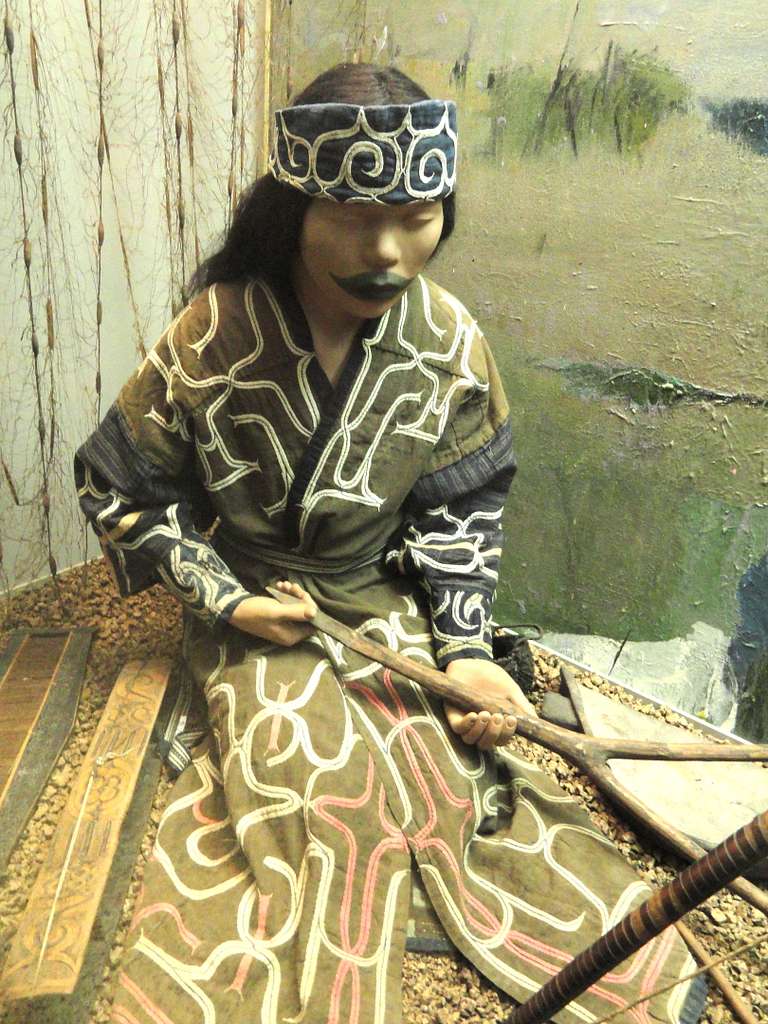
I have planned, designed and created about 10 different trips on Hokkaido for my Japan private tour clients. That's not a lot given that I have been doing Japan bespoke travel for 35 years now! My clients have gone scuba diving in July off the Shakotan Peninsula, west of Otaru. Hiked in the mountains of Daisetsuzan National Park. Tour the trendy towns of Biei and Furano. Marveled and strolled along the shores of Lake Toya and others across the island. And experienced the volcanic slopes of Hell's Valley and the deep hot spring bathing culture of that area. The remaining indigenous people of Japan, the Ainu (about 35,000 survivors) are also concentrated in lands directly south of Sapporo (and almost no where else on the island!). And I have worked with families from Singapore who wanted only to pick fresh fruit from trees and the ground and eat seafood and excellent meats. Hokkaido offers all these things . . .
As a word of caution, please do remember that Hokkaido is huge and I really mean huge. If you wanted to just experience the main areas that tourists visit between spring (May) and autumn (September), you must have at least 14 days. The core areas of Otaru, Sapporo, Asahikawa, Biei and Furano can be seen in say 10 days without rushing. The train travel time from Sapporo to the far eastern tip of the island can take over 10 hours! Getting to where the cranes do their mating dances and congregate for the journey south takes six hours or more! So, keep that in mind.
To sum things up, Hokkaido is many things and attracts some foreign travelers each season for it's unique natural and cultural attractions. Let's begin with what you can do from a basecamp in Sapporo City (or the Jozankei hot spring valley south of the city).
The rest of this post covers:
Content by Your Japan Private Tours' (established in 1990) founder Japan travel expert Ian Martin Ropke. I have been planning, designing, and making custom Japan private tours on all five Japanese islands since the early 1990s. Your Japan Private Tours specializes in bespoke travel for private clients (I do not work with agents) including exclusive excursions, personalized experiences, and unique adventures. I am 100% client-centric and total individual attention. Consider my Japan travel services for your next trip. And thank you for reading my content. Learn more!
Private tour ideas for Sapporo City and nearby
Sapporo is an Ainu word, and the Ainu have lived on Hokkaido since they were driven out of Hokkaido in the feudal period of Japan. The famous Hayato Miyazaki Princess Monohike portrays a time when the Ainu were still on Hokkaido. The name Sapporo in the Ainu language means "important river flowing through a plain."
Sapporo became a city known around the world for the first time in 1972 when it hosted the Olympic Winter Games. Way back then the Soviet Union was whole and would remain a solid block of power until the late 1980s when the Berlin wall fell (1989 to be exact). And the presence of Russian's trading and also vacationing on Hokkaido was part of my weekly newspaper reading in Kyoto between 1985 to the Ukraine war. In that era, a fair number of headlines were about the dispute between Japan and the Russians over potentially oil and mineral rich islands north of Hokkaido.
Today, Sapporo has nearly two million inhabitants out of Hokkaido's five million people. And the only skyscrapers on the island are in Sapporo, the result of a real estate gold rush that began in the late 70s and lasted well into the early 90s.
It's a city but a well spread-out city and very relaxing as cities go. This has a lot to do with the relaxed good nature of the people of Hokkaido, who were cut off from the Tokyo to Osaka economic whirlwinds and storms of the 20th century . . .
Top attractions in Sapporo
Hokkaido Historic Village: An open-air museum that showcases the old spirit of Hokkaido: The Historic Village of Hokkaido is an open-air museum in the suburbs of east Sapporo. It is home to about 60 traditional buildings from all over the island, dating from the 1870s to the 1920s. The extended village is broken into a town, fishing village, farm village, and a mountain village. The village's Hokkaido Museum presents artifacts and information about the history and nature of Hokkaido including Ainu culture and wildlife.
Curb Market: Hokkaido's lively seafood wholesale market sideshow: This fresh food market, on the edge of the large Sapporo wholesale market has 80 stores and restaurants lined up along several blocks. Curb Market specializes in Hokkaido seafood including crab, sea urchin, salmon roe, scallops, squid. You will also find local seasonal produce here (corn, melons and potatoes to name a few). The local top selling dish is as simple as you can get: fresh seafood served on bowl of rice (domburi). Delicious!
Nijo Market: Sapporo's central fresh food market: Nijo Market in central Sapporo is small but bustling all the same. Sellers deal in seasonal produce, fresh seafood of all kinds, and other local delicacies (such as uni ikura donburi or sea urchin and salmon eggs on rice). The market is open from about 7:00 to 18:00 every day of the week. There are also a few great restaurants and bars along narrow Noren Yokocho lane (car free!).
Sapporo Botanic Garden: Home to great gardens & a small Ainu museum: This pretty great botanical garden lies in the center of Sapporo. It is primarily a place devoted to research and education. This botanical garden was built in 1886 and includes an alpine garden, a greenhouse and a small Ainu museum. In the winter season, only the greenhouse is open to the public.
Jozankei Onsen: Killer hot spring town south of Sapporo: Jozankei Onsen is close to Sapporo (about an hour by cab) and it is part of the Shikotsu-Toya National Park. The town is situated between the high cliffed valley ridges of the Toyohira River. The onsen hot spring waters of Jozankei only got their start as a place to visit for leisure and health travel in 1866. Today, the town is home to many ryokan inns, restaurants and shops catering to the hot spring "lifestyle." Some resorts offer day bathing for visitors (public and gender separated and also private bathing). Jozankei is an especially popular autumn colors destination (in mid October but every year is a bit different now isn't it?).
Ski resorts near Sapporo City: Sapporo has a number of ski resorts on its north and northeastern flanks. The biggest is the Teine Ski Resort. The Kokusai Resort has the second most snowfall on the island after Niseko. Sapporo Teine is 40 minutes from the center of Sapporo. It has a wide range of trails ranging from easy to fast and furious. Two of the runs were used in the 1972 Winter Olympics. The resort's upper Highland Zone is nearly 1,000 meters above sea level. The lower Olympia Zone is more for beginners, plus snow sledding and tubing. Sapporo Kokusai only has five lifts and seven trails, but it receives the most snow on the island (after Niseko, where the Australians have bought a lot of real estate). Sapporo Kokusai is great for beginner and intermediate skiers. It has one black level course that will appeal to advanced skiers and off the main trail deep powder skiing that is amazing!
- Indexed full list of all my blog posts | articles.
- Indexed full list of all my Japanese culture essays.
Content by Your Japan Private Tours' (established in 1990) founder Japan travel expert Ian Martin Ropke. I have been planning, designing, and making custom Japan private tours on all five Japanese islands since the early 1990s. Your Japan Private Tours specializes in bespoke travel for private clients (I do not work with agents) including exclusive excursions, personalized experiences, and unique adventures. I am 100% client-centric and total individual attention. Consider my Japan travel services for your next trip. And thank you for reading my content. Learn more!