Japan private tour insights into overtourism & Ishikawa Prefecture
Before we get into the tourist attractions of Ishikawa Prefecture beyond Kanazawa City, the subject of this blog post, I would like to comment on a couple of Japan overtourism developments.
Overtourism is a fairly new word in the travel industry, but the meaning is crystal clear. Some cities and countries around the planet struggle to balance the profits from tourism with the negative effects of tourism. For example, Airbnb’s have greatly distorted the residential real estate market in Barcelona, New York City and other super popular travel destinations. Another side of overtourism relates to the impact of foreign travelers on local cultures. Rome, for example, attracts enormous numbers of foreign tourists and not all of them are "polite." Some old local neighborhoods in Rome have had to endure the invasion of drunk foreigners at night. In Kyoto, foreign travelers have damaged ancient buildings (whilst under the influence) and completely disrespected the ancient traditions and secrets of the Gion geisha district. We would call this ignorance or disregard for the local inhabitants in international travel.
A third example of overtourism, the most obvious one actually, is massive overcrowding in places that are not famous for crowds at all. Kyoto, again, is a perfect example during spring and autumn super-peak season, when nearly 500,000 Japanese domestic tourists flock to Kyoto's leading historical and cultural tourist spots. Believe it or not, but in super peak season Kyoto car & bus traffic crawls or enters gridlock conditions between noon and 19:00. This is because so many domestic Japanese tourists from Osaka and other cities come to Kyoto by car!
Venice, Italy was one of the first cities to try to combat overtourism with special entry fees. Now, you cannot enter the city without paying a fee, and this applies to all tourists and day trippers.
Kyoto has recently attracted international headlines for its high overnight tax for any and all tourists. If you are staying in a 5-star hotel, you have to pay about USD 70 extra per night. If you are staying in a youth hostel the extra charge is less than USD 2. The Kyoto overnight tax was sanctioned by the Japanese national government. I feel that more of these extra charges are well warranted as a way to reduce tourism numbers. However, as of this writing, it seems that the extra fee structure is not really keeping anyone away at all! Of course, super poor travelers will notice the extra fee in their budget calculations but almost everyone else can afford the current fees. They must be higher in my professional opinion. Steep extra fees should also be levied on foreign travelers arriving at Japan's international airports (and ports), which could easily be added to the air ticket price by travel agencies and airlines when tickets to Japan are purchased in person or online.
Overtourism is also driving Japanese politics to the right. Japan's first female prime minister will likely be Sanae Takaichi, who leans to the right and been in the news these past days. Japanese "right wing" politicians are gaining traction and many feel that foreigners should not be allowed to buy Japanese property or work in Japan. This is unfortunately a dilemma for Japan given that it is the fastest aging society in the world. Japan also has one of the lowest birth rates in the world. These two factors make it almost impossible for Japan to ignore foreign immigration unless cheap super robots become the norm.
And don't forget that since Covid, Japan's second highest export, after cars, is tourism! As of this writing, Japan's tourism sector is nearly USD 50 billion dollars per year. That is big money for a country that has lost a lot of manufacturing to South Korea and China.
And this brings us to complaints of the town of Kutchan, Hokkaido, which is a short distance from the world-famous Niseko ski resorts. Kutchan has a population of about 17,000 people and in the winter season nearly 20% are foreign service and construction workers.
Kutchan's anti-immigration viewpoint has made international headlines over a planned housing facility for up to 1,200 foreign workers. Thirty years ago Kutchan was a small potato growing community. Now, it takes care of the foreign workers that keep the Niseko resorts functional. The area just doesn't have enough Japanese workers for the booming tourism Japan now experiences every year. In fact, finding workers for Japan's travel and hospitality industry has been challenging for years now. Young Japanese people don't want to work for low wages and tend to avoid tourism jobs all together!
Since Covid, rich developers from Hong Kong, Singapore and China have started buying real estate in the Niseko area to cash in on the boom. This has led to more tourists and workers from Southeast Asia.
Much of rural Japan is an empty landscape today because there are less young people and because those young people go to big cities to find work. A recent study predicted that nearly 50% of the Japan’s local municipalities were at risk of disappearing by 2050.
I will write more about Japan's shrinking population and overtourism in my next blog post. Learn more!
The rest of this post covers:
Japan private travel content by Your Japan Private Tours' (established in 1990) founder Japan travel expert Ian Martin Ropke. I have been planning, designing, and making custom Japan private tours on all five Japanese islands since the early 1990s. Your Japan Private Tours specializes in bespoke travel for private clients (I do not work with agents) including exclusive excursions, personalized experiences, and unique adventures. I am 100% client-centric and total individual attention. Consider my Japan travel services for your next trip. And thank you for reading my content. Learn more!
Top places to visit outside of Ishikawa Prefecture's Kanazawa City
Ishikawa Prefecture is quite diverse after you get out of Kanazawa City. The Japanese Alps are just a bit to the northeast (the old road to Takayama) and the southwestern area is home to one of Japan's three-most honored peaks, Mount Hakusan. And Ishikawa has a very long coastline famous for beaches, old wind-beaten ryokan inns, fishing, and hiking.
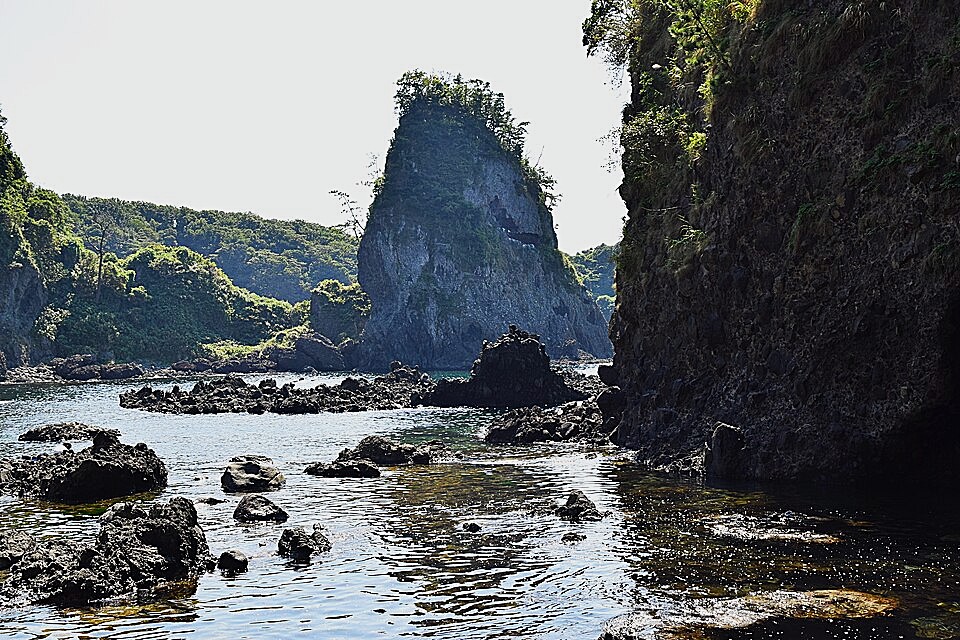
Ishikawa's rugged Noto Peninsula: The Noto Peninsula, roughly 100 km in length, forms the northern half of Ishikawa Prefecture, and the far northern tip is about 3 hours from Kanazawa City. In the 12th century, the Noto Peninsula was used for banishment after the defeat of the Taira samurai by the Minamoto clan (who went on to found Japan's first shogun military capital at Kamakura, just west of Tokyo). The peninsula's isolated and secluded nature made it a perfect location for banishment. From Kyoto, the imperial capital of Japan from 794 to 1185, the Noto Peninsula is only a few days journey. And in the 12th century all kinds of people were banished, many to the Noto Peninsula. Then in the 1970s, the Noto Peninsula, unbeknownst to the rest of the world, became a key location for North Korean sailors to kidnap Japanese women right from the shore! This makes the Noto a very interesting travel experience that is soaked in the dark past and also in modern times (Japan began its westernization phase at warp speed in 1868; by the early 20th century the entire country, more or less, had railway lines!). For tourists, Japanese or foreign, the Noto Peninsula is really about four things: hiking, hot spring bathing, seafood, and as Japan's historical center for lacquer work or urushi (centered in the town of Wajima). [Japanese lacquer is the best in the world and also quite expensive. Did you know that in the finest lacquer works that the lacquer has been applied and removed over 20 times! It's true!] For nature and outdoors lovers, the Noto Peninsula's Okunoto Coast and Kongo Coast are the most popular for coastal hiking and traditional rural hamlets. Most of the peninsula's coastline is protected as a Quasi-National Park. One other location that is well worth noting on the Noto Pen. is the Senmaida Rice Terraces just north of Wajima, which are wonderfully lit up with high-tech LEDs in late autumn and winter. Getting to the Noto requires time if you are going there by train or bus. It’s a long day trip from Kanazawa (10-12 hours). Hiring a car and driver is the smart way to go. Even smarter is to sleep on the peninsula for a couple of nights.
The old & new Kaga Onsen area: Kaga Onsen, southwest of Kanazawa City, consists of four different onsen hot spring towns. Kaga Onsen's deep inland background is Mount Hakusan, one of Japan's "three holiest mountains." Kaga's hot springs are over 1,300 years old. They were discovered by Buddhist monks! And every town in the area has public bathing facilities that are used all the time by locals and tourists. My favorite Kaga Onsen town for my travel preferences and Japan private tour clients is Yamanaka Onsen, which has low buildings, incredible forest paths, great public bathing, and amazing art & culture. The other top onsen towns in the area are Katayamazu (lakeside bathing!) and Awazu Onsen (which is home to the world's oldest hotel!).
Ishikawa Insect Museum: I know of no other culture where insects are so much a part of popular culture as Japan. And Ishikawa Insect Museum celebrates that passion with its live and mounted exhibits from all of Japan and the world. The museum's butterfly house is stunning! Learn more!
Great museums in the Kaga Onsen area:
Kutaniyaki Art Museum: The Kutaniyaki Museum has a deep collection of Kutaniyaki pottery, a 400-year-old tradition known all over Japan for its sleek and sleepy green, purple, yellow, red and blue glazes.
Kutaniyaki Kiln Exhibition Hall: This pottery museum, on the edge of Yamanaka Onsen, is home to many ancient and modern kutaniyaki pottery works (see above), and the ruins of a huge, multilevel Edo Period kilns.
Rosanjin's Hut Iroha: Rosanjin, one of Japan's most famous modern ceramicist artists (you can see his work in the permanent collection of the Kaho Museum in Kyoto's Gion district), lived and worked at the Yamashiro Onsen for a few years. The museum is one of the few places the public can see his work and his luxurious life as a Japanese ceramic superstar.
Basho no Yakata (Basho Mansion): This unique historical landmark is not far from the center of the Yamanaka Onsen town. The museum celebrates the brief visit of Matsuo Basho (1644-1694), Japan's most famous haiku poets. Basho is known to many foreigners for his travel diary book "The Narrow Road to the Deep North," which gives deeper meaning and context to his most famous haiku poems. He stopped in Yamanaka Onsen during his journey to the north and wrote a number of haiku about this hot spring town. This splendid mansion museum is the oldest building in the Yamanaka Onsen precinct. Many haiku materials are on public display, including an original hanging scroll of Basho's poem "In the mountains, chrysanthemums smell like hand-picked flowers." The museum is also home to a wide range of Yamanaka lacquerware and its celebrated 400-year history.
- Indexed full list of all my blog posts | articles.
- Indexed full list of all my Japanese culture essays.
Japan private travel content by Your Japan Private Tours' (established in 1990) founder Japan travel expert Ian Martin Ropke. I have been planning, designing, and making custom Japan private tours on all five Japanese islands since the early 1990s. Your Japan Private Tours specializes in bespoke travel for private clients (I do not work with agents) including exclusive excursions, personalized experiences, and unique adventures. I am 100% client-centric and total individual attention. Consider my Japan travel services for your next trip. And thank you for reading my content. Learn more!