Japan private tour insights for tiny but ancient Fukui Prefecture
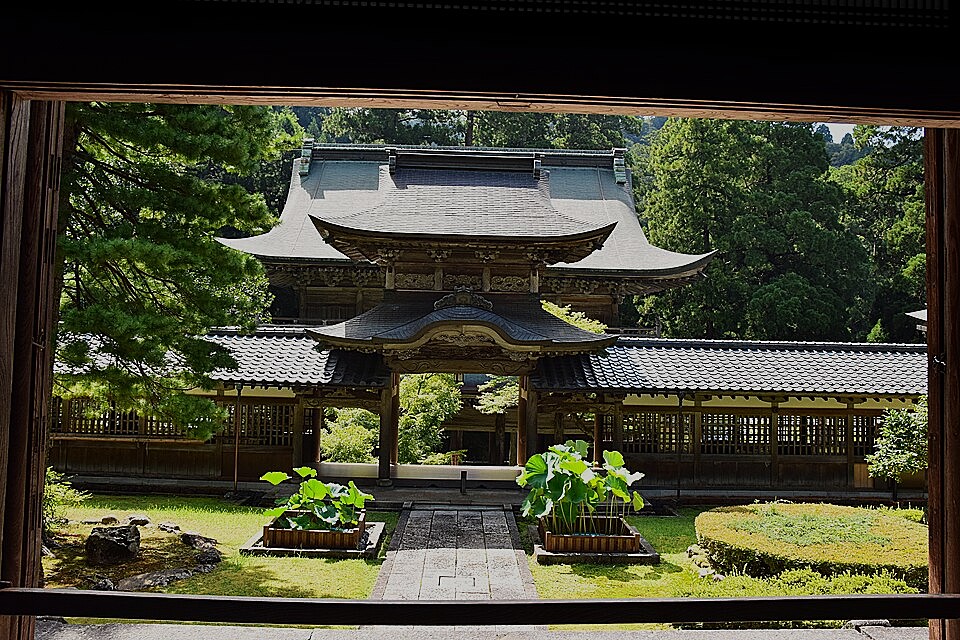
Fukui Prefecture is small, and its main attractions are the famous Zen temple of Eiheiji (headquarters of the Soto Zen sect, which is the one that gained great popularity in the US from the 1960s onward), the world-class Fukui Dinosaur Museum (for dino fans!), and Maruoka Castle (one of Japan's twelve surviving original castles). Fukui Prefecture is on the Japan Sea, and the interior is mostly mountainous. Note: Most international tourists don't even venture to the northern coast of Honshu island and the Japan Sea coast. The exception would be Ishikawa Prefecture's Kanazawa City but its not on the coast.
The capital of Fukui Prefecture is Fukui City and it can be used as a basecamp to see the prefecture's top tourist attractions. For Zen fans the best basecamp is Eiheiji Temple for morning meditation and simple Zen living.
The rest of this post covers:
Japan private travel content by Your Japan Private Tours' (established in 1990) founder Japan travel expert Ian Martin Ropke. I have been planning, designing, and making custom Japan private tours on all five Japanese islands since the early 1990s. Your Japan Private Tours specializes in bespoke travel for private clients (I do not work with agents) including exclusive excursions, personalized experiences, and unique adventures. I am 100% client-centric and total individual attention. Consider my Japan travel services for your next trip. And thank you for reading my content. Learn more!
The best places to visit in Fukui Prefecture
Amazing Eiheiji Temple, Soto Zen sect headquarters: The Soto Zen Eiheiji Temple complex and monastery is located on a thickly forested mountain slope just north of Fukui City. The temple was founded in 1244 by Dogen, who introduced the ideas of the Soto Zen sect to Japan in 1228. The other Zen sect of Japan is the more rococo Rinzai Zen sect. Both Zen sects gained great power and influence with the rise of the samurai warrior class in the early Kamakura period (1185-1333). Eiheiji Temple is home to nearly 70 buildings that are interconnected with covered walkways. The winters along most of the Japan Sea Coast east and north of Fukui deliver the highest snowfalls on Honshu Island. Some farmhouses in Snow Country are entered via the second floor in winter because of the incredible snow build up. If you apply in advance you can sleep at Eiheiji and experience the daily lifestyle of Soto Zen, which is austere and simple.
Ancient Heisenji Hakusan Shrine: Heisenji Hakusan Shrine is located in the lush forests at the base of Mount Hakusan (one of Japan's three most sacred mountain peaks). The shrine was originally founded in 717 as a Buddhist temple, which was used as the main basecamp for pilgrims enroute to the peak of Mount Hakusan. Over the next 700 years the temple the temple became increasingly powerful and at its peak it was home to thousands of Buddhist monks (including a huge number of so-called "warrior" monks). The temple burned down numerous times during the Sengoku civil war period (1467-1600). The temple lost its powerful status in 1574 and faded into history. When During the Meiji Period (1868-1912), when Japan rapidly westernized, Buddhism and Shintoism were forced to separate. Shinto became Japan's national religion early in the Meiji Period likely to imitate the one-religion countries of Europe and the New World. Heisenji Hakusan was a temple for nearly 1200 years and then it was turned into a Shinto shrine. Today the complex is still huge and home to many important religious locations and features including Sannomiya Shrine that marks the beginning of the pilgrimage route to the top of Mount Hakusan.
Tojinbo geological cliff walking: Tojinbo is the name of a rugged and beautiful one-kilometer-long section of basalt cliffs that are located on the Japan Sea coast just north of Fukui City. Over millions of years this coastline has been carved by rough seas to produce geological formations that can only be found in a couple of other places on planet earth. The Tojinbo geological park is easy to explore using various trails which lead along the coast to a small fishing village linked to tiny Oshima Island with a red no-car bridge. You can also appreciate this amazing coastline from boat cruises. The main parking lot at Tojinbo has numerous restaurants and souvenir shops. Crab and seafood are the main foods served at Tojinbo.
Takefu Knife Village: Fukui Prefecture was a samurai warrior class power spot for hundreds of years (starting in the early 15th century) and thus the excellence of the area's swords and blades. The Takefu Knife Village, which has many separate buildings, is home to a knife-making experience workshop, and a museum dedicated the craft of making knives and cutting tools. The village is about 20 km south of Fukui City. The knife village is next door to a large landscape garden park (Manyo no Sato Ajimanoen).
- Indexed full list of all my blog posts | articles.
- Indexed full list of all my Japanese culture essays.
Japan private travel content by Your Japan Private Tours' (established in 1990) founder Japan travel expert Ian Martin Ropke. I have been planning, designing, and making custom Japan private tours on all five Japanese islands since the early 1990s. Your Japan Private Tours specializes in bespoke travel for private clients (I do not work with agents) including exclusive excursions, personalized experiences, and unique adventures. I am 100% client-centric and total individual attention. Consider my Japan travel services for your next trip. And thank you for reading my content. Learn more!