Japan private tour insights for ancient and new Wakayama Prefecture
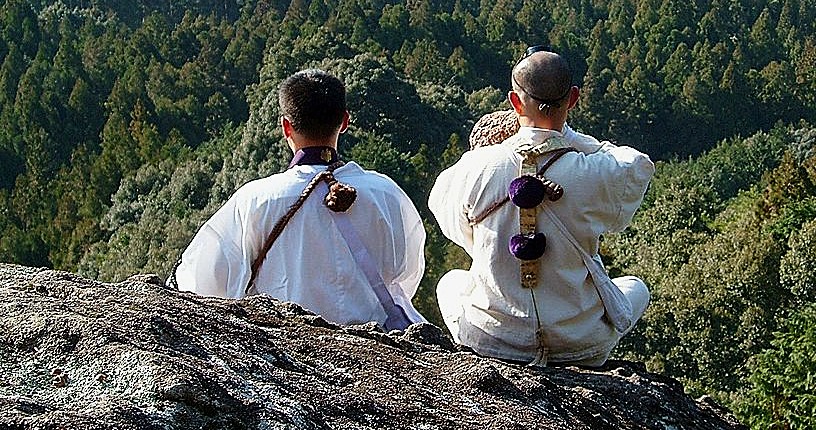
Wakayama Prefecture, located southeast of Osaka City, is both coastal and dominated by deep valleys and high mountains. Some of Wakayama's mountainous areas continue to be some of the most difficult terrain in Japan, which also makes these challenging areas so authentic and deeply natural. Koyasan, the Buddhist headquarters of the Shingon sect, is well known amongst foreign travelers as a very spiritual place. I have slept at Koyasan, in three or four of its temples offering overnight experiences to visitors, in all seasons and have always been impressed with the silent nights in the temples where I slept. Koyasan's Okuin cemetery is also an incredible place morning, day or night. The other big Wakayama Prefecture attraction for tourists are the Kumano Kaido pilgrimage routes, which all lead to Kumano Grand Shrine, the center of a 1,000 year old syncretic shugendo belief system.
The rest of this post covers:
- Wakayama's Mount Koya & Shirahama hot spring beach resort area
- Wakayama's Kumano area is a famous pilgrimage destination
Japan private travel content by Your Japan Private Tours' (established in 1990) founder Japan travel expert Ian Martin Ropke. I have been planning, designing, and making custom Japan private tours on all five Japanese islands since the early 1990s. Your Japan Private Tours specializes in bespoke travel for private clients (I do not work with agents) including exclusive excursions, personalized experiences, and unique adventures. I am 100% client-centric and total individual attention. Consider my Japan travel services for your next trip. And thank you for reading my content. Learn more!
Wakayama's Mount Koya & Shirahama hot spring beach resort area
Mount Koya: I have covered Koyasan or Mount Koya on this website here, so I will only give a short summary here to give the reader an idea of how special this mountain-top spiritual center is. Mount Koya is the headquarters of the Shingon Buddhist sect. Shingon and Tendai Buddhism were both introduced to Japan in the first years of the 9th century, when the Imperial capital of Kyoto was only about 10 years old. Shingon Buddhism was brought to Japan by Kobo Daishi (known posthumously as Kukai; Kobo Daishi is also the founder of Shikoku Island's 88 temple pilgrimage). Following the traditions of Buddhism in China, Kobo Daishi built his spiritual center high up in the mountains of Wakayama Prefecture. It is important to note that Osaka, Asuka and Nara all preceded Kyoto historically, which led to the greatest concentration of early religious moments in ancient Japan. Osaka was the first "capital" of Japan, Asuka the second and Nara the third. The remote and "pure" temple town of mountaintop Koyasan was chosen by Kobo Daishi and it is also where his mausoleum is located. Today, Koyasan is home to nearly one hundred temples. The most important temple in Koyasan is Kongobuji, the head temple of Shingon Buddhism. The vast forest cemetery of Koyasan's Okunoin, home to giant flying squirrels and countless red-bibbed Jizo figures), is an amazing place to stroll at any time of day (even at night!). Internationally, Koyasan is the most famous place in Japan to experience an overnight stay at a temple (shukubo) and by extension the "lifestyle" of a Shingon monk including shojin ryori vegetarian food and morning prayer sessions.
Shirahama hot spring beach resort: The hot spring and beach town of Wakayama Prefecture's Shirahama is very close to Osaka and quite built up (like Honolulu in some ways). It is one of Japan's three largest hot spring towns after Beppu in Kyushu and Atami west of Tokyo. Shirahama, unlike Koyasan, is not a place to search for old Japan, but it is a place to experience deep relaxation. The name Shirahama or "White Beach" comes from the area's long white sand beach (very fine sand). Though Shirahama has been a bathing destination for over 1,000 years it is characterized today as a place for modern beach culture and amusement parks. The area is home to six big public hot spring bath houses including two outdoor baths. The area is especially crowded in July and August!
Wakayama's Kumano area is a famous pilgrimage destination
The Kumano area is centered at the southern tip of Wakayama Prefecture's Kii Peninsula. The main religion in ancient Wakayama (and by extension much of Japan until the rise of Zen Buddhism in the 12th century) was the syncretic Kumano faith, which was a blend of Shinto and Buddhism known as Shinbutsu-shugo. The Kumano religious practices centered around the Kumano Sanzan (the three grand shrines of Kumano) and incorporated elements of Shugendo, or "the path of training and testing," a mountain ascetic practice. Shugendo made Shinto deities or kami also part of Buddhist deities. These syncretic deities known as Kumano Gongen were embodied in the natural landscape in the form of rivers, waterfalls, and mountains. Kumano is centered around three shrines, Hongu Taisha, Nachi Taisha and Hayatama Taisha.
The Yatagarasu three-legged crow, is a mythical figure in Japanese folklore and the emblem of Kumano Grand Shrine, where it is worshipped as a divine guide. If you can't visit Kumano, then consider Kumano Shrine in Kyoto, which is located at the northwest corner of Marutamachi Street and Higashiyama (or Higashioji) Street.
For more than a thousand years, Japanese pilgrims have traveled to the Kumano Sanzan on a network of walking trails known as the Kumano Kodo. The Kumano region is also referred to as "The Land of the Dead" based on the belief that spirits and family ancestors dwell here after they die. In 2004, Kumano's religious treasures and pilgrimage routes became a UNESCO World Heritage Site.
The Kumano Kodo pilgrimage has five different routes. 1. The Nakahechi route is the one most tourists follow. It is well preserved and relatively easy to walk. It leads from west to eat through forests to several villages where you can spend the night in a minshuku B & B. 2. The Ohechi route follows the coast from Tanabe to Nachi Taisha but isn't popular anymore as the coastal area is extremely developed on the dominate coastal road. 3. The Iseji route connects Kumano with Ise Shrine in Mie Prefecture, but it is also mostly coastal and thus noisy like the Ohechi route. 4. The north to south Kohechi connects Koyasan with Kumano and was favored mainly by Shingon Buddhist monks. This route is not easy and there are few inns and would best be explored with an experienced guide. 5. The long and challenging Omine Okugake route connects Nara Prefecture's Yoshino mountain site, via Mount Omine, with Kumano. This route was the primary pilgrimage route for followers of the Shugendo mountain worship sect.
Kumano's Nachi-Katsuura seaside town: Nachi-Katsuura, located on the southeastern coast of Kumano's Kii Peninsula, is well known for its onsen hot springs and fishing industry. As a resort area Nachi-Katsuura is a popular destination characterized by numerous coastal mega hotels that have everything from restaurants to karaoke bars. Two of these big hotels (Urashima Hotel and Nakanoshima Hotel) are unique as they can only be reached by boat. Nachi-Katsuura's tuna catch is the largest in Japan. And the town is one of the few places in Japan to experience a tuna market (and tuna auction). The area, sadly, was also famous for centuries for it's whaling industry. Today, touristic whale and dolphin shows are staged daily in a large bay in the area.
- Indexed full list of all my blog posts | articles.
- Indexed full list of all my Japanese culture essays.
Japan private travel content by Your Japan Private Tours' (established in 1990) founder Japan travel expert Ian Martin Ropke. I have been planning, designing, and making custom Japan private tours on all five Japanese islands since the early 1990s. Your Japan Private Tours specializes in bespoke travel for private clients (I do not work with agents) including exclusive excursions, personalized experiences, and unique adventures. I am 100% client-centric and total individual attention. Consider my Japan travel services for your next trip. And thank you for reading my content. Learn more!