Japan private tour tips for Hyogo Prefecture Part 1
Before we get into this post on Hyogo Prefecture (just west of Osaka City), I would like to comment on a recent article in The Guardian newspaper about nature connectedness.
When I think of nature connectedness in the context of Japan I immediately think of Shinto, Japan's official religion. The root beliefs of Shinto are all about nature and how humans are connected to the natural world. Shinto shrines are places to give thanks to the natural elements, especially in the context of agriculture. These natural forces include sunshine from the Amaterasu the Sun Goddess, rain, and the earth in which we grow things. Traditionally, Japanese people say itadakimasu before eating any meal. Itatakimasu translates as "I humbly receive" and is all about gratitude. Gratitude to the person who made the meal, the farmers who grew the ingredients for the meal, and, ultimately, the Shinto gods who helped to "grow" the ingredients.
It would seem logical that the Japanese people are very connected with nature and a lot of Japanese cultural content meant for foreigners emphasizes this connection. I was therefore shocked to learn that Japan is one of the least nature connected societies on earth according to a recent Guardian article. I expected Japan to rank highly for nature connectedness. I also expected Germany and Ireland to rank highly for this connection. It turns out that Japan and Germany and Ireland are three of the least nature connected places in the world.
The countries that are most connected with nature are almost all surprises to me (in order from one to ten): Nepal, Iran, South Africa, Bangladesh, Nigeria, Chile, Croatia, Ghana, Bulgaria, Tunisia.
The least nature connected countries in the world are (and the last countries have the least connection with nature!): Russia, Ireland, Saudi Arabia, UK, Netherlands, Canada, Germany, Israel, Japan, Spain.
The benefits of nature connectedness range from mental and physical health to increased happiness and reduced stress and anxiety. And the more connected people feel to the natural world the more they tend to engage in pro-environmental behaviors (recycling, nature conservation support, etc.). And that's not all! Spending time in nature can result in a greater sense of purpose and meaning in life, increase your confidence levels, and make you more creative.
Personally, I feel very connected with the natural world and always have. My parents are ardent naturalists, and I have always found calm and awe in nature, whether in a city park or a remote Japanese valley. I have been an avid cloud watcher since I was in my 30s. I also love geology and botany, and I’m constantly awed by trees and rivers. I know many Japanese individuals who feel the same way about nature but clearly most Japanese (and citizens of other developed nations) have lost this connection. Sad but true! I would suggest that we all learn more about the people of Nepal and how they remain so connected with nature with hardly any money.
The rest of this post covers:
Japan private travel content by Your Japan Private Tours' (established in 1990) founder Japan travel expert Ian Martin Ropke. I have been planning, designing, and making custom Japan private tours on all five Japanese islands since the early 1990s. Your Japan Private Tours specializes in bespoke travel for private clients (I do not work with agents) including exclusive excursions, personalized experiences, and unique adventures. I am 100% client-centric and total individual attention. Consider my Japan travel services for your next trip. And thank you for reading my content. Learn more!
Kobe City: The Yokohama of Western Japan in more ways than one!
Kobe City is the capital of Hyogo Prefecture and is considered to be the Yokohama of western Japan (Kansai) because of its unique concentration of foreign traders. Remember, foreigners were not allowed to set up anywhere they pleased after the fall of the Edo-Tokyo Tokugawa shogunate (1868). They were allowed in a few key cities across Japan: Hakodate (Hokkaido), Yokohama, Kobe, Nagasaki, and few other smaller cities.
Located on Inland Sea and bordered by the steep Rokko mountain range, Kobe has a very Western feeling both in the way it was built and the local culture. It feels more open and forward looking than other major Japanese cities and this is because of its deep foreign history.
The city of Kobe is also identified with Kobe Beef, which became an international sensation in the 1980s. Kobe Beef is just one type of wagyu beef but its the only one connected to a city name. Other top wagyu brands include Matsusaka and Yonezawa beef, but most foreigners have never heard of them. Wagyu beef is loved for its rich fatty marble texture. Kobe Beef comes from Tajima cattle. Kobe Beef is served as steak or used as the primary ingredient for teppanyaki, shabu shabu and sukiyaki cuisine. As you would imagine Kobe Beef or any other type of wagyu beef is expensive. Expect to pay at least Yen 10,000 for steak but you can easily spend Yen 30,000 per person in "famous" restaurants. And don't think you can just walk into one a wagyu restaurant. You have to make a reservation. Trust me!
High value tourist attractions in Kobe:
Ancient Arima Onsen: Kobe's famous Arima Onsen has been in operation for over 1,000 years. It is located on the north side of the Rokko mountain range or behind the city but is easy to get to. Arima is pretty built up and modern, but you can still find a few lanes that feel like the Edo period. Arima has two types of thermal waters: iron-rich Kinsen (good for skin health and muscle pain), and clear radium-rich Ginsen (good for muscle and joint ailments). The town has every type of bathing facility from private to public. There are ryokan hotels for spending the night or you can use facilities open to day trippers.
Nunobiki Ropeway: Kobe's Nunobiki Ropeway offers visitors a fun ride up the steep southern slopes of the Mount Rokko mountain range. The ropeway begins just next to Kobe's bullet train station (Shin-Kobe Station). The ropeway passes above the lovely Nunobiki Waterfall and the Nunobiki Herb Gardens. From the highest station, an observation deck provides amazing views of Kobe City and the sea, which is especially popular at night. You can also hike the route and if you do then you can see the waterfall up close and also various other attractions on the path including one of Japan's largest herb gardens and the top of Mount Maya.
Mount Rokko: The highest peak in the Rokko range is Mount Rokko (931 meters) and the upper area of the mountain is home to many attractions ideal for relaxation and family fun. These include a large botanical garden, farm animals, Japan's oldest golf course, and a fine restaurant and cafe complex. Mount Rokko is a great place to watch the sun set over the Inland Sea.
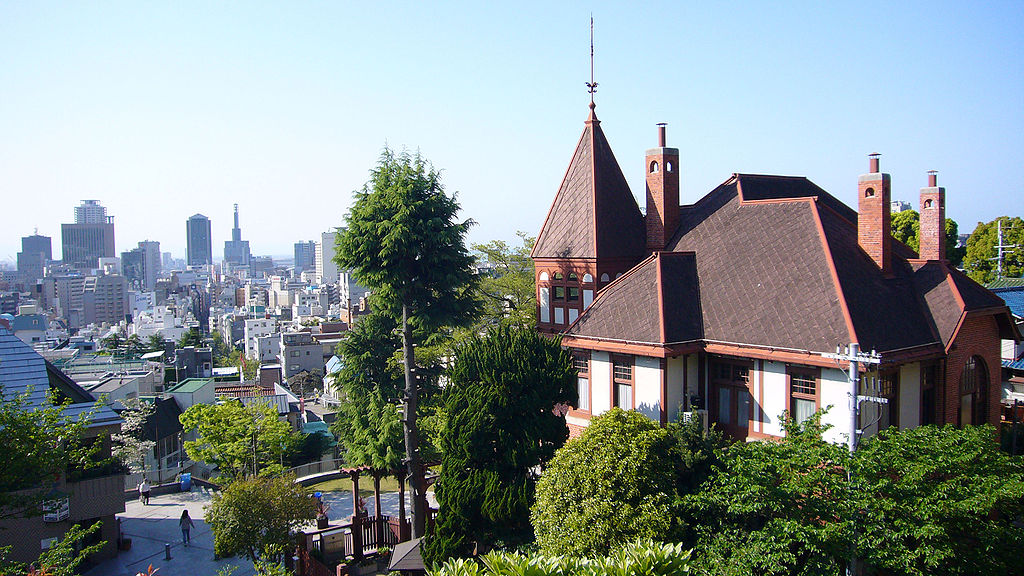
Kitanocho foreign traders' zone: Kobe's Kitano-cho district has the largest concentration of foreign merchant and diplomat homes in Japan. There are over a dozen ijinkan foreign residences that are open to the public for a small fee. My favorites are the: Kitano Foreigner's Club: The Kitano Foreigner's Club was a members-only social club frequented by the foreign residents who moved to Kobe after the port was opened up to international trade in 1868. This former residence, built in the late Meiji Period, reproduces the salon, featuring a bar, lounge and old-style kitchen complete with a wood-burning hearth. England House: England House (1907) has antique furniture and household items of that historical period. The second floor is home to a collection of Sherlock Holmes memorabilia including a replica of Sherlock Holmes' room. Ben's House: Ben's House was built in 1902 and is one of the district's oldest Western-style buildings. It is the former home of Englishman Ben Allison, an avid hunter and world traveler. The house is filled with stuffed animals, including tigers, a moose, a polar bear and other trophies collected from around the world.
Kobe Harborland: Kobe Harborland is a modern waterfront zone that feels like London or Los Angeles. It's a great place to have a meal and you can choose from a wide range of cuisine types. It's also a major shopping and entertainment district. The Umie shopping complex, near the waterfront, is home to Mosaic, the South Mall, and the North Mall. Gaslight Street, which cuts through the center of Kobe Harborland, is lit with old-style gas streetlamps and electric lights. The oldest part of Kobe Harborland is home to a collection of 19th-century redbrick warehouses known as Renga Soko. Last but not least, the area is also home to the Manyo Club hot spring resort located at the top of a skyscraper. The resort is open 24/7 and offers excellent city views!
Nankinmachi Chinatown: Japan's two most famous Chinatown's are the one in Yokohama and Kobe's Nankinmachi. Nakinmachi came into existence as the base for Chinese traders at the end of the 19th century. Today, Kobe's Chinatown is a popular area for tourists (for shopping and eating!).
Nada district sake breweries: Kobe's Nada district is one of Japan's oldest and most famous sake production areas. There are numerous old, established sake breweries in the Nada district, which is about three kilometers in length. Several of these breweries offer tours, sake tasting and museum facilities. The Hakutsuru Sake Brewery Museum is well worth the effort and also offers sake tasting.
Hyogo Prefectural Museum of Art: The Hyogo Prefectural Museum of Art showcases both modern and contemporary art and is located on the waterfront. The structure was designed by Japan's most famous architect, Ando Tadao, who also designed numerous buildings on Naoshima art island (one was featured in the 007 film "No time to die"). The museum is biggest modern art museum in Western Japan and home to exceptional collections of paintings, prints, sculpture and installations by famous international and Japanese artists.
Akashi Kaikyo Bridge: The Akashi Kaikyo Bridge is nearly four kilometers in length and has long been the longest suspension bridge in the world, which makes is well worth the effort. The bridge was completed in 1998 and connects the Japanese mainland with Awaji Island (and Shikoku Island). You don't need a car to experience the bridge. The Maiko Marine Promenade, 50 meters above the sea, is a spectacular walking route.
- Indexed full list of all my blog posts | articles.
- Indexed full list of all my Japanese culture essays.
Japan private travel content by Your Japan Private Tours' (established in 1990) founder Japan travel expert Ian Martin Ropke. I have been planning, designing, and making custom Japan private tours on all five Japanese islands since the early 1990s. Your Japan Private Tours specializes in bespoke travel for private clients (I do not work with agents) including exclusive excursions, personalized experiences, and unique adventures. I am 100% client-centric and total individual attention. Consider my Japan travel services for your next trip. And thank you for reading my content. Learn more!