Japan private tour ideas for avoiding overtourism & Okayama Prefecture Part 2
Before I get into this blog post about Okayama Prefecture (Part 2), I would like to explore the meaning and the advantages of off-season travel and off-the-beaten-track travel in Japan and in general.
As the word overtourism becomes established in the media I feel it is important to focus on the advantages of off-season travel and off-the-beaten-track travel for Japan and in general.
Off-season and off-the-beaten-track travel advantages include less crowds, less stress, less time wasted and lower prices for hotels and flights. All in all, off-season and off-the-beaten-track travel offer a better-quality travel experience.
Off-season travel was a term that came into use, mainly for European travel, in the 1950s when mass tourism really got started. Today, it is used for nearly all major travel destinations because all major travel destinations suffer from the negative effects of overtourism. In the last 10 years, the best places in France, England, Spain, Italy and France have become overly crowded in summer peak season. This is also true for Japan but in Japan peak season is cherry blossom season (late March to late April) and momiji maple leaf season (October and November).
The big difference between Japan's overtourism seasons and those in other countries is in itself seasonal. Cherry blossoms can be early or late. Maple leaf season can be early or late. So, it's not easy to predict peak season in Japan nor is it easy to experience these natural events with 100% success. For example, maple leaf season in 2025 at lower elevations (Kyoto, Tokyo) was nearly five weeks later than peak season in 2023. This means that off-season travel is also more reliable since it's not about what's in bloom or what's happening in the natural world in any specific way.
Japanese off-season travel months are when domestic Japanese tourists are hardly on the move. This includes January, February, May, June, the increasingly hotter and hotter summer months and September. I advise my Japan private travel clients to consider February (for plum blossoms and warmer daytime temperatures), May (for new leaves and all kinds of flowers), and September (for early autumn vibes). I also recommend the summer months to clients but only if they are willing to visit places that are reliably cooler in summer (the Japanese Alps, Hokkaido) or have great beach environments (the north side of Honshu island west of Kanazawa and key areas on Shikoku island).
Japan's high-value off-the-beaten-track travel destinations are myriad. In fact, when you skip the main Japanese travel destinations repeatedly covered in the international press and on social media (namely Kyoto, Nara, Kamakura, Mount Fuji) the rest of Japan is off the beaten track. In the last few years, I have been working with more and more private travel clients who are interested in seeing the best of Kyushu, Shikoku and Hokkaido island (usually in summer and autumn). And a lot of my Honshu island clients are visiting the relaxed Izu Peninsula, the amazing Tohoku region north of Tokyo, and the stunning coastal areas west of Kanazawa.
And don't forget, in super peak season it is wise to mix the very famous locations with a few off-the-beaten-track places. In this way, you get to see everything: iconic, famous Japan and sleepy, authentic Japan. Learn more!
The rest of this post covers:
Japan private travel content by Your Japan Private Tours' (established in 1990) founder Japan travel expert Ian Martin Ropke. I have been planning, designing, and making custom Japan private tours on all five Japanese islands since the early 1990s. Your Japan Private Tours specializes in bespoke travel for private clients (I do not work with agents) including exclusive excursions, personalized experiences, and unique adventures. I am 100% client-centric and total individual attention. Consider my Japan travel services for your next trip. And thank you for reading my content. Learn more!
Other high-value places to visit in Okayama Prefecture
The charms of Okayama's Fukiya Village: The remote, old-world village of Fukiya is located in the hills, roughly 15 km west of Takahashi City. The area evolved from its rich copper mine and also prospered as a producer of the valuable bengara color pigment made from red iron oxide. The town's economic fortune began to decline in the 1920s. However, the distinctive red bengara paint can stil be seen on many of the village's old houses. Bengara paint is both a water and fire retardant and also useful for textile dyeing, as a paint pigment, and for waterproofing ship hulls. Some of the village's homes have been converted into craft galleries and restaurants. The Former Katayama Residence is open to the public and gives visitors an authentic picture of how wealthy bengara merchants lived in the Edo period. The Fukiya Historical Museum, another old village home, is also open to the public. The comprehensive Bengara Factory Museum, which consists of many restored Meiji period (1868-1912) buildings, introduces visitors to the bengara manufacturing process. South of Fukiya Village (about a 40-minute walk from the village center), the Hirokane Residence is also open to the public (but only some rooms can actually be entered). This substantial wealthy merchant home, built on a hill, looks like a castle and has warehouses, a tea ceremony room, and a traditional Japanese garden.
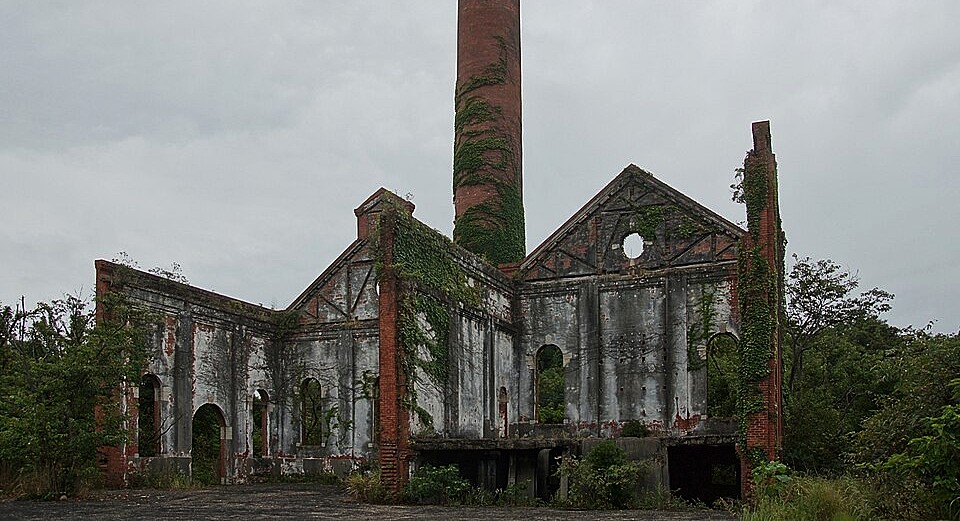
Okayama's Inujima art island: Tiny Inujima Island (or "Dog Island"), under the influence of nearby world-famous Naoshima art, is a great place to stroll and see contemporary art outdoors and indoors. Before becoming an art island, Inujima was one of the best sources for granite stone blocks for castle construction. In the late Meiji period (1868-1912), copper was found on the island and a copper refinery was built there. The refinery only lasted a bit more than a decade and then shut down. The old refinery is now designated as a industrial modernization heritage site that is used to display contemporary art in an underground setting built with local materials. The rest of the island is home to a tiny village and the Inujima Art House Project's five gallery sites.
Staying in an Okayama Prefecture farmhouse: Okayama is largely rural and nearly 65% of the prefecture's 1.8 million inhabitants live in Okayama City and Kurashiki City. The countryside of the prefecture, on the mainland and on islands in the Seto Inland Sea, offer great farmhouse stay experiences. An Okayama Prefecture farmhouse stay can include agricultural experiences (planting and harvesting), cooking experiences and craft experiences. The best areas to stay are Tsuyama City, Kagamino Town and Chuo Town. Farm Terrace Takakura, in Tsuyama City, offers opportunities to harvest seasonal fruits and vegetables, as well as activities like wood-fired pizza and bread baking. Tsukihi Farmhouse B and B in Kagamino Town, is a pesticide- and chemical-fertilizer-free farm where visitors can pick vegetables, chop wood, and make soba noodles. The KibiChuo Town Farm Stay Project connects visitors with various farms in Chuo Town for a range of experiences, including agricultural work and cooking. Other farmhouse stays, like Uji House, offer natural dyeing experiences. Most traditional Japanese farmhouses offer simple accommodations, such as sleeping on futons spread out on tatami mats. Meals generally use fresh ingredients from the farm and local areas, which change with the seasons. Many farmhouse stays encourage interaction with the local community and host families. Learn more!
- Indexed full list of all my blog posts | articles.
- Indexed full list of all my Japanese culture essays.
Japan private travel content by Your Japan Private Tours' (established in 1990) founder Japan travel expert Ian Martin Ropke. I have been planning, designing, and making custom Japan private tours on all five Japanese islands since the early 1990s. Your Japan Private Tours specializes in bespoke travel for private clients (I do not work with agents) including exclusive excursions, personalized experiences, and unique adventures. I am 100% client-centric and total individual attention. Consider my Japan travel services for your next trip. And thank you for reading my content. Learn more!