Japan private tour insights for Yamaguchi Prefecture, the western tip of Honshu
Before we get into this post on Yamaguchi Prefecture, at the western tip of Honshu Island, I would like to comment on a couple of things happening in Japan right now.
The first topic, which has received international attention, are Japan's increasingly common bear attacks. Northern Akita Prefecture, in particular, has had more bear attacks this year than ever. What is interesting is why there are more encounters between bears and people. The reason is climate change! Akita's bears rely on oak acorns and beech nuts for a big part of their diet in autumn. This past year has seen a continued general decrease in acorns and beech nuts due to climate change. And this trend is happening all over the world. In California, large predators can't find enough drinking water and are increasingly entering settled areas leading to conflict. This is also due to climate change. I feel humans will not understand the dangers and implications of climate change until it is almost too late. We are likely to repeat what happened on Easter Island. But maybe not!
The second topic that came up in the news also relates to the environment. Japan ranks in the top five countries for its recycling policies and practices. Recently Japanese scientists have discovered a new and inexpensive way to turn PET plastic bottles and textile waste turned into valuable compounds using an iron catalyst. Researchers at Tokyo Metropolitan University developed a method to actually break down PET bottles and textiles using a cheap, abundant iron catalyst and alcohols. Globally, PET plastics account for up to 12% of landfill volume, which means few PET materials are actually being turned into useful byproducts. Polyester, especially the PET variety, is a common plastic used in bottles, textiles, carpets, and curtains. PET bottles that are just melted produce materials that are lower in quality than the original bottle's plastic. The new Japanese method is inexpensive and can be scaled and that's good for the environment. These kinds of recycling breakthroughs offer a promising strategy for a circular economy, where widely discarded materials are transformed into reusable resources for industrial applications. Thank you Japan!
The rest of this post covers:
Japan private travel content by Your Japan Private Tours' (established in 1990) founder Japan travel expert Ian Martin Ropke. I have been planning, designing, and making custom Japan private tours on all five Japanese islands since the early 1990s. Your Japan Private Tours specializes in bespoke travel for private clients (I do not work with agents) including exclusive excursions, personalized experiences, and unique adventures. I am 100% client-centric and total individual attention. Consider my Japan travel services for your next trip. And thank you for reading my content. Learn more!
Notable places to visit and experience in Yamaguchi Prefecture
Yamaguchi Prefecture is the westernmost prefecture on Honshu Island. The prefectural capital is Yamaguchi City. Yamaguchi, historically known as Choshu, played a prominent role in overthrowing the Edo-Tokyo Tokugawa shogunate in the 1860s, which brought Japan's feudal era to an end. The prefecture has a low population density, rich historical locations, lots of nature, and great seafood!
Yamaguchi City: Dating from the 14th century, Yamaguchi is a relaxed city and the capital of Yamaguchi Prefecture. During Japan's warring states period (1467-1600), Yamaguchi was known as the "Kyoto of the West." Yamaguchi's Rurikoji Buddhist temple is well-known for its five-storied pagoda (a national treasure) that was built in 1442. The temple precinct is also known as Kozan Park, home to the Chinryutei Japanese tea ceremony house. The men of Western Japan that overthrew the shoguns of Edo used to pretend to practice tea ceremony here but were in fact plotting how to overthrow the Edo Shogunate. Yamaguchi's Joeiji Temple has one of Japan's most famous Zen gardens. The Sessutei garden was designed by Sesshu, Japan's famous Zen ink painter, and is roughly 500 years old (Muromachi period). The garden represents a living version of one of Sesshu's black and white Zen landscape paintings.
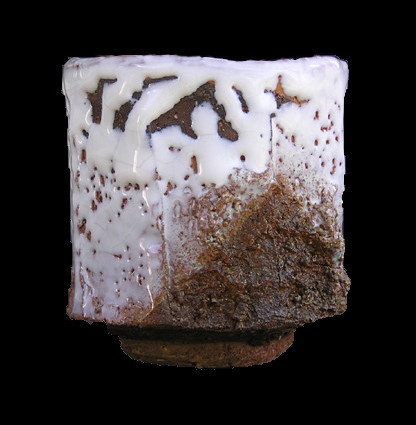
Relaxing and preserved Hagi castle town: The old castle town of Hagi faces the Sea of Japan and is known as a quiet place to drink in history. The castle lies in ruins but was once home to the Mori samurai clan, one of the most powerful in the Edo period, who were also key in the overthrow of the Edo-Tokyo Tokugawa shogunate that controlled most of Japan. The Mori daimyo lords ruled over Choshu, as the area was originally known, for more than 250 years. Hagi was spared the destruction that largely ruined many feudal towns after the violent end of the Edo period known as the Meiji Restoration period. And for this reason, the old parts of Hagi are still almost the same as when they were built. The town has a number of exquisite preserved traditional samurai and merchant residences that are open to public. Aiba Waterway: Hagi's Aiba Waterway is a canal that flowed southeast of Hagi's castle town. It was built in the early 1700s and used to transport rice, firewood and other daily life items. The canal's waters were also used to irrigate farmland and to put out fires. The small boats that plied the Aiba Waterway have disappeared and the canal has become a thriving habitat for countless colorful koi carp. The canal area's fine Yukawa Residence, which is open to the public, shows how canal water was used in loca Hagi homes along the canal to wash clothing, dishes, vegetables, and to create garden ponds. The bathroom in this large home offered direct access to the canal for bathing. Hagiyaki pottery: Hagiyaki pottery is well known across Japan, especially in the tea ceremony world. The Japanese only came to understand chemical glazes in the late 16th century by kidnapping thousands of potters from Korea (which Japan invaded on two occasions, when Toyotomi Hideyoshi ruled Osaka Castle). Hagiyaki vessels change color over time, which makes them seem alive, and this makes them especially popular in Japan's traditional tea ceremony worlds. Hagi's Yoshika Taibi Memorial Museum, on the edge of town, has a large collection of Hagiyaki masterpieces including a workshop that demonstrates how the pottery is made. The Hagi Uragami Museum has regular exhibits of Hagiyaki pottery, ukiyoe paintings, and contemporary arts.
Shimonoseki City: Shimonoseki City lies at the western tip of Honshu Island. The Kanmon Strait (about 700 meters wide) separates Honshu from Kyushu Island. In the lead-up to the Meiji Restoration, the Choshu forces (who ultimately overthrew the Edo Shogunate) were outraged by the steady incursion of Western imperialist forces (mostly British) who brazenly began sailing through the Kanmon Strait and the Seto Inland Sea. The Choshu military attacked many of these ships leading to the bombing of Shimonoseki in 1864 by Western powers. Today, the Kanmon Strait, a busy seaway, can be crossed by car using the Kanmonkyo Bridge. The Kanmon Railway Tunnels (for normal trains and the shinkansen bullet trains) also connect the two islands. Shimonoseki is also the departure point for the "slow" overnight ferry to Busan, South Korea, which is a relaxing and nostalgic way to travel in my opinion. Shimonoseki is famous for seafood and especially famous for fugu pufferfish (known as fuku locally).
- Indexed full list of all my blog posts | articles.
- Indexed full list of all my Japanese culture essays.
Japan private travel content by Your Japan Private Tours' (established in 1990) founder Japan travel expert Ian Martin Ropke. I have been planning, designing, and making custom Japan private tours on all five Japanese islands since the early 1990s. Your Japan Private Tours specializes in bespoke travel for private clients (I do not work with agents) including exclusive excursions, personalized experiences, and unique adventures. I am 100% client-centric and total individual attention. Consider my Japan travel services for your next trip. And thank you for reading my content. Learn more!