Japan private tour overtourism insights and Nagasaki Prefecture travel tips Part 2
Before I get into my Nagasaki Prefecture Part 2 blog post, I will review the latest news about Japan's tourism industry and foreign travel to Japan.
The yen has weakened again, and this is boosting foreign arrivals in Japan. However, many of Japan's foreign travelers are increasingly budget travelers. This results in more foreign tourists in Japan, but less money spent by many tourists.
This is pushing the Japanese government to find ways to increase both the number of foreign arrivals and the amount they spend in Japan. Higher-value, sustainable tourism is not an easy strategy for any country, but it is the only strategy that benefits the economy and local communities.
It is also important to understand that budget travel appeals to a wide range of economic classes. When I travel to Canada every year to visit my ageing parents I spend a few days in the Toronto region. I stay at inexpensive hotels, and I don't eat all of my meals in restaurants nor do I buy a lot of things (i.e. think shopping). In fact, I actually enjoy going to supermarkets to buy high quality food items and then returning to my hotel room for picnic meals whilst watching a film. Is this not also a way to experience local foods! Not everyone wants to eat in a restaurant three times a day when in a foreign country. Not because they can't afford it but more from personal preferences and choices. For me this applies particularly to dinners, and this is also what many foreign travelers in Japan are doing. Not every night but some nights. Face it: after a day of touring in Kyoto or Tokyo or elsewhere, tourists are exhausted and this makes eating in your hotel room relaxing and fun on many days.
The Japanese media has fixated on this trend and film clips of foreign travelers in Osaka's Namba district stocking up on ready-to-eat sushi, tempura, and canned beer have gone viral. I feel that this is an over reaction and you can be sure that many Japanese traveling in foreign countries do the same and why not! And it should also be mentioned that Japan's largest sources of foreign travelers have remained the same, more or less: mainland China, South Korea, and Taiwan. These are nations known for being frugal even at home . . . North Americans are not famous for saving money, but Asians are!
Courting luxury travelers is something the Japanese government has long understood and promoted. But it's not easy to attract the rich to any destination and wealthy people don't necessarily go in for luxury dining three times a day. Breakfasts and lunches are usually simple and often mimic what the average Japanese eats (especially for lunch).
Over the last few years, the average spend by Japan's foreign tourists has decreased but not by all that much. In 2022, when the country opened after Covid, the average foreign tourist in Japan spent Yen 237,000 in 2025 this only dropped to Yen 219,000. Luxury goods shopping is something the mainland Chinese were especially known for, and their numbers have dropped considerably due to tensions between Japan and China over Taiwan's independence.
On the other hand, statistics are showing that more and more foreign tourists in Japan are spending money on experiences, which include specialty restaurants and things like tea ceremony and kimono dress up.
In response to these challenges, the Japanese government is currently thinking about raising its international tourism tax and I think this is an excellent idea. Unfortunately, the increase being proposed will in no way reduce overtourism. To raise the international tourism tax from Yen 1,000 to Yen 3,000 is meaningless in my opinion. Instead, it should be raised ten or even twentyfold (or even more).
Japan’s wants to attract 60 million foreign visitors by 2030 but the push to attract more visitors cannot be just a numbers game. It has to be about quality and also distribution. Japan must figure out a way to get more foreign visitors to got to the parts of Japan that are beautiful but dying (i.e., zero population growth and shrinking economies). Countries like Spain and Italy have done much better in this regard but they also have a much longer history of dealing with these issues. Let's see how Japan manages in the years ahead. I feel they will learn and the best place to learn is from other nations that have solved these problems.
The rest of this post covers:
- Nagasaki's Shimabara Peninsula: Volcanic onsen natural worlds
- Hirado Island: former Dutch trader's base & Christian center
- The exotic & serene Goto Islands in the East China Sea
Japan private travel content by Your Japan Private Tours' (established in 1990) founder Japan travel expert Ian Martin Ropke. I have been planning, designing, and making custom Japan private tours on all five Japanese islands since the early 1990s. Your Japan Private Tours specializes in bespoke travel for private clients (I do not work with agents) including exclusive excursions, personalized experiences, and unique adventures. I am 100% client-centric and total individual attention. Consider my Japan travel services for your next trip. And thank you for reading my content. Learn more!
Shimabara Peninsula: Volcanic onsen natural worlds
Nagasaki Prefecture's Shimabara Peninsula is a very popular and high-value hot spring and hiking destination east of Nagasaki City. It is ideal for day trips and also for staying in the area for a couple of nights or more. Remember, not everyone loves city travel (and that includes me!). Shimabara's main attractions are the active volcano of Mount Unzen, Shimabara Castle, and the historical legacy of the area's "Christian" Shimabara Rebellion in the Edo period (1600-1868).
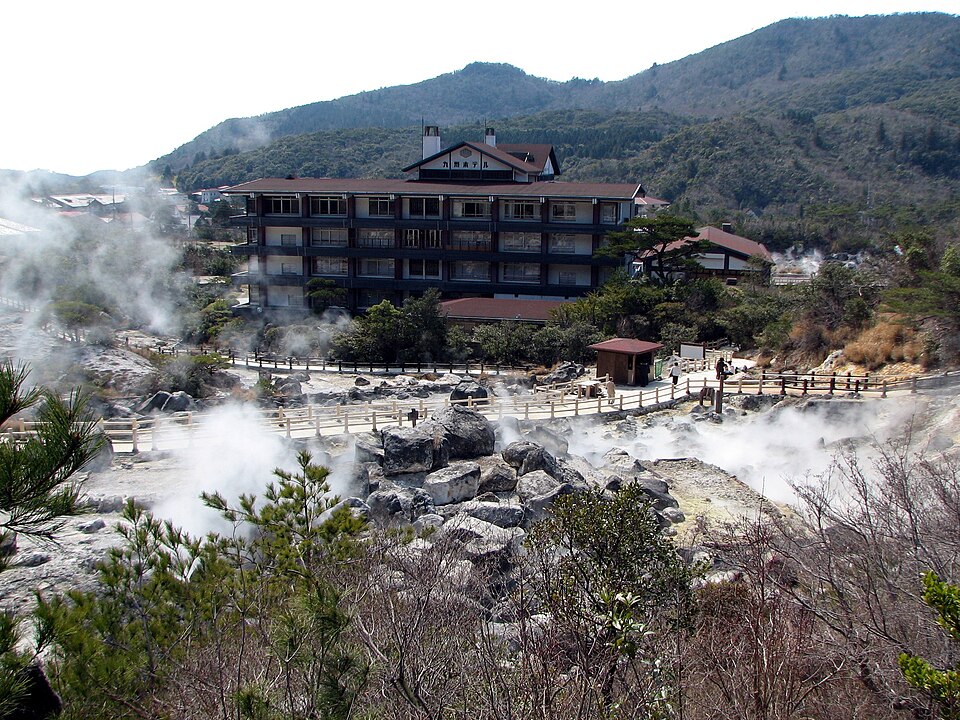
Mount Unzen: Mount Unzen, an active volcano at the center of the Shimabara Peninsula, is known for its natural beauty, and is part of the Unzen Amakusa National Park, one of Japan's first national parks. In spring, the mountain's slopes are covered in flowering pink azalea bushes. And in autumn, Mount Unzen's slopes are famous as the best place in Kyushu for autumn colors (reds, yellows, and browns). Access to the upper slopes of the mountain is easy with the Unzen Ropeway. From the top of the ropeway visitors can see the Ariake Sea and Kumamoto Prefecture (to the southwest) in the distance. Hiking trails begin at both the lower and upper ropeway stations. The upper hikes leads to Mount Fugendake (1359 meters), from which you can see the smoking top of volcanically active Mount Heisei Shinzan (1486 meters). The Unzen Onsen hot spring area, lower down on Mount Unzen, below the Nita-toge Pass, has superb bathing facilities and ryokan hotels of all kinds. Unzen Onsen in ancient times began as a Buddhist temple town that rivalled the splendor of Koyasan (Wakayama Prefecture). In the Meiji period (1868-1912), the Unzen Onsen area developed into one of Japan's earliest tourist resorts favored by foreigners (from Nagasaki City) and even today you can see a few remaining Western details in the town. From the center of the onsen town visitors can stroll through and bathe in a number of jigoku hellscapes (barren rocky areas punctured with billowing steam vents and gushing hot springs. These hot water hells were used to execute rebels and Christians after the failed Shimabara Rebellion (1637-1638). For day trippers, the local public Kojigoku Onsen, is worth a visit. It lies in a forested area a short walk outside of the town center. Kojigoku Onsen has two exquisite old stone baths and massage waterfalls (gender separated!).
Shimabara Castle: Shimabara Castle was at its peak a very large feudal castle for such a small feudal fiefdom. It was constructed by heavily taxing the locals in the early Edo period, who were also cruelly persecuted for their Christian beliefs. This led to the violent and shortlived Shimabara Rebellion (1637-1638), which ultimately failed and resulted in the cruel execution of many (see above). The castle, like so many across Japan, was destroyed during the outrages of early Meiji period (1868-1912). The castle's current structures are ferroconcrete dating from 1964. The 5-story castle keep or tower is home to the interesting Castle Tower Museum, which has a superb collection of Christian and samurai artifacts. One of the castle's original samurai districts, known as Teppo-cho (Gun Town), set along a canal, is historically amazing. It is home to three preserved samurai houses (all open to the public). And the so-called City of Swimming Carp, a small canal neighborhood south of the castle, is alive with hundreds of koi colored carp.
Hirado Island: former Dutch trader's base & Christian center
Hirado Island in the northwestern corner of Nagasaki Prefecture is an off-the-beaten path destination today. However, in its heyday this island served as the base for the super powerful and wealthy Dutch East India Company until the firm's operations were moved to Dejima Island in the port of Nagasaki City. The island is one of the closest points to the Asian mainland in the Kyushu region. The early European traders were frequently followed by Christian missionaries who likely felt safer near a Western trading post. The Hirado Christians were persecuted by the Tokugawa Shogunate and many had to go underground to keep their faith secret and alive.
Dutch Trading Post: Hirado Island's Dutch Trading Post was established in 1609 in the first years of the Edo period with the express approval of the Tokugawa Shogunate (Edo-Tokyo). The Hirado base of the Dutch East India Company only lasted a few years before they were "forced" to move to Dejima Island in Nagasaki City's harbor. Hirado's original Dutch trading warehouse and office was reconstructed in 2011 using interlocking stone blocks supported by thick, exposed wooden beams. The reconstructed warehouse functions as a museum that covers the history of Japanese-Dutch international trade and commerce relations. Near the warehouse are a few surviving bits and pieces of the original Dutch trading post.
Christian Sites: Christianity arrived in Japan in the mid 1500s and was initially tolerated by Japan's samurai government authorities but not for long. Most of Japan's early Christian converts were residents of what is now known as Nagasaki Prefecture. The Tokugawa Shogunate felt threatened by the powerful ideas behind Christianity and decided in the late 17th century that enough was enough. Many "Hidden Christians" continued to practice their religion in secret over the next 200 years on Hirado Island and elsewhere. This period of Japan is superbly covered in Martin Scorsese's 2016 film "The Silence," starring Andrew Garfield, Adam Driver, Tadanobu Asano, Ciarán Hinds and Liam Neeson. Nakae no Shima Island, two kilometers off the coast of Hirado Island, is a tiny, uninhabited island where religious leaders were executed during the persecution of Christians. For Japan's Christians the island's fresh water is considered sacred for baptisms.
The exotic & serene Goto Islands in the East China Sea
Nagasaki Prefecture's Goto Islands are a chain of 5 small islands west of Nagasaki City in the East China Sea. The Goto Islands were the last place Japanese mission ships stopped enroute to China in the classic Tang dynasty period (7th to 9th century). Kukai (Shingo Buddhism) and Saicho (Tendai Buddhism), two of Japan's most important Buddhist saints, both stopped at the Goto islands on their way to and from China. There are a couple of popular tourist sites on the Goto Islands related to Kukai. The Goto Islands are also famous for their Christian history and became a "safe haven" for many Hidden Christians in the late 17th century. The ban against Christianity was lifted in 1873 and since then many churches were built on the Goto Islands. Four of these churches were named World Heritage Sites in 2018. But the main tourist attractions of the Goto Islands are their natural beauty ranging from great beaches and mountain landscapes. The island's traditional fishing villages are also a wonderful place to wander, relax and eat.
Fukue Island: Fukue Island is the biggest of the Goto Islands and also the most populated. Fukue Island has many old churches that are powerful historical silhouettes. The island's natural attractions include beaches, rough cliff-like coastlines, and mountains. The island's feudal castle is now only ruins, but samurai residences and streets have survived. The exquisite Lord Goto Residence on the old castle grounds is home to a scenic Japanese garden. And Bukeyashiki Samurai Street is also a lovely place to stroll.
Nakadori Island: Nakadori Island is the second biggest island of the Goto Islands. The island is also known for it's numerous Christian churches, beautiful landscapes, and charming villages.
Wakamatsu Island: This island is connected to Nakadori Island by bridge and is the least developed of the Goto Islands. Wakamatsu's Whale Museum offers an excellent overview of what was once a prosperous industry across the Goto Islands. Near the museum, visitors can admire views from Kaido Shrine, set on a small, forested hill. The shrine was a place to pray for the safety of whalers and the main torii gate of the shrine was constructed with pieces that resemble whale jaw bones.
- Indexed full list of all my blog posts | articles.
- Indexed full list of all my Japanese culture essays.
Japan private travel content by Your Japan Private Tours' (established in 1990) founder Japan travel expert Ian Martin Ropke. I have been planning, designing, and making custom Japan private tours on all five Japanese islands since the early 1990s. Your Japan Private Tours specializes in bespoke travel for private clients (I do not work with agents) including exclusive excursions, personalized experiences, and unique adventures. I am 100% client-centric and total individual attention. Consider my Japan travel services for your next trip. And thank you for reading my content. Learn more!