Japan private tour insights for Kyoto's and Japan's latest wave of coffee culture
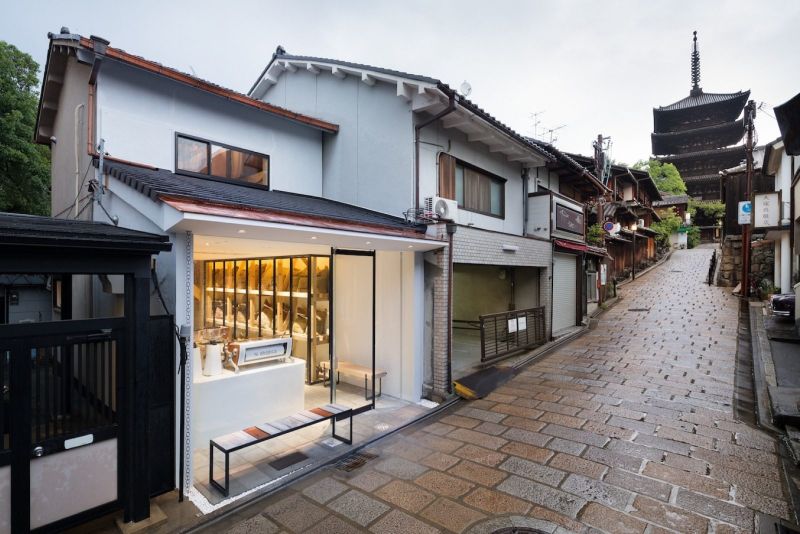
When I travel, and I have traveled the globe for nearly 50 years, I have always found cafes to be one of the best places to watch the locals and the tourists. And this true for nearly all countries on the planet. This blog post is about the third wave boom in coffee cafes in Kyoto (and Japan), which took off in the mid 2010s.
But before we get to coffee in Kyoto it would be good to understand Japan's relationship with coffee from the get go. Japan's coffee culture, much like other countries, has changed over time in accordance with societal changes. The very roots of coffee in Japan go back to the 16th and 17th centuries when it arrived with the Dutch and Portuguese traders. Japan's first coffee shop was called Kahiichakan. It opened in 1888 and went bankrupt five years later. At that time black tea was all the rage. Like coffee it was foreign and connected to the sophistications of Europe. While coffee was more Italian or French, black tea was very much English and French. Obviously, the French understood caffeine better than most! Tea consumption in Japan was also about the very vessels it was consumed in. Suddenly the Japanese of the early 20th century were drinking tea outside their homes and at home in ornate porcelain teacups that in no way resembled the tea bowls used in the Japanese tea ceremony. In fact, cups with handles were a totally new thing in Japan.
In Europe, cups with handles were first used to serve chocolate in the 17th century. And then in the early 18th century, with technological hard-paste porcelain innovations in Germany, cups with durable handles suddenly became possible. Very quickly, imported Chinese porcelain cups were replaced with the new Western teacup and coffee cup form (i.e., with handles). And these exotic tea and coffee cups with handles introduced to Japan by Western traders became popular very quickly with the Japanese.
Back to Japan's coffee history. In 1933, Tadao Ueshima established the Ueshima Tadao Shoten company in Kobe (a Western bastion from 1868 onwards). Today, Mr. Ueshima is known as the "father of coffee in Japan."
World War II put a stop to all coffee imports to Japan, and it only began making a comeback in the early 1950s. In 1969, the father of coffee in Japan began mass producing canned coffee that could be consumed literally anywhere. During the 1970s and 1980s coffee continued to gain market share. The establishment of the Doutor Coffee chain in 1980 made coffee a on-the-go beverage that gave you energy and was easy to find in vending machines, cafes and at home (usually via filter or cloth socks).
Coffee's popularity across Japan began to change in new ways with the first Starbucks, which opened in Ginza, Tokyo, in 1996. I remember my first Japan Starbucks experiences and immediately understood why the Japanese literally went wild for Starbucks cafe spaces. What made Starbucks so special is that they gave people a well furnished and designed living room environment to relax in. The experience was tasteful, relaxing and exotic. The staff were also different: you could chat and banter a bit with them while you waited for your coffee. In a way, going to Starbucks in Japan was like leaving Japan and entering a foreign world . . . BTW: Japan is Starbuck's 3rd biggest market worldwide (after the US and China).
Since the 2010s I have entered Starbucks cafes (worldwide) less and less in favor of local and family run coffee shops. I like to support individuals over corporations . . . And in Japan the coffee cafe choices have really changed over the last decade.
Nowadays, Japan’s coffee cafes aren't just about coffee. They are also about mood, music, and co-working space and open from dawn to late at night. Younger generations hardly drink alcohol anymore. Instead, they get "high" on coffee and this certainly true in Japan.
And a lot of the current boom in cafes in Japan is about imported cultural trends. Baristas and roasters who gained experience in places like Australia, the USA, and Scandinavia introduced new contemporary specialty coffee concepts to Kyoto (and elsewhere in Japan). This new wave emphasized single-origin beans, precision brewing methods (like pour-over), and minimalist design, a contrast to the traditional dark roast coffee of kissatens.
The space in which cafes exist in Kyoto has also shifted away from modern concrete and steel structures to the organic materials so prominent in traditional Japanese merchant houses (machiya) into stylish, modern cafes. This has provided a unique atmosphere that blended historical Kyoto aesthetics with contemporary coffee culture, appealing to a wide range of customers. In Tokyo and Osaka, where machiya buildings are uncommon, cafes have built into funky 1930s buildings that also have a certain historical allure.
Kyoto's new cafes have also successfully integrated with the existing culture, offering pairings of specialty coffee with traditional Japanese sweets and catering to a local population that already had a high per-capita coffee and bread consumption.
The highly photogenic interiors of the new cafes (e.g., % Arabica's minimalist look) and the unique settings made them popular on social media platforms like Instagram. This, combined with a rise in tourism, helped spread the popularity of Kyoto's new coffee scene globally.
To find great coffee cafes in Kyoto, simply get off the main streets and walk the back lanes of the downtown core. You will find your vibe very quickly. I sure did!
Here are a few of my Kyoto café favorites: 1. Funky Carinho, on Ogawa Street just north of Sanjo Street. 2. Elegant and stunning Whatsopp, just south of Nijo Castle, a block and a half west of Horikawa Street. 3. Goodman Roaster Kyoto for killer soundtracks and ambieance; on Ayanokoji Street just west of Karasuma Boulevard. 4. Minimalist % ARABICA coffee (various locations). 5. Inoda Coffee on Sanjo Street and around the corner on Sakaisuji Street (great for watching large numbers of older Japanese people "hanging" out). Enjoy!
- Indexed full list of all my blog posts | articles.
- Indexed full list of all my Japanese culture essays.
Japan private travel content by Your Japan Private Tours' (established in 1990) founder Japan travel expert Ian Martin Ropke. I have been planning, designing, and making custom Japan private tours on all five Japanese islands since the early 1990s. Your Japan Private Tours specializes in bespoke travel for private clients (I do not work with agents) including exclusive excursions, personalized experiences, and unique adventures. I am 100% client-centric and total individual attention. Consider my Japan travel services for your next trip. And thank you for reading my content. Learn more!