Japan private tours: Japanese Walking, and Hokkaido's Otaru City & Niseko
Before we get into the "meat" of this post (the nostalgia and romance of Otaru City and the winter and summer amazings of the Niseko ski resorts), I would like to point out that Japanese thinking is trending worldwide right now in the form of "Japanese Walking," an interval walking training approach. The Japanese Walking strategy started gaining prominence after a study led by Hiroshi Nose, an exercise physiologist at Shinshu University Graduate School of Medicine in Japan (Shinshu is another name for Nagano Prefecture). Japan has the world's fastest ageing population (Germany is second) and thus the most elderly people. The first study was undertaken around 2005.
Dr. Nose's study posited that the interval-training techniques used by star athletes (fast and slow in terms of intensity in a single workout session) could improve the overall health of the elderly. He also felt that healthier old people (and the generation of to-be old people) would also significantly reduce the burden of the elderly on the medical system (which the United States and Canada also have huge problems with, namely because the elderly are too sedentary and brain lazy. Or? ). The initial Japanese walking study results were promising, and Dr Nose's team has continued to refine the technique.
Japanese Walking is all about alternating bursts of intense walking and with relaxed and slower forms of exercise. Typically, Japanese Walking practitioners walk quickly for three minutes and then strolling slowly for three minutes. Longer strides are recommended for fast walking, as is arm bending and swinging whilst walking quickly.
Ideally, do about 30 minutes of Japanese Walking four times a week. Dividing a 30-min session into three 10-min sessions is also considered to be equal to a continuous half-hour session.
Results have show that Japanese Walking walkers have better blood pressure, cardiovascular health and leg strength when compared walking walked at a continuous, moderate pace. In the summer of 2025, according to a July feature in the New York Times, Japanese Walking went viral on TikTok, no small feat! Give it a try!
The rest of this post covers:
Japan private travel content by Your Japan Private Tours' (established in 1990) founder Japan travel expert Ian Martin Ropke. I have been planning, designing, and making custom Japan private tours on all five Japanese islands since the early 1990s. Your Japan Private Tours specializes in bespoke travel for private clients (I do not work with agents) including exclusive excursions, personalized experiences, and unique adventures. I am 100% client-centric and total individual attention. Consider my Japan travel services for your next trip. And thank you for reading my content. Learn more!
Otaru & the Shakotan Peninsula
The small city of Otaru and it's historical harbor are less than an hour northwest of Sapporo. Otaru is a city with history and charm and very clever governmental marketing team! I have provided services in Otaru for a few Japan private tour clients and have always been impressed by the city's tourism assets. The city only got started towards the end of the 19th century.
Hokkaido's very first rail line went from Otaru to Sapporo. So, you could say that things from Tokyo entered Hokkaido mostly via Otaru as Sapporo was made the capital of the island (with 40% of the island's current population). As a result, the port of Otaru became quite important and valuable. At the same time the vast fortunes made by the herring fishery industry of the region were concentrated in Otaru (believe it or not, the herring was super valuable for Japan's skyrocketing and new fertilizer industry!). Otaru is also one of the oldest glass centers in Japan and well known for its Otaru Glass style.
Today, the city is both historical and forward looking. Otaru is attractive in all seasons and closely linked with the spectacular Shakotan Peninsula (directly west of Otaru) and the giant Niseko ski resort zone (southwest of Otaru).
Otaru City's top places in town and out of town:
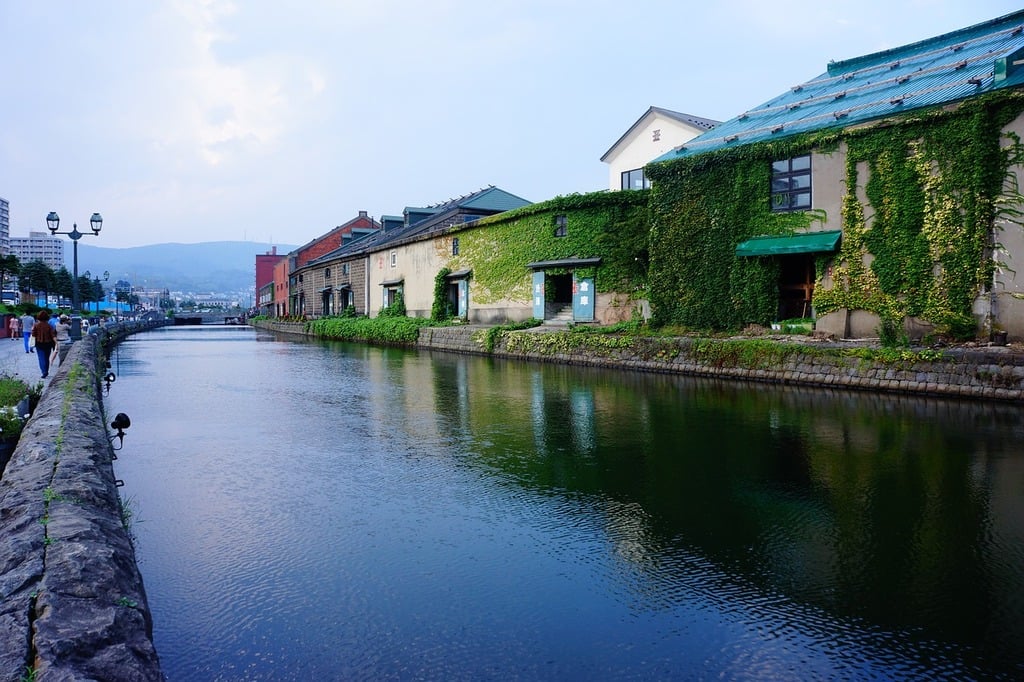
Otaru's charming old canal area: The Otaru Canal formed a key part of the city's port facilities until World War II. The cargo on the biggest ships were offloaded onto smaller vessels and taken to a dense area of warehouses that lined the canals . Modern dock technology made the canals' original purpose obsolete. But in the 1980s the people of Otaru made sure that their canals were not landfilled (as it true of most of Osaka's original canal system). Instead, they became tourist attractions and places for new restaurants and shops servicing tourists. In the evenings, old-fashioned gas lamps light the scene adding a nostalgic and romantic charm to the area. Otaru's annual Snow Light Path Festival is also centered on the canal area.
The vibrance of Sakaimachi Street's old merchant quarter: Sakaimachi Street was for the longest time the center of the merchant class of Otaru (and the trading companies they served). Lucky for tourists from Japan and abroad, this merchant quarter has also been preserved and converted into a lively old-new-world scene. Many of the old buildings along Sakaimachi Street are now restaurants, cafes, shops, and museums. In the 1950s, when the herring fishing industry went into decline, glass buoy makers for ships shifted production to high-end glass for interior use. Many of these early glass workshops can be found along and near Sakaimachi Street today.
Herring Mansions for work & play: With the fortunes made from the herring industry (used as key ingredient for early industrial fertilizer production processes), a number of individuals in Otaru became very rich and built homes to reflect their wealth. During the boom times of the Hokkaido herring fishing, large Herring Mansions were constructed by wealthy fishermen where they would both process their catch (and thus add value to it) and live luxuriously overlooking the seas that made them rich. One particular Herring Mansion stands out. It dates from the 19th century and once stood on a hill on the coast roughly five kilometers outside of central Otaru. The mansion was moved to its present location, a short taxi ride north of central Otaru, in 1958. It is open to the public and showcases fishermen's tools and lots of information (visual and audio) about the life of a herring fisherman and herring magnates in general. But that's not all! Inland a short distance in the higher hills stands the Former Aoyama Villa, which was a very luxurious villa built by the Aoyama family (one of the top three herring magnates).
Tourist attractions on the edge of Otaru City:
Shakotan Peninsula: The Shakotan Peninsula is just around the corner from Otaru Station. Basically, it is northwest of the city. Shakotan translates as Dragon, and the peninsula is kind of serpent shaped. The coastline along the east coast of the Shakotan is full of great beaches, dive shops (for killer snorkeling and scuba diving), and family fun seaside picnicking, boating and playing. The waters around the peninsula are renowned for their brilliant blue color and also for a very rich marine ecosystem. There are also intriguing seaside caves that can be visited in glass-bottomed boats. And the local uni sea urchin cuisine is considered amongst the best in Japan!
Yoichi Town's Nikka Whisky Distillery: The main distillery of Nikka Whiskey, one of Japan's leading whiskey brands (and one of its oldest whiskey makers; the company founder is known as the "father of Japanese whiskey"), is located in Yoichi on the edge of Otaru City. The Yoichi Distillery dates to 1934 and was built here because of its access to pure water and access to peat (just like in Scotland). Nikka whiskies rank among the world's finest single malt whiskies. And yes you can taste their whiskey at the distillery as well as learn a lot about hou whiskey is made.
Otaru Snow Light Path: The Otaru Snow Light Path Festival takes place in February every year and features both lighting innovation and snow statue competitions. Many locals add to the fun and the aesthetics with their own home (and small business) lantern displays.
Niseko: world-famous ski resort & summer chill spot
Niseko is without a doubt the most famous ski resort in Japan. It is known for super deep light powder snow (called Kapow) and as the most popular ski destination in the world for Australians (since the late 1980s). Niseko covers a large inland area that lies a short distance SW of Otaru as the crow flies. By train you go inland from Kutchan Station on the sea directly west of the Niseko resort zone.
Niseko skiing is all about fast, long ski runs, an almost-endless supply of super great powder. It is also lively and tasteful after-ski playland. And in the summer the fun continues with summer sports and summer fun in the cool climes (as Tokyo and Osaka melt pavement!).
Niseko is also renowned for its off-trail skiing, usually serviced by guided tours and helicopter tours. Niseko's ski resorts are all concentrated around Mount Niseko-Annupuri. The three top resorts are Grand Hirafu, Niseko Village and Annupuri, which cover most of the southeastern side of the mountain. And like the Italy to France ski runs, Niseko's big three resort are joined via the mountain's peak. So, you can ski from one to another and then return to your chalet or hotel by shuttle bus. Cross country skiing, snow shoeing and snow mobiling are also popular at Niseko. The most developed and "sophisticated" town in the orbit of Niseko is Hirafu Town. Lots of Australians there and the locals are super foreigner friendly. And sometimes you feel as if you are in a foreign country and not in the high hills of Hokkaido! Check it out!
- Indexed full list of all my blog posts | articles.
- Indexed full list of all my Japanese culture essays.
Japan private travel content by Your Japan Private Tours' (established in 1990) founder Japan travel expert Ian Martin Ropke. I have been planning, designing, and making custom Japan private tours on all five Japanese islands since the early 1990s. Your Japan Private Tours specializes in bespoke travel for private clients (I do not work with agents) including exclusive excursions, personalized experiences, and unique adventures. I am 100% client-centric and total individual attention. Consider my Japan travel services for your next trip. And thank you for reading my content. Learn more!