Aomori Japan private tour advice: Hirosaki castle town & wilderness
This blog post is mostly devoted to distinctly off-the-beaten-track nature locations in Aomori Prefecture. FYI: I would estimate, as a Japan private tour expert since 1990 on all five islands, that about five percent of all foreign travelers visiting Japan immerse themselves in nature. And I would go further and claim that Southeast Asians are the most likely to venture into Japan's vast national and quasi park areas. The forests of Japan are unlike all the forest habitats in southeast Asia as they are in the temperate zone of the northern hemisphere. The peoples of Australia, India, Malaysia and Thailand have completely different tropical forests. Even Australia has huge areas of what are called tropical forests.
The west side of Aomori Prefecture is sparsely populated, mostly mountainous and home to vast "untouched" natural landscapes ranging from virgin beech forests and rugged coastlines to marshes and stunning lakes.
The rest of this post covers:
- The charms of Aomori's Hirosaki castle town
- Aomori's Towada caldera lake and surroundings
- The Tsugaru Peninsula & quasi national park
Japan private travel content by Your Japan Private Tours' (established in 1990) founder Japan travel expert Ian Martin Ropke. I have been planning, designing, and making custom Japan private tours on all five Japanese islands since the early 1990s. Your Japan Private Tours specializes in bespoke travel for private clients (I do not work with agents) including exclusive excursions, personalized experiences, and unique adventures. I am 100% client-centric and total individual attention. Consider my Japan travel services for your next trip. And thank you for reading my content. Learn more!
The charms of Aomori's Hirosaki castle town
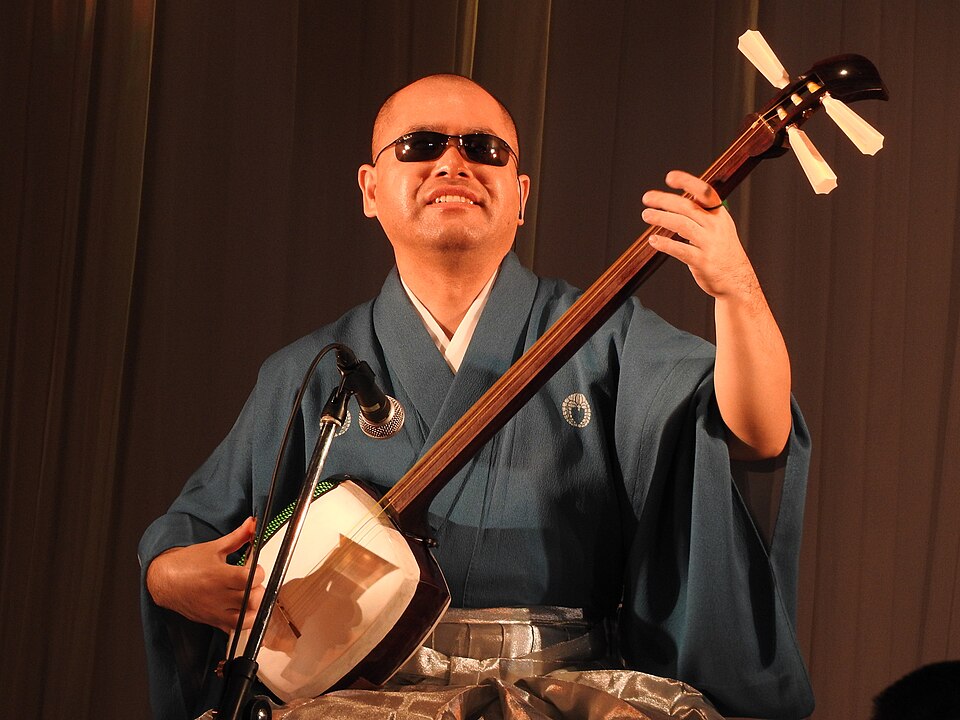
In the Edo period (1603-1868), Aomori's castle town of Hirosaki was a key power center of the entire northern tip of Honshu island. The small city continues to be one of the cultural centers of the northern Tohoku Region. The city is well-known across Japan with traditional Japanese music lovers for its Tsugaru shamisen guitar music (shamisen instruments have only three strings). Shamisen performances take place in Hirosaki's oldest restaurants in peak travel seasons.
High-value Hirosaki attractions:
Hirosaki Castle: Every castle town has a castle. Hirosaki Castle was built in 1611 for the local Tsugaru samurai clan. The first castle featured a three-story castle keep or tower, moats, and elaborate protective gates and yagura corner turrets. The castle's original was struck by lightning and burned down in 1627 and was only rebuilt again in 1810. The castle has been under renovation since 2013 (to be completed by 2018). However, the castle continues to be open to visitors.
Aoni Onsen: Hirosaki's Aoni Onsen is an unusual and tiny secluded hot spring spot located in a remote valley between Hirosaki and Lake Towada (see below). This hot spring resort has lodging business and zero electricity or cell phone reception. The onsen is especially famous with younger generations seeking the nostalgia of no internet in sight. The local lodging is called Lamp no Yado and sits right on the Aoni River in a thick forest setting. At night, countless oil lamps are lit to give light to the hot spring. There’s no electricity remember! Lamp no Yado's gender-separated hot spring baths are open to day trippers as well. Rooms can be rented for about USD 100/night/person including meals.
Neputa Mura: Hirosaki's Neputa Mura museum is devoted to the traditions of Aomori prefecture's Neputa Matsuri festivals, which take place in the first week of August across the prefecture. The museum's displays include colorful Neputa parade floats covered in big painted screens depicting warriors, historical female beauties, and other historical themes. The museum also introduces the local traditions of Hirosaki including shamisen guitars and handicrafts. The museum is also home to a 19th-century Japanese garden and teahouse (for the Japanese tea ceremony).
Aomori's Towada caldera lake and surroundings
Lake Towada ranks as the biggest volcanic caldera lake on the entire island of Honshu. The lake is part of the larger surrounding Towada-Hachimantai National Park and is considered a top ten Japan location for seeing autumn foliage.
Lake Towada is encircled in steep forested slopes and the lake's waterfront is nearly all undeveloped. Most tourists experience the lake's stunning vistas from sightseeing boats, but you can also walk around the lake on a car road that features observation decks. Local buses only serve a part of the road that goes around the lake.
The Oirase Stream flows out of the east side of the lake through the Oirase Gorge. This is the lake's only outlet and the force of the water is strong. This gorge is stunning in all seasons, but fall is the biggest draw. The rushing waters of the stream drop from the high-altitude lake via a series of spectacular waterfalls. A roughly 10-km trail leads along the stream with a car road running parallel to the walking path. Due to the stream's popularity cars are prohibited on the Oirase Stream road in peak season.
The Hakkoda mountains lie north of Lake Towada (about halfway to Aomori City). And the highest peak in this mountainous area is Mount Hakkoda (1,600 meters). The mountain is well-known for its stunning seasonal beauty. The mountain's foliage begins changing at the top at the end of September, reaching the base about two weeks later. Mount Hakkoda's super snow conditions have attracted increasing numbers of extreme skiing enthusiasts over recent decades for its deep powder and ungroomed off-piste expert ski trails. The mountain is most popular in spring, summer and autumn. Visitors can ascend to the peak or near the peak on the Hakkoda Ropeway. From the top one can choose from a wide variety of hiking trails. Many are easy hiking and some are only for experts.
The other great Towada area attraction worth mentioning is the contemporary Towada Art Center in Towada City, which opened in 2008. The museum's premise is about the interaction of nature with urban settings. The complex is made up of numerous small buildings linked by glass corridors. The museum and its grounds are illuminated at night as part of the Fragments of Color Cubes art installation by Takahashi Kyota.
And west of the Towada region Japanese summer nature enthusiasts flock to The Shirakami Sanchi mountain range, which connects the west side of Aomori prefecture with Akita prefecture. Shirakami Sanchi is home to the very last virgin beech forests in all of Japan and was declared a UNESCO World Heritage Site in 1993. The inner area this forest is a protected World Heritage zone with restricted entry. Special permission and a permit is necessary to enter the oldest and wildest part of the heritage site zone. The Shirakami Sanchi mountainous area is famous for hiking, waterfalls, and remote lakes. The Juniko twelve lakes in the Shirakami Sanchi zone overlook the Sea of Japan coastline and offer visitors world-class hiking, boating and camping experiences.
The Tsugaru Peninsula & quasi national park
The Tsugaru Peninsula makes up the northwestern tip of Aomori prefecture. During the Edo period (1603-1868), the peninsula belonged to the Hirosaki domain ruled over by the Tsugaru samurai clan. At the end of the Edo samurai era (1868) the peninsula was used for samurai prisoner-of-war camps. Since the Edo era, and even today, the Tsugaru area is one of the poorest and remote areas of Japan. [For literature buffs, Tsugaru is closely connected with the influential Japanese writer Osamu Dazai (1909-1948), who wrote the powerful modern classics the The Setting Sun and No Longer Human. I was powerfully moved by his work during the mid 1980s when I first started living in Kyoto.]
The areas that stand out on the peninsula are Tsugaru Quasi-National Park home to volcanic peaks, a portion of the Shirakami Sanchi beech forests (introduced above), Cape Tappi, and the wetlands of Juniko and Jusanko lakes and marshes. The coastal areas of the park include stunning sand dune landscapes at Byobuyama. The Byobuyama area also has vast marshes with some of the best lowland plant diversity in all of Japan.
The northern part of the Tsugaru Peninsula, which is the northernmost point on Honshu island, is home to cypress forests and wind-swept shrub sugar maple and oak forests. Other parts of the coast are home to beautiful camellia forests (at Tsubakiyama and Iwasaki). Mount Iwaki, the highest peak in the region, features everthing from deciduous forests to subalpine scrub alder and birch forests. The peak has rare dwarf pines and a hardy species of cherry.
Lake Jusan lies at the southwestern base of the Tsugaru Peninsula and has incredible appeal. The lake is fed by up to thirteen streams or rivers as the name implies. Economically, Lake Jusan is noted for its shijimi clam industry (these clams are used for high quality miso soup across all of Japan). The primary source of the lake, the Iwaki River, was home to numerous villages in the Jomon period (14,000-300 BC) characterized by huge shell mounds. The Iwaki River region was part of the vast northern Mutsu Province, which only came under central Japanese control at the end of the Kyoto-based Heian period (794-1185). The Northern Fujiwara clan controlled trade with the Asian continent and Hokkaido via the Port of Tosa, located on the western shore of Lake Jusan. The lake and port were controlled by the Kamakura shogunate (1185-1333) after the Heian period. Fukushima Castle was built on the north shore of the lake in the Kamakura period and was controlled by the Ando samurai clan. The Asian trading port pretty much died out in the late 15th century. But in the Edo period, the port was used to ship rice from the area east of the lake to Osaka! The Port Tosa ruins are a preserved National Historic Site.
- Indexed full list of all my blog posts | articles.
- Indexed full list of all my Japanese culture essays.
Japan private travel content by Your Japan Private Tours' (established in 1990) founder Japan travel expert Ian Martin Ropke. I have been planning, designing, and making custom Japan private tours on all five Japanese islands since the early 1990s. Your Japan Private Tours specializes in bespoke travel for private clients (I do not work with agents) including exclusive excursions, personalized experiences, and unique adventures. I am 100% client-centric and total individual attention. Consider my Japan travel services for your next trip. And thank you for reading my content. Learn more!