Japan private tour insights for Tohoku's Akita prefecture
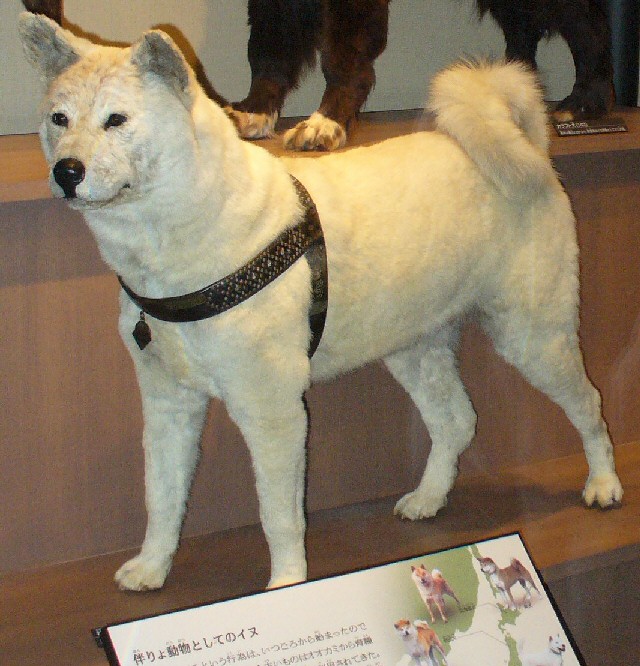
Like most of the Tohoku region, most foreign travelers have never heard of Japan's Akita prefecture. But some have heard of the Akita-ken dog breed, probably the only internationally recognized canine from Japan. They are big dogs and resemble muscular huskies with a more brownish tinge and bigger heads. Akita dogs gained international popularity for their appearance in the 2009 American remake of the Japanese 1987 original film “Hachi: A Dog’s Tale” (starring Richard Gere as the dog's master or owner or best friend).
The original film, based on a true story, was Seijirō Kōyama's 1987 Japanese film Hachikō Monogatari. It tells the true story of Hachiko, an Akita dog, who lived in Tokyo from 1923 until his death in 1935. Hachiko went to Tokyo's Shibuya Station every day to pick up his master (and likely also drop him off). [I recently watched a dog follow his owner's car (a family of 4) into car traffic and trail the family vehicle for 300 yards in busy complicated city traffic!]
Hachiko was born as purebred male Akita-ken in 1923 on a farm in Odate, Akita Prefecture, which lies in the mountains in the northeastern corner of Akita prefecture. The owner of the farm was an agricultural engineer (which means he was modern mind samurai of scientific mind, quite rare in the 1920s anywhere on the planet at the time.
When Hachiko's owner, Professor Ueno, died two years after the adoption (1923), the dog continued to wait for him to arrive at Shibuya Station for nearly 10 years! Now that's amazing! [A spitz relative of the Akita dog breed are eaten in winter in Korea. I have seen them chained up in Busan on more than one occasion. These dogs can look very similar to Hachiko.]
Many foreign tourists visiting Shibuya pay their respects and show their admiration for Hachiko in front of the station where he waited so faithfully for all those years. I love dogs and have been a "dog whisper" since I was a young child. The Hachiko tale is almost as moving as a great Shakespeare tragedy! Long live the spirit of Hachiko and the Akita dog breed! If you wish to see this dog breed up close then you will find many places in Akita prefecture where this breed is a common sight. The best places for such an experience are the Odate Akita Dog Visitor Center and the Odate Akita Dog Museum (which is the town where Hachiko was born!).
Though Akita prefecture is way of the beaten track for nearly all foreign tourists visiting Japan, I can only help praising the area more because it is so out of the way and far from the fast beating hearts of Tokyo and Osaka. The prefecture has rich handicraft traditions and also unique cuisine products. Akita handicrafts (see below for details) include Kaba cherry-bark crafts, Odate cedarwood crafts, and Kawatsura lacquerware (dating to the 13th century!). In the food category, Akita prefecture is known for its Hatahata fish, Kiritanpo hot pot cuisine, Hinai chicken (top three in Japan!), Kisakata Iwagaki oysters, and Inaniwa udon wheat noodles. Learn more below!
The rest of this post covers:
- Akita Prefecture's peaks, forests, hot springs, coastlines, and samurai
- Local Akita handicraft & cuisine standouts
Japan private travel content by Your Japan Private Tours' (established in 1990) founder Japan travel expert Ian Martin Ropke. I have been planning, designing, and making custom Japan private tours on all five Japanese islands since the early 1990s. Your Japan Private Tours specializes in bespoke travel for private clients (I do not work with agents) including exclusive excursions, personalized experiences, and unique adventures. I am 100% client-centric and total individual attention. Consider my Japan travel services for your next trip. And thank you for reading my content. Learn more!
Akita Prefecture's peaks, forests, hot springs, coastlines, and samurai
Tohoku's Akita prefecture is just south and west of Aomori prefecture (previously covered here) and has a long north-south coastline on the Sea of Japan (or the East Sea). The prefecture is mainly known as a tourist destination for its mountain and coastal natural beauty, deep forest hot springs, and the one of Japan's best preserved samurai districts (in the town of Kakunodate).
Great destinations across Akita prefecture:
The mountainous Hachimantai area: The mountainous region of Hachimantai in northern Akita prefecture (and Iwate prefecture) forms the southern part of the Towada-Hachimantai National Park. Nyuto Onsen: Nyuto Onsen hot spring resort, home to a cluster of old onsen ryokan inns, lies in the far eastern mountains of Akita prefecture. The local Tsurunoyu has been in operation for over 300 years! Nyuto translates as "nipple" because local Mount Nyuto is capped by a nipple. As you might have guessed, the hot spring waters of Nyuto are milky or cloudy. milky/cloudy appearance of the area's hot spring water. The hot water healing pools of Nyuto are avaible to those who overnight at the inns and also to day trippers (mostly from the large city of Morioka, Iwate Prefecture, a short distance southeast of Nyuto). It is also not far from Lake Tazawa (about 10 km northeast of the lake), the deepest lake (over 400 meters) in all of Japan. The lake's cobalt blue water is almost transparent!
Kakunodate old castle town: The former castle town of Kakunodate (founded in 1620) was a major samurai power center in Edo-period Akita prefecture history. It is often referred to as the “Little Kyoto of Tohoku." The castle is gone but the town has one of the best preserved, if not the best, samurai and merchant district in Japan. Kakunodate is also one of the Tohoku region's best cherry blossom viewing spots.
August Akita festivals: August Akita Kanto Festival: The Akita Kanto Festival is one of Tohoku’s most popular festivals. Nearly 300 long bamboo poles are used to suspend columns of paper lanterns, which are lifted sky high at night. The festival is an ancient traditional ritual to ensure a rich harvest. the poles are said to symbolize ears of rice; the paper lanterns are said to be bags of rice. The skill of moving these long poles like "batons" by the skilled Sashite performers is a sight to behold, with each bamboo pole and lanterns weighting up to 50 kilograms! The festival takes place annually from August 3 to 6. August Omagari Fireworks Festival: This festival got started in 1910, and attracts fireworks experts from all over Japan. It is ranked as a top-three firework spectacle in Japan. The city of Omagari now hosts this event once a season. The main and biggest summer festival takes place on the last Saturday of August.
Local Akita handicraft & cuisine standouts
Akita's top handicraft traditions:
Kaba cherry-bark crafts: Using the bark of the mountain cherry tree, prized for its deep color and unique luster, local craft masters make stunning tea caddies, tea chests and other Japanese tea ceremony utensils, paper boxes, tea bowls, brooches and tie pins.
Odate cedarwood crafts: The Odate region was ruled over by the Satake Nishi samurai family. They took advantage of the area’s abundant forest resources and encourage samurai families to make wood crafts. Typical cedarwood products include lunch boxes, serving trays, and things that are still useful in contemporary life (including coffee cups!).
Kawatsura lacquerware: Kawatsura's lacquerware tradition dates to the 13th century, when samurai began to apply lacquer to their armor. Kawatsura lacquer products are made to last and decorated with fine carving and delicate gold powder designs.
Akita Prefecture's local cuisine standouts:
Hatahata fish: The Hatahata fish, the symbol of Akita Prefecture, is a coldwater fish known for its silky, tender texture. It is served grilled, in hot pots, or as sushi.
Kiritanpo pounded grilled rice: Freshly cooked rice pounded and grilled on a wooden skewer is locally known as kiritanpo and is commonly eaten with miso or in other soups. Akita’s popular winter hot pot cuisine uses Kiritanpo in chicken broth ( Hinaidori chicken broth; see below). The best experience of all is to grill these rice skewers over a traditional Irori fireplace (the center of many of Tohoku's large traditional farmhouses where winter is a serious situation).
Hinai chicken: Ranked as one Japan's three top chicken breeds, Hinai chicken is known for its soft meat and deep juicy flavor. Hinai chicken is widely used across Akita (not all is exported!) for yakitori (grilled chicken), oyakodon (rice topped with chicken and eggs) and kiritanpo hot pot (see above).
Kisakata iwagaki oysters: Kisakata iwagaki natural oysters grow in the cold depths of the Japan Sea. They are famous for their rich, briny taste. Oyster lovers flock to Akita between June and August!
Inaniwa udon noodles: Inaniwa udon wheat noodles are a specialty of Yuzawa City and the tradition dates back more than 300 years. It is still made by hand by skilled artisans. Inaniwa noodles are firm but have a smooth texture.
- Indexed full list of all my blog posts | articles.
- Indexed full list of all my Japanese culture essays.
Japan private travel content by Your Japan Private Tours' (established in 1990) founder Japan travel expert Ian Martin Ropke. I have been planning, designing, and making custom Japan private tours on all five Japanese islands since the early 1990s. Your Japan Private Tours specializes in bespoke travel for private clients (I do not work with agents) including exclusive excursions, personalized experiences, and unique adventures. I am 100% client-centric and total individual attention. Consider my Japan travel services for your next trip. And thank you for reading my content. Learn more!