Iwate Prefecture, Tohoku region, Japan private tour insights Part 1
Iwate Prefecture, on the east side of the Tohoku region along the Pacific Ocean (150 km of coastline!), is the second largest prefecture in Japan after Hokkaido. Iwate prefecture has a very low population density, and is known to the Japanese as a relaxed, slower-paced culture and lifestyle location. As such, Iwate offers travelers, history buffs and nature enthusiasts everything you could hope for. But for most international travelers visiting Japan, Iwate is invisible and unknown. That changed a lot in 2023, when covid was finally over but the Ukraine war was just beginning, when the New York Times rated Morioka City (the capital of Iwate) as number two after London on the "52 Best Cities to Visit Worldwide."
This says a lot because the New York Times is an impeccable newspaper if not the best on the planet (with the UK's Guardian coming in second in my humble opinion). Obviously, Morioka City has something most cities can only dream of. When a city has it all together in a vast almost unknown part of the world, you can bet that it's truly amazing! Just ask the New York Times.
This post, the first of 2 on Iwate Prefecture shines more light on the specialness of Morioka for travelers and what Iwate is known for in terms of local cuisine (specialty beef, almost the best noodles in Japan) and handicraft traditions (the origin of iron production in Japan, the best tansu wooden chests in Japan, and stunning lacquer traditions). [My next blog post will highlight the wide range of attractions that are a few hours from Morioka City, from nature to feudal history, or a bit further away on the prefecture's 150-km Pacific coastline.]
The rest of this post covers:
- Morioka City, #2 on 2023 NYT's top cities to visit
- Iwate Prefecture's local cuisine & craft traditions
Japan private travel content by Your Japan Private Tours' (established in 1990) founder Japan travel expert Ian Martin Ropke. I have been planning, designing, and making custom Japan private tours on all five Japanese islands since the early 1990s. Your Japan Private Tours specializes in bespoke travel for private clients (I do not work with agents) including exclusive excursions, personalized experiences, and unique adventures. I am 100% client-centric and total individual attention. Consider my Japan travel services for your next trip. And thank you for reading my content. Learn more!
Morioka City, #2 on 2023 NYT's top cities to visit
Morioka City, the capital city of Iwate Prefecture with a population of 284,000, is roughly two and a half hours north of Tokyo on the Tohoku shinkansen bullet train line (with frequent departures). Morioka is like a sea-level Switzerland with high mountains on three sides and three big rivers running through it (the big, long Kitakami River, the Shizukuishi River and the Nakatsu River).
During the feudal age, the Morioka region was ruled by the Nambu clan and their Morioka Castle seat of power. Today, there are still many local products, big and small, with the name Nambu tacked in front. Like Nambu Tekki ironware. Or Nambu lacquer and probably even Nambu rice and Nambu noodles.
Morioka City is famous across Japan for its amazing noodle traditions. When we think of noodles then we are also talking about something that was imported to Japan from China (or maybe from Korea who imported the noodle making technique from China). This would have been well over 1,000 years ago now for Japan and the Morioka noodle traditions go back at least 300 years or more.
Being the capital, Morioka is Iwate Prefecture's main transportation hub and cultural center. The city may be a bit better known with foreign travelers from the 2023 New York Times article cited above, but not much. And here's why. The Tohoku region and Iwate Prefecture are directly north of Tokyo. Over 90% of international travelers visiting Japan travel west of Tokyo along the Golden Route (leading to Kyoto | Osaka via the Japanese Alps and or Kanazawa north of Kyoto). But if you are looking for a private travel adventure, Morioka is a great place to start a 7–10-day tour package. I have designed a few Tohoku plus Hokkaido travel packages since 1990 and am always exited to make more tours for this region that so few "gaijin" know about.
To begin with Morioka is a walking city and that is important for relaxation in more ways than you might imagine. The city is full of green zones and rivers and historical attractions like Morioka Castle and the ancient wooden rakan statues at Hoon-ji Temple (made between 1731 and 1735 in Kyoto by Buddhist priests and then transported to Morioka), modern art, and environmental beauty. Morioka's Koiwai Farm Koiwai Farm (est 1891 by Japan's first generation of agricultural industrialists) ranks as one of the leading dairy farms in Japan.
Morioka is also home to a great number of charming Taisho-era (1912-1926) buildings designed with a mixture of Japanese and Western architectural aesthetics. The city is also home to a famous 400-year-old cherry tree that grew from a granite boulder (located on the grounds of the Morioka Courthouse near the castle).
Morioka is also known for being one of Japan’s outstanding third-wave coffee roasting startups (known as Nagasawa Coffee), whose owner, Kazuhiro Nagasawa, is famous for his coffee roasting attention to detail (think like Steve Jobs for design!).
And no great walking city is without an excellent bookstore for browsing, musing and exploring. Morioka's Booknerd bookstore has wide range of classic Japanese art books.
If you are a jazz fan then Moriaka offers the experience and music of Johnny’s jazz cafe, in operation for more than 40 years.
The city is also an excellent place to find top Japanese handicrafts ranging from ironwork and lacquer to silk and wool textiles. The Morioka Handi-Works Square sells about 4,000 handicraft products made by regional artisans.
Last but not least, given the NYT #2 position of Morioka in 2023, it is important to state that the people of Morioka are very sincere and relaxed compared to say Tokyoites or Kyotoites. This makes a travel city basecamp so much better: local people and local culture that foreigners go to Brooklyn and Istanbul and Calcatta to "appreciate." Morioka is a quiet city gem that offers access to deep nature and empty traditional farmhouse landscapes.
Iwate Prefecture's local cuisine & craft traditions
Iwate cuisine highlights:
Morioka's Famous Triple Noodle Renown: The Three Great Noodles of Morioka include Wanko Soba, Morioka Reimen and Morioka Jajamen. Wanko Soba buckwheat noodles are served in small bowls in the all-you-can-eat tradition. A server will pass by your table and fill up your noodle bowl as many times as you like! And many people, the servers too, are yelling “Hai jan jan! Hai don don!” The first bowl is eaten plain to taste the flavor, and toppings are added from the second bowl onward. Japanese women average 30-40 bowls, while men can go as high as 50-60 bowls. You have to wonder how small these bowls are and how busy the servers must be to dispense countless tiny noodle portions? Morioka Reimen noodles (originally from Korea) are chewy cold noodles served in a rich beef broth. Morioka Reimen noodles are made of potato starch and flour, giving it a slightly glassy sheen. The broth is chilled, and toppings include sliced meat, kimchi, a slice of fruit, half a boiled egg, and cucumbers. Morioka Jajamen noodles are flat and are served in a spicy meat sauce. Morioka Jajamen originates from north China where it is known as Zhajiangmian. Jajamen noodles, a kind of udon, are served dry with meat miso, sliced green onions and sliced cucumbers, and ginger on the side.
Iwate's high-quality Maezawa & Tankaku beef: Maezawa beef is famous across Japan for people who love beef. The Maezawa cows are fed rice straw. Iwate's marbled beef cuts melt in your mouth. Iwate is also the largest producer of Tankaku beef in Japan, which is known for its. tasty lean Akami cuts which are both chewy but tender in texture.
Iwate craft traditions:
Iwate textiles dyes from feudal times: Iwate's textile industry got started in the early 19th century. Iwate is known for its silk "Tsumugi" fabrics and wool "Homespun" cloth. As sericulture or silkworm culture in Japan grew into an national export (to China in those days and also as far as Europe!). Tsumugi silks and crepe silks (chirimen) evolved into a major market player in the Bunsei era (1818-1830). Iwate wools or homespun wool products got started when Japan began to westernize in the Meji Period (1868-1912). Entrepreneurs in Iwate imported sheep from Europe. Shikon dyes (purple gromwell) from Iwate also gained renown for the Morioka samurai domain in feudal times. And even today, purple gromwell dyes and medicines continue to find favor over chemical imitations.
Akanezome dye technique: Akanezome is an ancient Japanese dyeing technique. The dye is made from the red roots (aka-ne) of the madder plant. The resultant dye can be red or distinctly reddish yellow (a yellow is part of some sunsets they say). Akanezome dyeing originates in Iwate Prefecture. It is one of the oldest red dye production techniques in Japan!
Katazome dye technique: Iwate Prefecture is wellknown for its Katazome Japanese stencil dyeing technique, which uses a resist paste made from rice paste. The resist sections are applied using a carved stencil (katagami) onto fabric or paper. Since the pasted areas resist the dye, incredbly intricate, repetitive patterns are left on the fabric. The word "katazome" translates to "pattern dyeing."
Hidehira lacquerware: Hidehira lacquerware (or Hidehira-nuri in Japanese) is produced in the area around the ancient town of Hiraizumi (which will be featured in the next post). The defining feature of Hidehira lacquerware is its use of locally made gold leaf to create vivid patterns not usually seen in lacquerware. Some classical patterns have been derived from patterns used in the Heian period (794-1185). Drawings of plants and natural things are featured in some designs. Hidehira lacquerware was founded by Fujiwara no Hidehira (roughly 1122-1187), a late Heian-period military commander. His is widely known as the "King of Michinoku" or the King of Tohuku. The Tohoku region was originally called the Michinoku domain. Hidehira brought in expert craftsmen from Kyoto to create lacquerware using the abundant lacquer and gold found in the area around Hiraizumi (see next post).
Joboji lacquerware: Joboji lacquerware (or Joboji nuri in Japanese) is produced in the town of Joboji. The Joboji region is known as the leading producer of domestic Japanese lacquer with 60% market share. Colored versions in the Joboji tradition include black, vermilion, or light brown. There is no decoration, and the final finish is a subdued sheen. Joboji lacquer is renowned across Japan for its purity and strength and has been used for the restoration of important national cultural buildings such as the Kinkaku-ji Temple (the Golden Pavilion) in Kyoto. Legend says that Joboji lacquerware got started at local Hachiyozan Tendai-ji Temple in 728 AD. The monks from the distant Nara-Kyoto region, who built the temple, also brought advanced lacquering knowledge with them. After WWII, Joboji lacquerware production rapidly declined due to the spread of low-priced plastic items and imported lacquer. But the tradition has survived. It was designated a National Traditional Craft in 1985.
Nambu ironware: Nambu ironware (or Nambu tekki in Japanese) is a kind of metalwork produced in Iwate's Morioka City and Oshu City. Nambu ironware dates back to the middle of the Edo period (1603-1868). And the origins of ironwork in Japan, believe or not, are all in Iwate Prefecture. Nambu ironware is rust-resistant, long-lasting, and provides uniform heat circulation. The exterior of Iwate's iconic tea kettles feature a bumpy textured pattern called arare or hailstone (this techique is used to increase the surface area of the kettle but not is volume). Emperor Taisho, who ruled from 1912 to 1926, visited the Tohoku region in 1908 and had the eighth-generation Nizaemon Koizumi personally show him the basics of the Nambu ironware production process. This event was covered in newspapers throughout Japan and greatly increased the renown of Nambu ironware across Japan for tea ceremonies and other uses. The internationally acclaimed 1997 Hayao Miyazaki manga film (Studio Ghibli), Princess Mononoke, in my expert opinion, was set in the region we now know as Iwate. The manga film is set during the 15th-century Muromachi era, where the powers of samurai Japan made iron and disrespected the Japanese forests of the area (everywhere really whether in Japan or Europe). The male hero in Princess Mononoke, Ashitaka, is an Ainu from the north of Iwate (this was of course before the indigenous Ainu or Emishi peoples were pushed out of Honshu all together to their final home in Hokkaido). The Emishi Ainu's last stand on Honshu ended in the early Muromachi era (1336-1573). These tribes resisted Japanese imperialism and assimilation for hundreds of years. But slowly the samurai powers of the Tokyo and Kyoto regions pushed north and pushed these people's further north to the wilds of Hokkaido. Princess Mononoke was raised by giant wolves, and her tribe of animals and spirits are forced into battle with the water and forest hungry iron making enterprises of the evolving Japanese (headed by a smart and ruthless female industrial entrepreneur). So, when you see the film imagine that you are in Iwate Prefecture before the forests fell and iron weapons from swords to guns and hand cannon wiped out the Ainu and the natural balance.
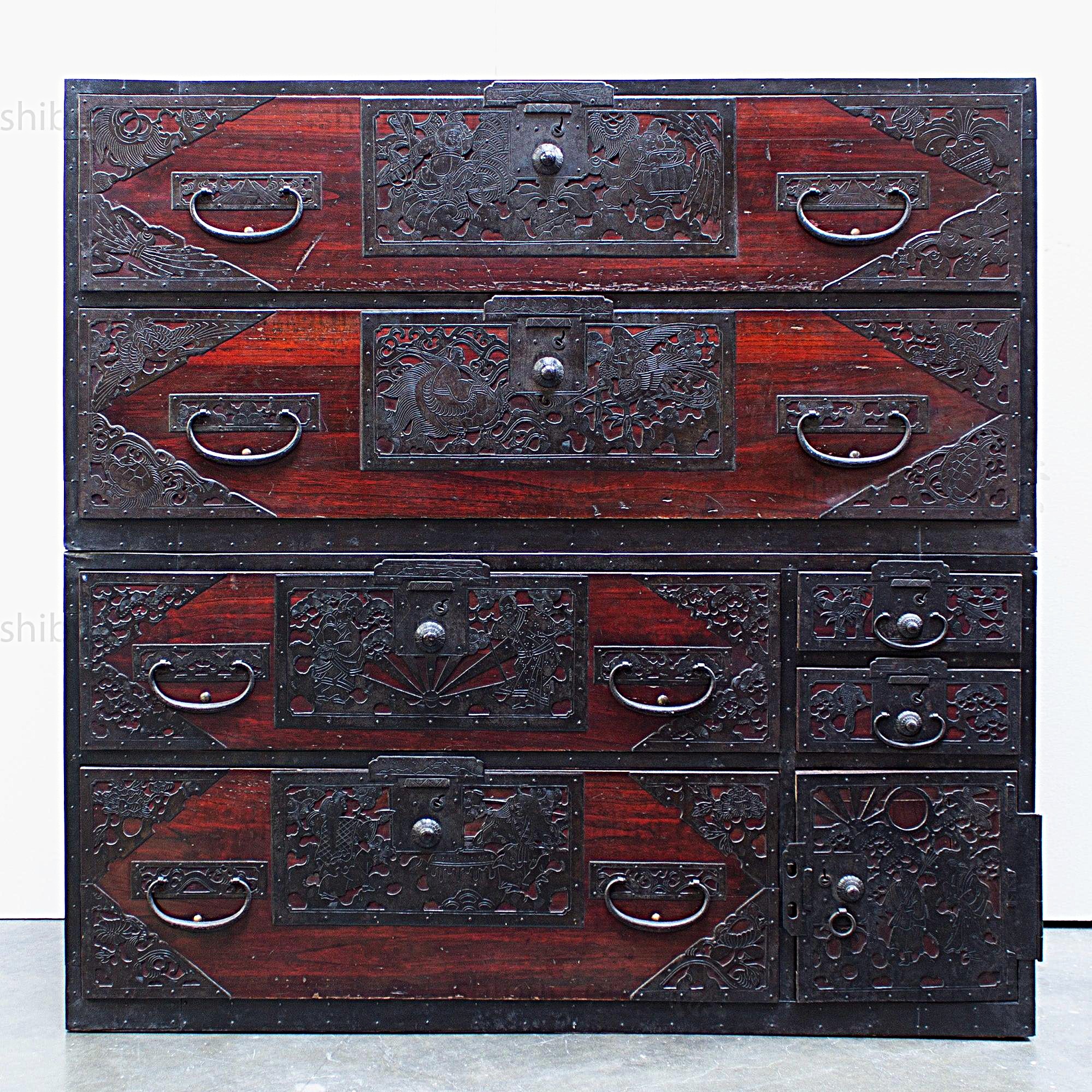
Iwayado Tansu wooden chests: Iwate's exceptional tansu wooden chests are still made by hand in small numbers and can cost up to USD 10,000 for a new (or an antique one). Tansu chests or cupboards became the must-have furniture of the affluent during the Edo period (1603-1868). Tansu have always been crafted by skilled artisans from fine woods such as keyaki (zelkova) and kiri (paulownia). Iwate Prefecture's tansu traditions combine fine wood joinery with master lacquer work, and elaborate, hand-forged iron handles and hinges. Traditionally, tansu are used for storing cloths, for storing inventory for merchants and sometimes as staircases (kaidan dansu).
- Indexed full list of all my blog posts | articles.
- Indexed full list of all my Japanese culture essays.
Japan private travel content by Your Japan Private Tours' (established in 1990) founder Japan travel expert Ian Martin Ropke. I have been planning, designing, and making custom Japan private tours on all five Japanese islands since the early 1990s. Your Japan Private Tours specializes in bespoke travel for private clients (I do not work with agents) including exclusive excursions, personalized experiences, and unique adventures. I am 100% client-centric and total individual attention. Consider my Japan travel services for your next trip. And thank you for reading my content. Learn more!