Japan private tour insights for Tohoku's Miyagi Prefecture
Miyagi Prefecture, the last Tohoku region prefecture on this blog, is on the Pacific coast in the southeastern corner of the Tohoku Region. The prefectural capital is Sendai City (with about one million inhabitants). Miyagi was devastated by the March 2011 tsunami tidal wave but has largely been restored to it's former glory.
Sendai City is the biggest city in the entire Tohoku Region. The city was established in 1600 by the powerful Date samurai clan. And most of the city's top travel attractions are connected with the Date clan. Sendai's top attractions include the elaborate Zuihoden Mausoleum (Date clan), the Date-built Rinnoji Temple (known for its stunning garden), and the Osaki Hachimangu Date family shrine complex.
The rest of this post covers:
Japan private travel content by Your Japan Private Tours' (established in 1990) founder Japan travel expert Ian Martin Ropke. I have been planning, designing, and making custom Japan private tours on all five Japanese islands since the early 1990s. Your Japan Private Tours specializes in bespoke travel for private clients (I do not work with agents) including exclusive excursions, personalized experiences, and unique adventures. I am 100% client-centric and total individual attention. Consider my Japan travel services for your next trip. And thank you for reading my content. Learn more!
The scenic & historical wonders of Matsushima Bay
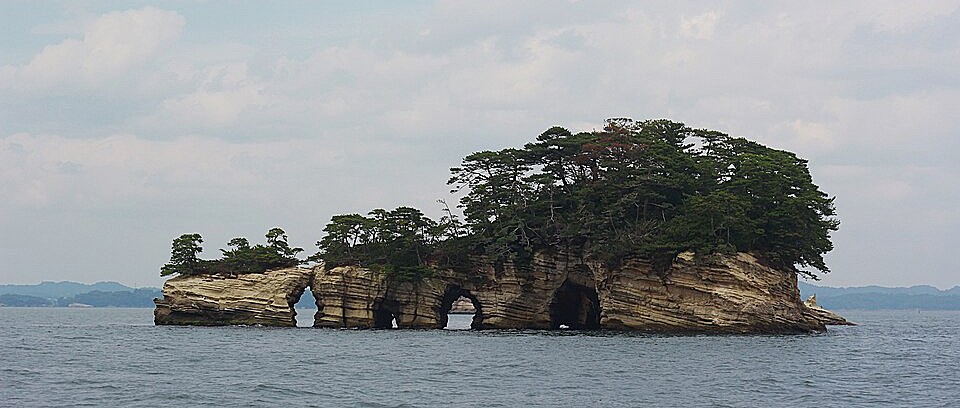
Miyagi Prefecture's Matsushima Bay has been considered one of the top three most beautiful scenic spots in Japan for over 400 years. And for good reason. The sheltered Pacific Ocean bay is home to more than 200 small pine-covered islands. The bay and its islands can be explored on foot, by bicycle, and on small cruise boats.
And the mainland shore of the bay (west of the islands) has a number of outstanding historical attractions. Here's a short overview of the top travel locations in the Matsushima Bay area:
The Zen opulence of Zuiganji Temple: This temple ranks as one of the best Tohoku Region Zen temples. Zuiganji was establised in 828 as a Tendai sect Buddhist temple (the headquarters of the Tendai sect is Enryakuji Temple, which is located near the top of Mount Hiei overlooking Kyoto from the northeast). During the Kamakura period (1185-1333), Zuiganji was converted into a Zen temple belonging to the Rinzai sect (the headquarters of the Rinzai Zen sect is Myoshinji Temple in western Kyoto, a little east of Arashiyama). The temple lost its importance after the Kamakura period, and was only restored and substantially renovated in 1609 by the region's powerful Date samurai clan (based in Sendai, a little southwest of Matsushima Bay). The temple precinct is home to a beautiful cedar-tree green area and also caves (used for Zen meditation in the past, and now featuring Zen statues). The temple is especially "famous" for its exquisitely painted fusuma sliding doors featuring lots of gold gild in the elegant Rinzai Zen style.
The Date clan's Entsuin Temple mausoleum: Entsuin Temple was constructed in 1647 right next door to Zuiganji Temple (see above). This very expensive and elaborate mausoleum was built for a leading son of the region's dominant Date samurai clan (who died at a young age). The interior is unique because of its gold leaf decorations and stunning paintings that feature a number of hearts, spades, diamonds and clubs (like the ones in a classic deck of cards) because the Date samurai family was interested in the West (they even sent clan representatives to the Vatican in Rome!). The mausoleum's gardens also feature Western themes including a heart-shaped pond and a European-style rose garden.
The amazing Kanrantei tea house: This Azuchi-Momoyama period (1568 to 1600) tea house was originally constructed in Kyoto and paid for by "shogun" Toyotomi Hideyoshi. The tea house was then sent in pieces to Miyagi's Date daimyo samurai lord as a gift for his services. It was then sent by the lord's son to it's present location overlooking Matsushima Bay. Today, travelers can admire the tea house's beautiful rooms whilst enjoying Japanese whipped green tea (i.e., Japanese tea ceremony matcha tea!). The tiny museum behind the tea house is home to an exquisite range of samurai weapons, tools and armor.
Tiny but mighty Godaido Temple: This almost tiny temple is on an equally small island not far from the main pier. And despite its size this temple is really the symbol or icon (or one of them) that represents Matsushima in general. Godaido was constructed a long, long time ago (807!) and is home to five outstanding hand carved wooden Buddhist statues (which are only publicly displayed every 33 years!). The temple's main hall exterior is covered with carvings of the 12 animals the represent the Chinese lunar year. Each side of the building features three different animals in the following order Rat, Ox, Tiger | Rabbit (or Cat), Dragon, Snake | Horse, Goat (or Sheep), Monkey | Rooster, Dog, and Pig (or Wild Boar).
Miyagi's ancient Yamadera mountain temple complex
Miyagi Prefecture's mountain temple of Yamadera is typical of some of the most interesting and exotic forms of Buddhism in Japan. Historically speaking, the deep mountains have always been favored by "serious" Buddhist monks and priests. And Yamadera Temple is one of the best mountain temples in the Tohoku Region.
Yamadera (or Mountain Temple) is located about 30 km directly northwest of Sendai City as the crow flies. The temple grounds are part of a high and steep mountainside that offers stunning views of a lush valley down below. The temple was established in 860 (early Heian Period) as a Tendai sect temple (officially known as Risshakuji Temple).
In the early Heian Period (794-1185), the Japanese emperor (based in the imperial city of Kyoto) dispatched a high-ranking Buddhist priest to the Tohoku Region, which was along the northern frontier of Japan (at the time this area was part of Dewa Province). Remember, that Japanese civilization began in Kyushu and then expanded eastward. Japan's first imperial capitals, in order, were Osaka (Namba), Asuka (Nara Prefecture), Nara City and then Kyoto (and finally Tokyo from 1868 onward).
Yamadera Temple is also famous in Japan as the location where the world-famous haiku poet Basho wrote one of his best haiku poems at the end of the 1600s on his "epic" 43 stops on his Oku no Hosomichi, Journey to the Northern Interior. The Yamadera stop was #26.
"Ah, the Quiet, but piercing the Rocks — the Cry of the Cicada"
The lower part of the temple complex is home to the main Konponchudo Hall constructed from local beech wood lumber. The hall, the oldest building at the temple, is home to ancient Buddhist statues and a flame that was originally carried to the temple from Kyoto's Enryakuji Temple (the headquarters of the powerful Tendai Buddhist sect) on the upper slopes of Mount Hiei overlooking the Kyoto valley.
It takes about half an hour to walk from the temple's lower area to the precincts upper zone via a path with 1,000 stone steps. Parallel to the stairs visitors can also see many ancient stone lanterns and statues in the adjacent forest. One of Yamadera's best-known buildings, Kaisando Hall, is located in the upper area of the mountain temple complex.
- Indexed full list of all my blog posts | articles.
- Indexed full list of all my Japanese culture essays.
Japan private travel content by Your Japan Private Tours' (established in 1990) founder Japan travel expert Ian Martin Ropke. I have been planning, designing, and making custom Japan private tours on all five Japanese islands since the early 1990s. Your Japan Private Tours specializes in bespoke travel for private clients (I do not work with agents) including exclusive excursions, personalized experiences, and unique adventures. I am 100% client-centric and total individual attention. Consider my Japan travel services for your next trip. And thank you for reading my content. Learn more!