Japan private tour insights for Niigata Prefecture's rice-snow-onsen worlds
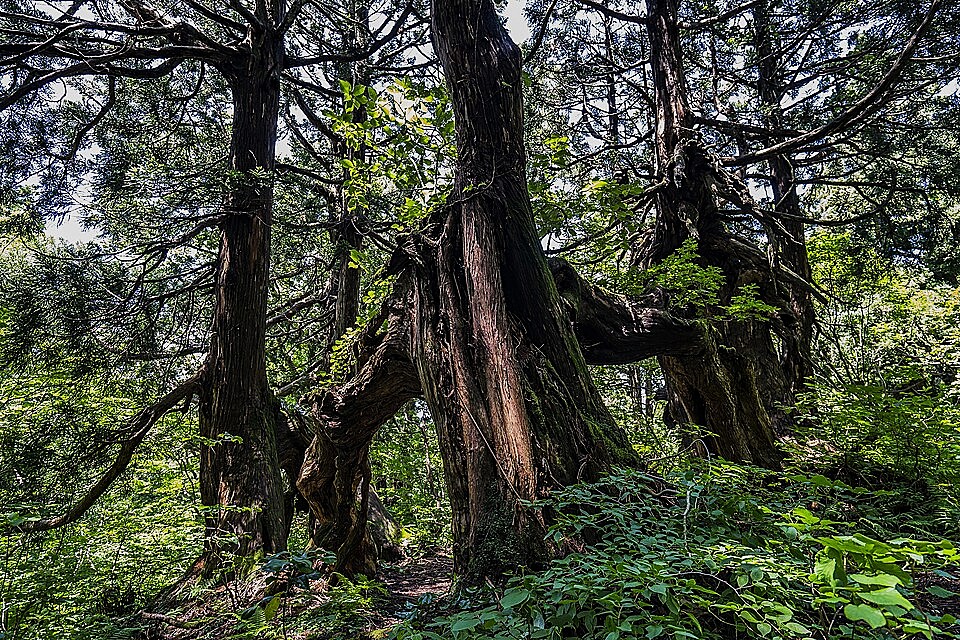
This post introduces the wonders of Niigata Prefecture (Niigata City is the prefectural capital) which is easy to get to by bullet train. Niigata is on the north coast of the Sea of Japan. The prefecture is best known for its vast rice fields, and spectacular coastal and mountain regions. It is also a well-known skiing and hot spring destination for the Tokyo region. And it is home to incredibly old sugi cedar forests and unique bird life!
Before I get into today's post on Japan private travel insights on Niigata prefecture, I would like to summarize a recent media article on the Japan Rail Pass. For decades, the Japan Rail Pass was a must-have and affordable power ticket for Japan travel. It still is but the price has gone up 70% and now more and more travelers are choosing to limit bullet train travel to save money.
I find it interesting that the one-way bullet train coach ticket, from Tokyo to Kyoto, has remained almost the same for past 30 years. It's still about Yen 12,000-13,000 (unreserved seats are the least expensive) for coach (add 50% for first-class Green Seats), which is about USD 80-85. The fast Nozomi class trains cover the 533 kilometers between Kyoto Station and Tokyo Station in 2 hours and 20 minutes! And this beats air travel hands down!
Given the high price of the Japan Rail Pass since 2023 you really have to decide how much you will use the bullet trains. Or said another way, bullet train usage determines the value of a Japan Rail Pass. If you move around on all 4 main Japanese islands by train then the pass will be worth it or very well could be worth it. The passes cover 7, 14 or 21 days so you have to consider: will you be using the bullet train a lot in that time frame or not.
Currently the 7-day Japan Rail Pass is Yen 50,000 (about $340). It's Yen 80,000 yen ($540) for the 14-day pass. And Yen 100,000 ($675) for the 21-day pass. Add 50% to these prices for first-class Green Car Japan Rail Passes.
And don't forget if you have big suitcases and use coach bullet train seating you usually have to reserve luggage storage separately (first class Green car seats include big luggage storage.
Finally, also note that Japan Rail Passes are only good on Japan Railways train. You can't use them on private rail lines (of which there are many, especially in Japan's largest cities) or subway systems. Learn more!
The rest of this post covers:
Japan private travel content by Your Japan Private Tours' (established in 1990) founder Japan travel expert Ian Martin Ropke. I have been planning, designing, and making custom Japan private tours on all five Japanese islands since the early 1990s. Your Japan Private Tours specializes in bespoke travel for private clients (I do not work with agents) including exclusive excursions, personalized experiences, and unique adventures. I am 100% client-centric and total individual attention. Consider my Japan travel services for your next trip. And thank you for reading my content. Learn more!
Niigata's Sado Island: Gold & taiko drums
Sado Island is one of Japan's largest islands beyond the big five (Hokkaido, Honshu, Shikoku, Kyushu, Okinawa). It can only be reached via a 90-kilometer ferry ride and, as such, the island is quite remote and very interesting in more than one way.
Due to its remoteness, Sado Island was the perfect place to exile politically threatening Japanese people over the centuries. These include a emperor, Nichiren (powerful Buddhist monk and Buddhist sect leader) and the founder of the Noh theater tradition (Zeami Motokiyo).
I journeyed to Sado Island with my first wife in a mini van (660 cc!) in the early 1990s to experience the world-famous (even then) Earth Celebration hosted by Sado's renowned Kodo taiko drum group (huge drums!). Given that we had a van the trip was quite memorable. It was the middle of August (Obon or the Festival of the Dead is from Aug 10-16) and most people were at their ancestral homes. We stopped the van in the middle of Niigata's almost endless rice fields, and I was just amazed by the landscape. It was nearly all rice with just a few ancient, fairly large farmhouses. We were invited into one these home a short time later for a classic Japanese feast in a huge tatami room overlooking the owner's rice fields. So, for me Niigata started out in an amazing way. And then we toured Sado Island for a few days. Wonderful!
If you visit Sado do try to go in summer for the best weather of the year.
Top attractions on Sado Island
Sado's World-famous August Earth Celebration: Sado's well-known taiko drum music festival (usually held after Obon or Aug 16) is a great experience. Thousands of Japanese people flock to this festival and stay in tents and local minshuku B & Bs. The three-day event is held in and near to Ogi Town, on the sea. The venue has countless booths and food stands. The event also offers taiko drumming experiences and dance workshops.
Sado Gold Mine: For the longest time the Sado Gold Mine was the richest gold mine in all of Japan. The mine also had a fair bit of silver and copper veins. The Sado Gold Mine was productive from 1601 to the very end of the Edo period (1600-1868) and nearly all the profits were owned by the Tokugawa shogun dynasty base in Edo-Tokyo. After the fall of the Tokugawas the mine continued to operate until the late 1980s. It became a World Heritage Site in 2024. On our trip to Sado my wife and I wandered the tunnels of the mine and both the signage and the mannequins set up all over the mine were extremely well done. And when you are finished exploring the mines underground you can learn more at the site's excellent museum (with a great souvenir shop!).
Sado's long-abandoned Kitazawa Flotation Plant: For something really different consider the long-abandoned Kitazawa Flotation Plant located in mountainous forests above the Sado Gold Mine. The plant was built in 1938 and in operation until 1952 as part of the gold (and silver) extraction process. Now it's weird industrial tourist attraction that is completely covered in vegetation, with a cafe and everything. Japan has a few of these abandoned factories and industrial facilities, one or two have been used in James Bond films.
Toki crested ibis breeding forest: Sado Island's last really important attraction is Toki Forest Park, which is home to the "resurrected" toki crested ibis bird species. The Toki crested ibis went extinct due to hunters and chemical pollutants. The last birds of this species died on Sado Island in 2003, despite conservation efforts. Lucky for us, crested ibises introduced from China were successfully bred in Toki Forest Park. As of this writing, there are over 500 of these magnificent birds in the wild and the park continues to produce more. From extinction to resurrection is always a happy ending!
Other great Niigata travel destinations
Niigata's Yuzawa ski & hot spring zone: Niigata's Yuzawa big ski resorts, more than 12, are super easy to reach from Tokyo because of the bullet train line that goes to Niigata. It takes less than two hours from central Tokyo to these outstanding slopes (for skiing and snowboarding of course). Yuzawa is famous for its deep powder snow and a very long winter season. Yuzawa is a great onsen hot spring destination in any season. And if you are a sake rice wine lover then remember that Echigo-Yuzawa Station (bullet train) has an all you can taste sake shop stocked with nearly 100 Niigata sake brands (remember Niigata's rice is excellent and that is a key ingredient for making sake, along with pure spring water).
Mount Myoko ski & onsen worlds: Niigata's other major ski resort is Mount Myoko (a dormant volcano) on the western edges of the prefecture. Myoko is especially known for it's super deep powder snow, which expert skiers can't get enough of. Myoko is also the oldest ski resort zone in Niigata and full of equally old onsen hot spring places.
Echigo Tsumari's incredible modern art installations: The countryside around Niigata's Echigo-Tsumari area is a wonderland for modern art installations, made by Japanese and international artists. The Echigo Tsumari Art Triennale (since 2000) is hosted here every three years over a 3-week period in the summer months (even in the rice fields!). The Echigo-Tsumari area is a satoyama farm landscape dotted with terraced rice fields, small farm villages and hillside forests. Over the past decades the Echigo-Tsumari region has been home to less and less people due to a fast-falling population, super harsh winters and few jobs. Over time, if lucky, the area's art impact may bring more young people to the area. Fingers crossed!
- Indexed full list of all my blog posts | articles.
- Indexed full list of all my Japanese culture essays.
Japan private travel content by Your Japan Private Tours' (established in 1990) founder Japan travel expert Ian Martin Ropke. I have been planning, designing, and making custom Japan private tours on all five Japanese islands since the early 1990s. Your Japan Private Tours specializes in bespoke travel for private clients (I do not work with agents) including exclusive excursions, personalized experiences, and unique adventures. I am 100% client-centric and total individual attention. Consider my Japan travel services for your next trip. And thank you for reading my content. Learn more!