Japan private tour insights: steam trains & Wakkanai, Hokkaido
Before we get into this post about Wakkanai (and the small islands of Rishiri and Rebun west of Wakkanai) in the far north of Hokkaido, I'd like to introduce a trending topic in Japan: steam locomotive train travel!
I had British Japan private tour clients a couple of years ago who were train "freaks" (or at least the husband was). They travelled around the entire planet, going west from the UK, on the most special trains they could find. Everything from Amtrak to the Orient Express. In Japan they rode the bullet train, but their absolute favorite trains were Japan's amazing vintage steam locomotive (SL) trains. Here are the most popular SL train experiences in Japan as of this writing.
First a bit about the history of trains in Japan. Japan's first-ever passenger train, pulled by a steam locomotive built in UK, connected Tokyo's Shimbashi Station with Yokohama Station. The first run was in October, 1872. The 29-km (18-mile) route took 53 minutes from end to end. That's like 31 km per hour, which far exceeds what a horse and buggy could do let alone a human pulled rickshaw cart.
Today, the only SL trains in the country run on routes that have been preserved for Japan’s countless train fans. Japan’s best SL trains are as follows:
The SL Banetsu Monogatari (JR East): This train covers 111 kilometers (69 miles) in three and half hours and runs along tracks laid in 1946 between Niigata Prefecture and Fukukushima Prefecture, north of Tokyo.
SL Fuyu no Shitsugen (JR Hokkaido): Translated as “winter wetlands,” the SL Fuyu no Shitsugen is only steam locomotive running on the island of Hokkaido (and only between January and March). The train wends through the Kushiro Wetlands National Park with vistas of mountains and rivers. The varnished wood decor interiors and an old cast-iron potbelly stove used to prepare seafood stand out. The ride is 90 minutes and covers about 48 km (30 miles).
SL Gunma (JR East): The SL Gunma runs through Gunma Prefecture, which is a short distance northwest of Tokyo (less than an hour by bullet train from Tokyo Station). The trains and train cars used on this line were built in the late 1930s and have wooden interiors (with the exception of the 1978 train that is more modern but still retro from a 21st-century perspective). The train ride takes two hours and covers a distance of 60 km (37 miles).
SL Paleo Express (Chichibu Railway): Chichibu Railway’s SL Paleo Express began running in 1988. This SL only runs between April and December weekends and national holidays. This steam train choo choos through Chichibu, a little northwest of Tokyo. The line takes travelers past limestone cliffs and densely forested mountains. The journey on this train line takes between 2 and 3 hours but only covers 56 km (35 miles).
Thomas the Tank Engine (Oigawa Railway): Shizuoka Prefecture, just west of Tokyo, is most famous for its green tea plantations. But for train fans the prefecture is best known for its Thomas the Tank Engine steam locomotive. The train line took off in 2014 and is based on the character featured in the nearly 80-year-old English children’s book of the same name. Even today, tickets can be hard to get as the train only runs on weekends between June and October. Tickets can only be purchased in Japan at Lawson convenience stores, and via the Asoview travel website. The Thomas the Tank SL ride takes 40 minutes and covers a distance of 37 km (23 miles). Learn more!
The rest of this post covers:
Japan private travel content by Your Japan Private Tours' (established in 1990) founder Japan travel expert Ian Martin Ropke. I have been planning, designing, and making custom Japan private tours on all five Japanese islands since the early 1990s. Your Japan Private Tours specializes in bespoke travel for private clients (I do not work with agents) including exclusive excursions, personalized experiences, and unique adventures. I am 100% client-centric and total individual attention. Consider my Japan travel services for your next trip. And thank you for reading my content. Learn more!
Wakkanai & the Rishiri and Rebun islands
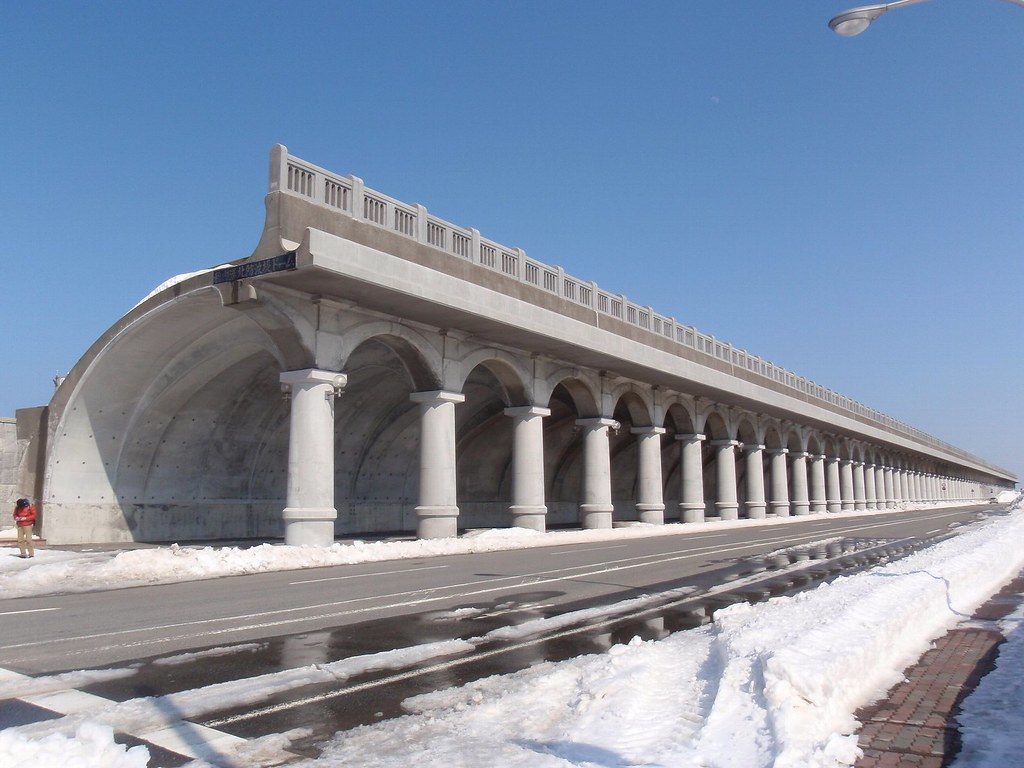
Wakkanai, the tip of the northern peninsula of Hokkaido, is probably the least known destination on the island. The township of Wakkanai has everything from green rolling hills to architecture inspired by the Romans. It is the best place in Japan for scallops (the shells have long been used for making road pavement) and it is also the closest point to Russia. In fact, many of the road signs in Wakkanai are in Japanese and Russian. Wakkanai has a great museum that tells visitors all about the time when Sakhalin Island was Japanese (it's Russia's now) and well worth it for history buffs. Though nearby Sakhalin is no longer disputed territory, there are still four small islands off the coast of northeastern Hokkaido that are disputed (good luck with that!).
The first Japanese settlement at Wakkanai was built in 1685 as a key trading post between the Japanese and the indigenous Ainu people. It became a village (as opposed to a trading post) in 1879. Wakkanai was strategically important as a base for anti-submarine warfare during the Russo-Japanese War and the Pacific War. After World War II, Wakkanai served as an allied military post throughout the Cold War, and American troops were stationed there for many years.
Wakkanai and the area that surrounds it seems more like a place in northern Canada than part of Japan. The official tree of Wakkanai is the Mountain Ash, which I know so well from northern Ontario. The Canadian-feeling includes the local building styles and the strong influence of the indigenous Ainu people on the area (Wakkanai translates as "jutting chin" in the Ainu language). Wakkanai's west side Cape Noshappu is famous for it's stunning (albeit cold) sunsets and dolphins.
Wakkanai's North Breakwater Dome, inspired by the arcades of Rome, is over 400 meters long and functions to protect the town from the Sea of Okhotsk's super strong winds and high waves. scallop shells beside them. The scallop-shelling experience at the Sarufutsu Marugoto Kan shows visitors how to pry open scallop shells and how the fleshy scallop meat is neatly removed with a separate tool. Scallop donburi rice bowls are the local delicacy and can also include local crab and salmon.
For nature lovers the Sarobetsu Wetland Center offers great access to Wakkanai's local biodiversity and the community that relies on the surrounding land. The Sarobetsu marsh is the largest marsh in Japan. Wooden boardwalks make exploring the marshland ecosystem easy for all ages.
And Wakkanai is also one of the few places in Japan where curling is popular. The winter sport was introduced to the area by Canadian Olympian and coach, Wally Ursuliak (1929-2025). And if you want to try curling (which I also practiced growing up in northern Canada) is the local Wakkanai sports hall, which is used by local teams, is the place to go.
Cape Soya, Japan’s northernmost point, offers views across the sea to disputed Sakhalin Island (still a Russian territory) and it is also home to Japan's most remote dairy farming area. Famous for its bright white (and slightly purple) roads made from crushed scallop shells, the Soya Hills are wildly green and home to dairy cows and wind farms (and also wild Ezo deer). The road leading through the Soya Hills is a famous cycling route.
And never forget that this northern edge of the Ring of Fire city has its own version of hot spring relaxation. The rejuvenating Wakkanai Onsen Dome features a wide range of hot pools, saunas and an outdoor rotenburo bath with great views.
Wakkanai can be reached by train or air. Direct seasonal flights connect Wakkanai's small airport with Haneda Airport (a two-hour flight). If you are going by train from Sapporo then you will need five hours, with incredible views from both sides of the train as it heads straight north. From Sapporo all trains pass through Asahikawa enroute to Wakkanai. Consider stopping for a night or at least a few hours.
Asahikawa City, is smack dab in the center of Hokkaido Island, and it's second largest city on the island after Sapporo. For foreign tourists Asahikawa is mainly a key train transfer station. The northbound connection leads to Wakkanai. The southbound connections take travelers to the endless flower fields of Biei-Furano and Daisetsuzan National Park. Trains going to the famous birdwatching worlds of Kushiro, and the Shiretoko area on the far east coast, also depart from Asahikawa Station. Asahikawa is especially popular with Japanese domestic travelers (especially families) coming up from the big cities of Tokyo, Nagoya and Osaka because of its zoo (one of the best in Japan; especially for penguins), and the city's well-developed low-altitude family-oriented winter sporting opportunities like snow shoeing, cross country skiing and snowmobiling. The city also has a variety of ramen that stands out on Hokkaido.
The remote Rishiri and Rebun islands west of Wakkanai
Rishiri Island and Rebun Island lie a little west of Wakkanai and can only be reached by ferry (for passengers and vehicles). The islands, which are part of the Rishiri-Rebun-Sarobetsu National Park, stand out for their beautiful hiking trails, coastal scenery, alpine flora, and tiny fishing villages. The ferry service between Wakkanai and the two islands of Rishiri and Rebun has been running since 1934. A nostalgic travel moment to be sure, just like the Japanese steam locomotive trains introduced above.
Rishiri Island is about 20 kilometers west of Wakkanai. The center of the island is dominated by Mount Rishiri, a dormant volcano. The entire island is home to less than 5,000 people, who make a living from tourism (mainly in the summer) and fishing. Rishiri is especially famous for its sea urchins (uni) and kombu seaweed. The island attracts tourists, mostly in the summer months, for its hiking and cycling routes. Between June and August, the island's alpine flora is in full bloom.
Rebun Island is about 10 km north of Rishiri Island. Rebun is especially famous for its rich alpine flora of which some species can only be found on the island. The island's unique alpine flora and stunning natural scenery, including views of nearby Rishiri Island, can be enjoyed via a network of pleasant walking and hiking trails.
- Indexed full list of all my blog posts | articles.
- Indexed full list of all my Japanese culture essays.
Japan private travel content by Your Japan Private Tours' (established in 1990) founder Japan travel expert Ian Martin Ropke. I have been planning, designing, and making custom Japan private tours on all five Japanese islands since the early 1990s. Your Japan Private Tours specializes in bespoke travel for private clients (I do not work with agents) including exclusive excursions, personalized experiences, and unique adventures. I am 100% client-centric and total individual attention. Consider my Japan travel services for your next trip. And thank you for reading my content. Learn more!